
LIFESTYLE
Nirjala Ekadashi 2026: Is fasting without water impossible? Then please Lord Vishnu using this simple method..

Nirjala Ekadashi 2026: A lunar year (Samvat) sees the arrival of many significant dates. Performing religious rituals or acts of devotion on these days is considered highly meritorious. The Ekadashi tithi—a day dear to Lord Vishnu—occurs 24 times in a year: 12 during the *Krishna Paksha* (waning phase of the moon) and 12 during the *Shukla Paksha* (waxing phase). During the auspicious hours of Ekadashi, one can please Lord Vishnu through very simple practices. Among all 24 Ekadashis, the fast of Nirjala Ekadashi—observed during the *Shukla Paksha* of the Jyeshtha month—is considered the most rigorous.

It is a religious belief that observing the Nirjala Ekadashi fast alone yields the spiritual benefits of all Ekadashis combined; however, for those suffering from chronic illnesses or the elderly, observing this fast is extremely difficult. How can such individuals attain the full merit of Nirjala Ekadashi, and what is the procedure? Let us explore this in detail.
**Scriptures Outline Special Rules for Those Unable to Observe the Strict Fast**
If you lack the physical capacity to observe the Nirjala Ekadashi fast—or cannot abstain from water due to illness—how can you still reap its full benefits? Pandit Shridhar Shastri, an expert in scriptures and religious texts, explains that while the fast of the Jyeshtha *Shukla Paksha* Ekadashi grants the merit of all Ekadashis, the elderly, the sick, working professionals, and those unable to abstain from water can also attain its complete spiritual rewards. He notes that religious texts describe in detail the rules for successfully observing this special fast.
**Worshipping Lord Vishnu Without Abstaining from Water**
To attain the full merit of the Nirjala Ekadashi fast (falling on June 25), those physically unable to observe the fast without water should worship Lord Vishnu with deep faith and devotion. They should perform prayers and recite the *Vishnu Sahasranama* (the thousand names of Lord Vishnu) in both the morning and the evening. During the observance of the fast, one must abstain from consuming any *tamasic* (heavy, dulling, or impure) foods or non-vegetarian items; furthermore, one should not even entertain thoughts regarding such foods. During the fasting period, consume only *phalahar* (fruit-based or fasting-appropriate meals) two or three times a day—specifically in the morning, afternoon, and evening.
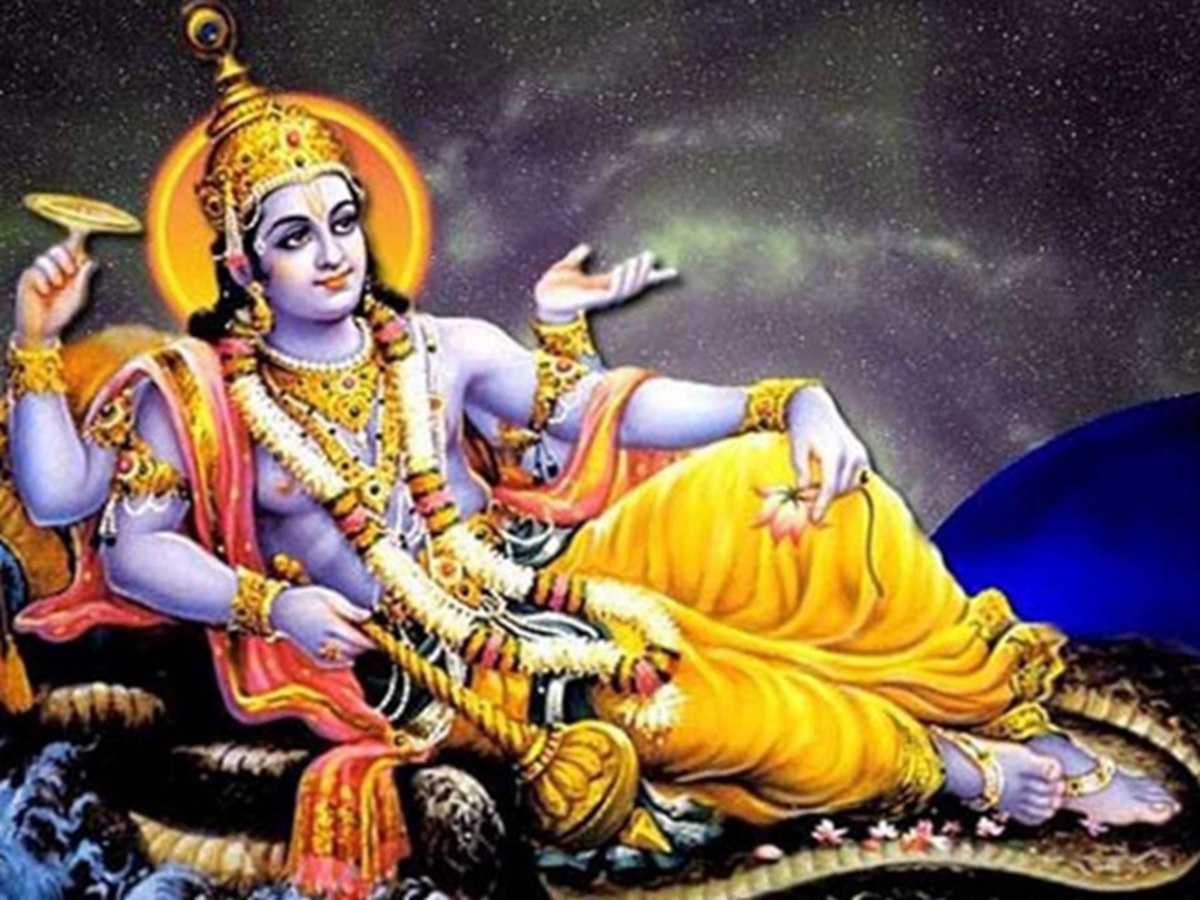
**Chant this *Mahamantra* (Great Mantra), which is equivalent to the *Vishnu Sahasranama***
Pandit Shridhar Shastri further explains that having a heart filled with faith and devotion is paramount to reaping the full benefits of this fast. For devotees unable to recite the *Vishnu Sahasranama*, chanting a specific mantra 108 times in the morning and 108 times in the evening—with a pure mind and heart—will yield the complete rewards of the *Nirjala* (waterless) fast and open the path to *Moksha* (liberation).
Here is that special *Mahamantra*:
*Ram Rameti Rameti Rame Rame Manorame.*
*Sahasranama Tattulyam Ramnama Varanane.*
PC Social Media