
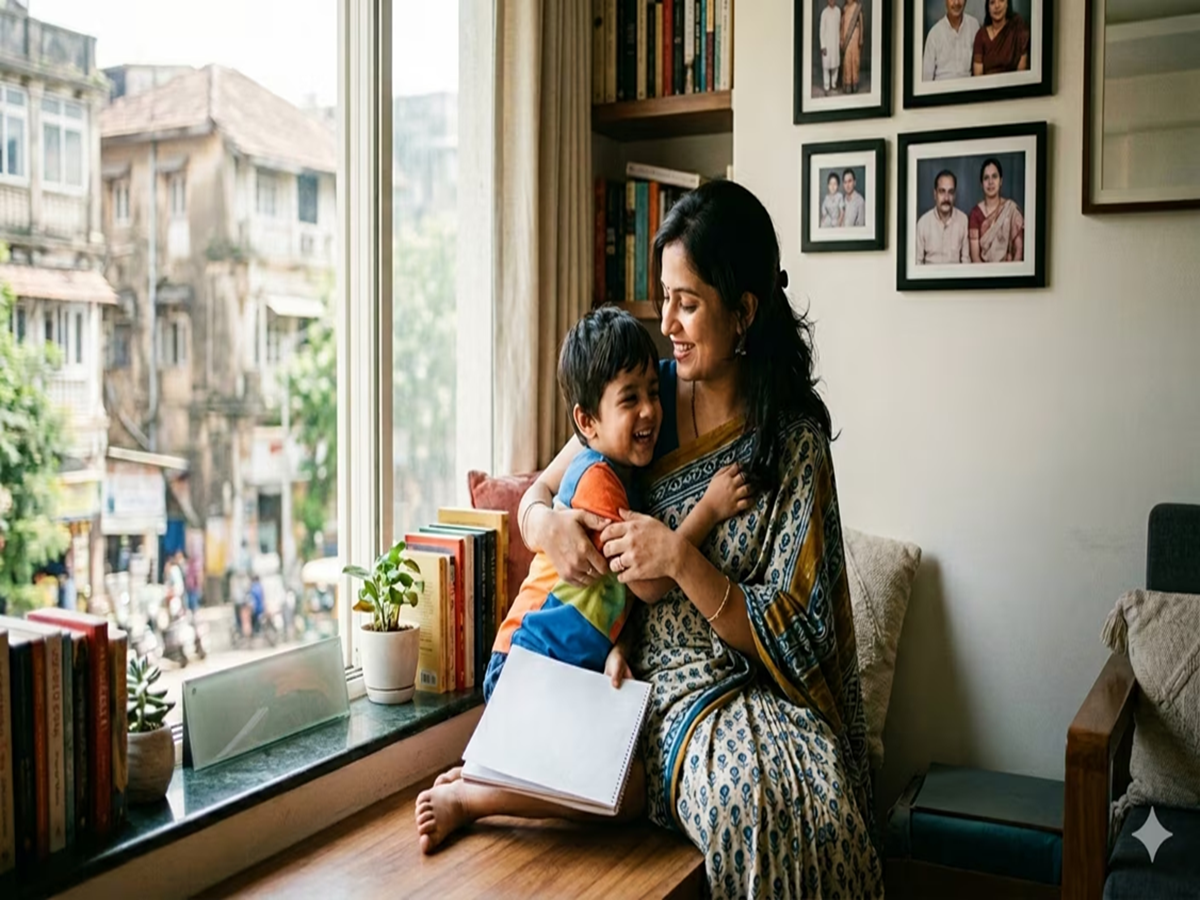
Mothers' Legal Rights Regarding a Child's Surname: It is often said that, in this world, a mother holds a status even higher than that of God. From nurturing a child in her womb for nine months, enduring unbearable pain to give birth, and then sacrificing countless nights of sleep to raise them, a mother serves as the very foundation of a child's existence. Yet, the moment that child steps into this world, their identity—both in the eyes of society and on official documents—is defined solely by their 'father's' name and surname. Have you ever wondered why this is the case? Why is a mother's name so often relegated to nothing more than a mere entry in the column adjacent to the 'father's name'?

**A Patriarchal Society and the Burden of Lineage**
The structure of our society has historically been 'patriarchal.' In bygone eras, property, lineage, and social status were transferred exclusively from male to male. A surname was not merely a name; it served as a 'tag'—an identifier indicating which land, tribe, or clan a child was the rightful heir to.
Since women traditionally moved to a different household after marriage, their surnames were deemed 'temporary,' while the father's surname was accorded the status of a 'permanent' identity.
**The Crisis of Identity**
A mother shapes a child—physically and emotionally—yet when it comes to the matter of identity, she is often treated as a mere 'default' figure. Society's prevailing logic has long been that bearing the father's name provides a child with 'protection' and 'legitimacy.' But are a mother's love and her struggles not sufficient to bestow a social identity upon her child? This is a question that modern women and an increasingly aware society are asking with growing persistence today.
**What Does the Law Say?**
In 2022, a bench of the Supreme Court—comprising Justice Dinesh Maheshwari and Justice Krishna Murari—clarified during the hearing of the *Akshara Reddy vs. J. Rama Krishna* case that a mother, by virtue of being the child's sole 'natural guardian,' possesses the absolute right to determine her child's surname. The Court observed that imposing a father's surname on a child could be detrimental to the child's mental health and infringe upon the mother's rights.
**‘Double Surnames’ and a New Identity**
Nowadays, many parents are challenging this tradition. The trend of ‘hyphenated surnames’ has gained momentum, wherein both the mother's and the father's surnames are appended to the child's name (for example: Yash Sharma-Kapoor). This serves not only as a symbol of equality but also connects the child to both of their roots. Some parents are now even opting to use the mother's surname exclusively.
**Why is Equality in Identity Essential?**
A surname is not merely a word; it is an integral part of one's dignity and existence. If a mother is the child's first teacher and protector, then including her name in the child's identity is not a ‘favor,’ but her inherent ‘right.’ This shift is not intended to diminish anyone, but rather to accord equal respect to both parents.
In recent years, several cases have emerged in which single mothers or working women have won legal battles to have only their own names recorded in their children's passports and school documents. In terms of global trends, the legal mandate for ‘double surnames’ (incorporating both the mother's and the father's names) in Spain and various Latin American countries has been viewed as a model worth emulating. (For detailed information, it is advisable to consult a legal expert.)
PC Social Media