Food & recipe
Do your rice turn out mushy and sticky when cooked in a pressure cooker? Learn the right way to cook it..
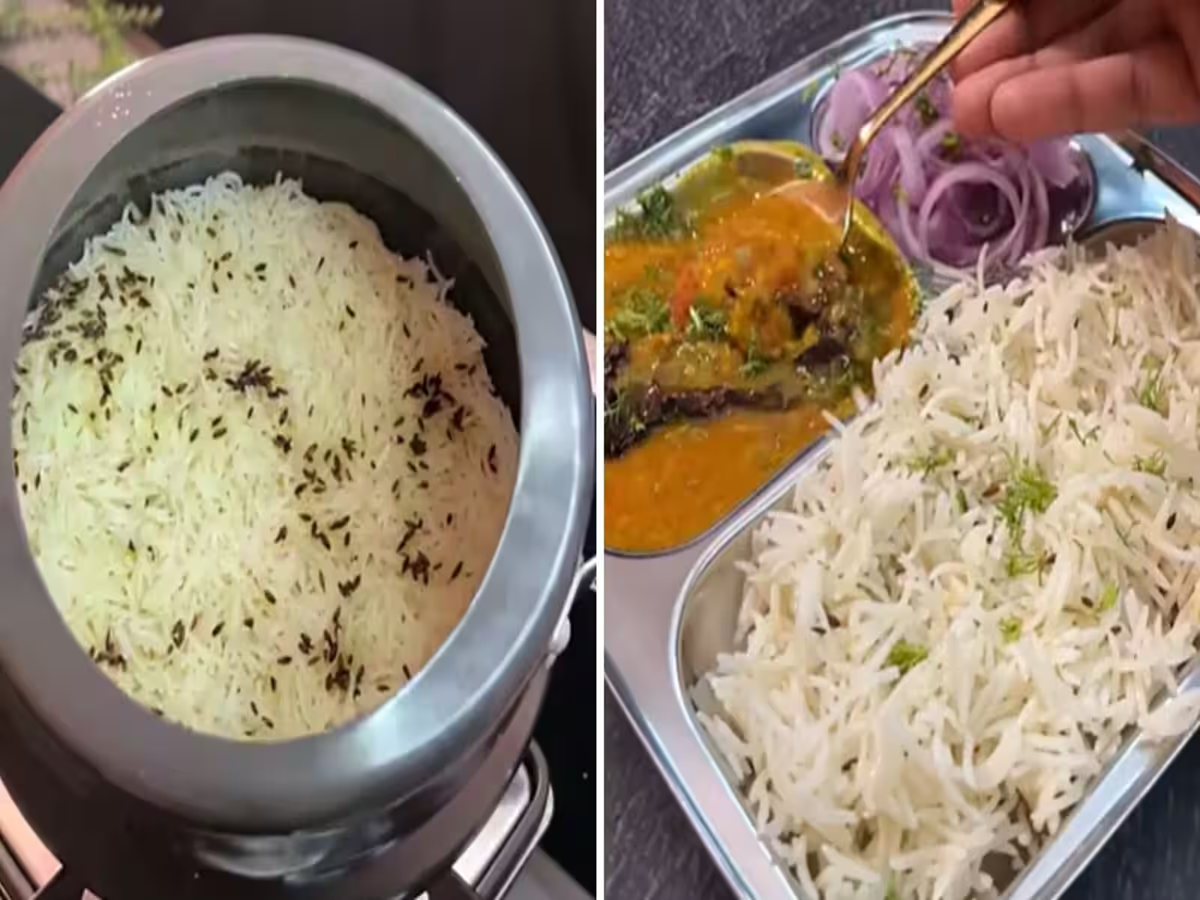
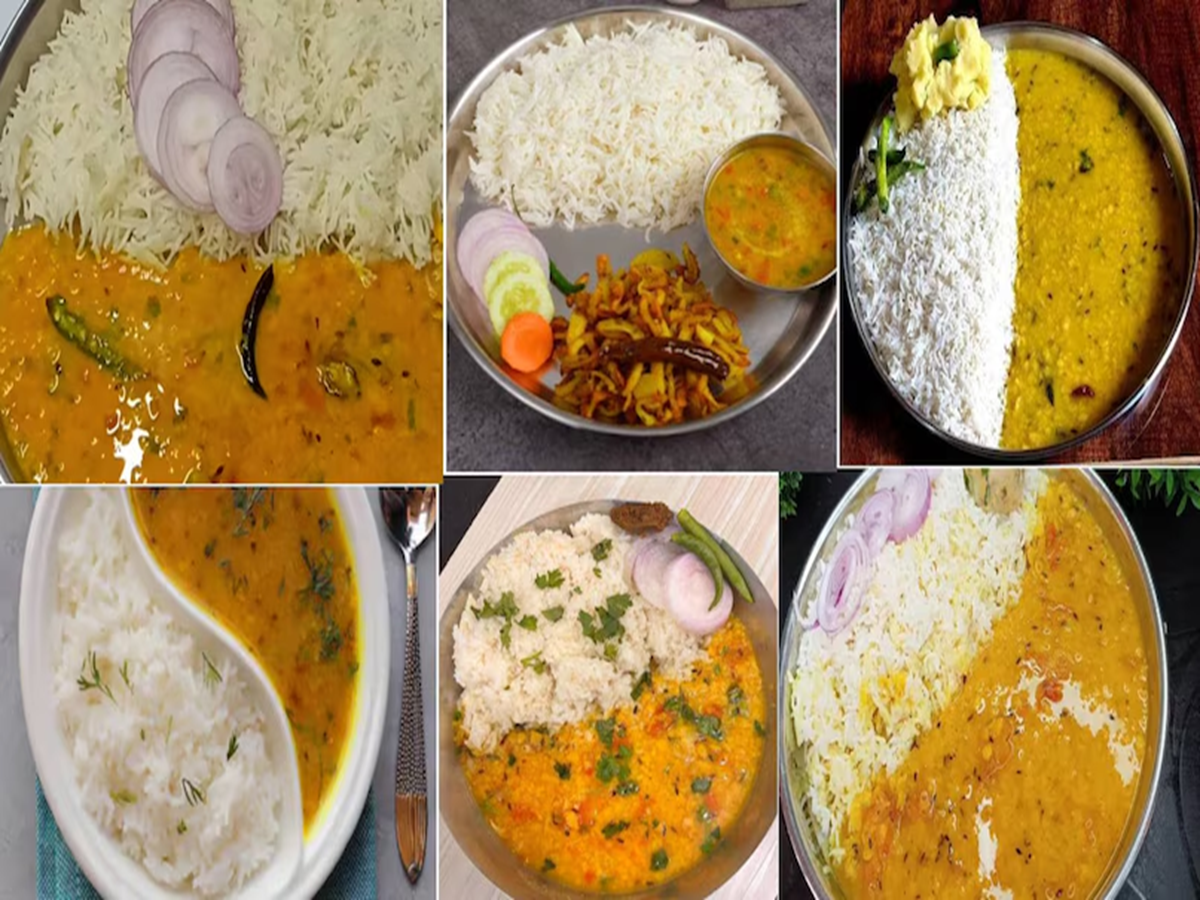
How to Cook Fluffy Rice: Whether you are serving plain rice with dal (lentils) or putting together a meal with rajma (kidney beans) or kadhi (yogurt-based curry), perfectly cooked rice elevates the entire dining experience. However, upon opening the pressure cooker, you might sometimes find excess water left behind, or the grains might become so soft that they break apart when served. While the variety of rice is often blamed for such outcomes, the cooking method plays a significant role in the final texture. Factors such as how the rice is washed, whether it is soaked, the amount of water used, and the cooking duration are all crucial. It is also important to understand that not all rice varieties have the same texture.
Some types of rice are naturally stickier, while varieties like Basmati are prized for their distinct, separate grains. Therefore, rather than applying the same technique to every type of rice, consider the specific requirements of the variety you are using. By refining your habits—specifically how you wash the rice, measure the water, and handle it after cooking—you can achieve much better results when using a pressure cooker.
First Mistake: Cooking rice without washing it properly
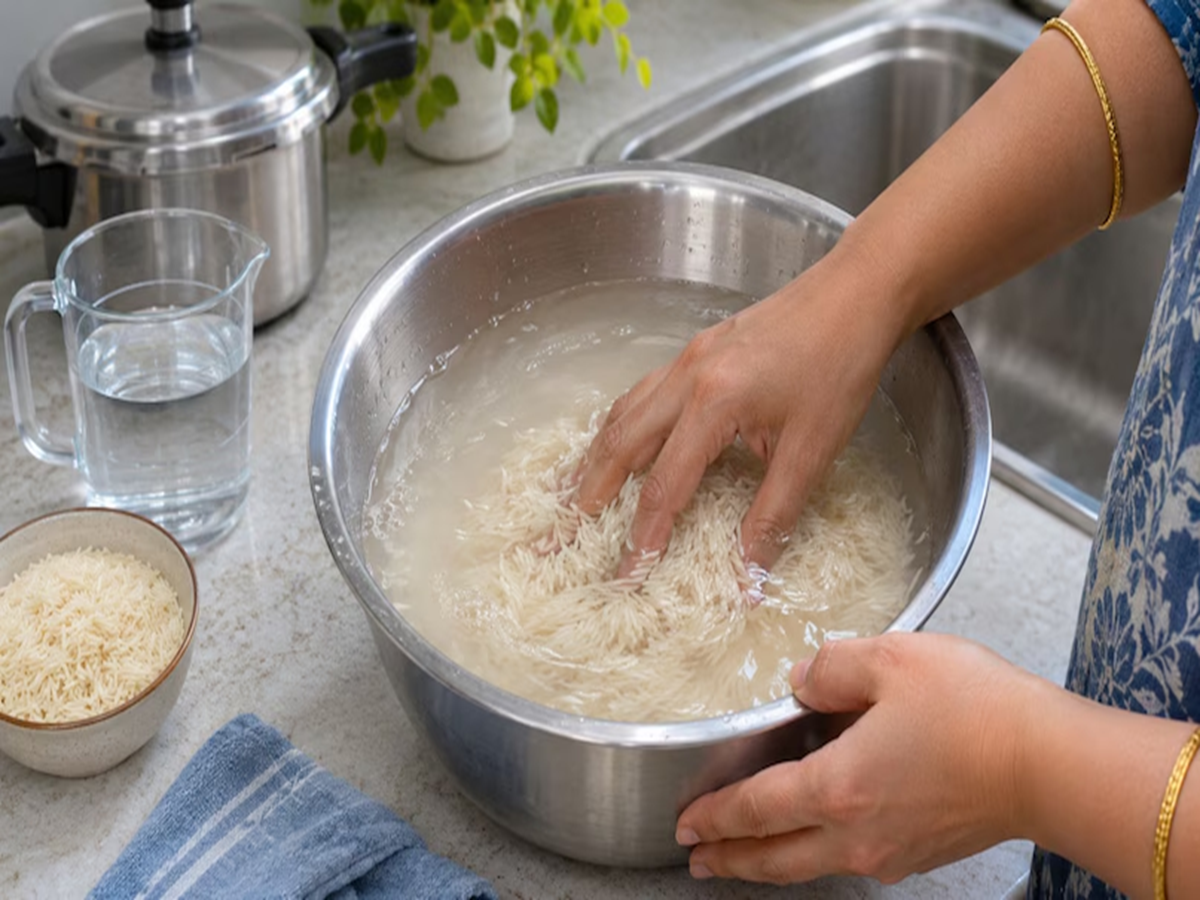
Excess starch on the surface of the rice grains can dissolve into the cooking water, leading to a sticky texture. Washing the rice before cooking helps ensure that the grains remain separate. Place the rice in a bowl, add water, and gently swirl it with your fingers. Drain the water and add fresh, clean water. You can repeat this process two to three times. It is sufficient to wash the rice until the water becomes less cloudy; there is no need to keep washing it until the water is completely clear. If the packaging provides specific instructions, follow those instead.
Avoid rubbing the rice vigorously while washing.
Washing rice does not mean scrubbing it as if you were washing clothes. Rubbing the grains forcefully can cause them to break, which negatively affects their texture once cooked. Wash the rice carefully, especially if the grains are long and slender. You can use a fine-mesh strainer while draining the water to prevent the grains from slipping into the sink. After washing, let the rice drain for a while; this reduces the excess water clinging to the grains, making it easier to gauge the amount of water to add to the pressure cooker.
If you choose to soak the rice, keep track of the time.
Soaking Basmati rice before cooking allows the grains to absorb water. Check the packaging for recommended soaking times—while many home-cooking methods suggest 15–20 minutes, this is not a universal rule for every variety. If you have soaked the rice, drain the water before cooking. Also, keep in mind that pre-soaked rice and dry (unsoaked) rice require different cooking times and water quantities. Using the same old measurements without considering this can result in the rice becoming overly soft or mushy.
Another common mistake: Estimating the water by eye.
A frequent reason for rice turning out soggy in a pressure cooker is adding too much water. Conversely, if there is too little water, the grains may not cook properly and could stick to the bottom. To ensure consistency, use the same cup to measure both the rice and the water. The amount of water required for one cup of rice depends on the variety, the soaking duration, the type of pressure cooker, and the cooking method. Furthermore, cooking rice directly in the pressure cooker is different from cooking it in a separate container placed inside the cooker.
There is no single "perfect" ratio for all types of rice.
Many recipes suggest using one and a half cups (or slightly more) of water for every cup of rice, but this is not a universal rule. Different types—such as new versus aged rice, Basmati, short-grain, or brown rice—have varying requirements. Start by following the instructions provided on the rice packaging or in your pressure cooker’s manual. If the rice turns out too soft, make minor adjustments to the water quantity or cooking time the next time you prepare it. Making multiple changes at once makes it difficult to determine which specific adjustment led to a better result.
Pay attention to heat levels and cooking time.
Even if the correct amount of water is used, cooking the rice for too long can cause the grains to become soft and break. Therefore, do not rely solely on the number of "whistles" (pressure releases) as a universal rule for every pressure cooker. Factors such as the size of the cooker, the intensity of the gas flame, and the quantity of rice can all affect the outcome. Follow the instructions provided by the manufacturer of your appliance, and do not leave the kitchen for long periods while the rice is cooking. It is also essential to adhere to the minimum liquid requirement and the maximum fill limit for the pressure cooker.
Third mistake: Stirring vigorously immediately after cooking.
Freshly cooked, hot rice grains are delicate. Stirring them forcefully with a heavy ladle or pressing down on them can cause the grains to break. Once the rice is cooked, turn off the gas and allow the pressure in the cooker to dissipate safely. Do not force the lid open; follow the manufacturer’s instructions for releasing steam. Open the lid only after the pressure has completely subsided. If the rice is very hot, let it rest for a few minutes before gently scooping it out.
Gently lift the rice with a fork.
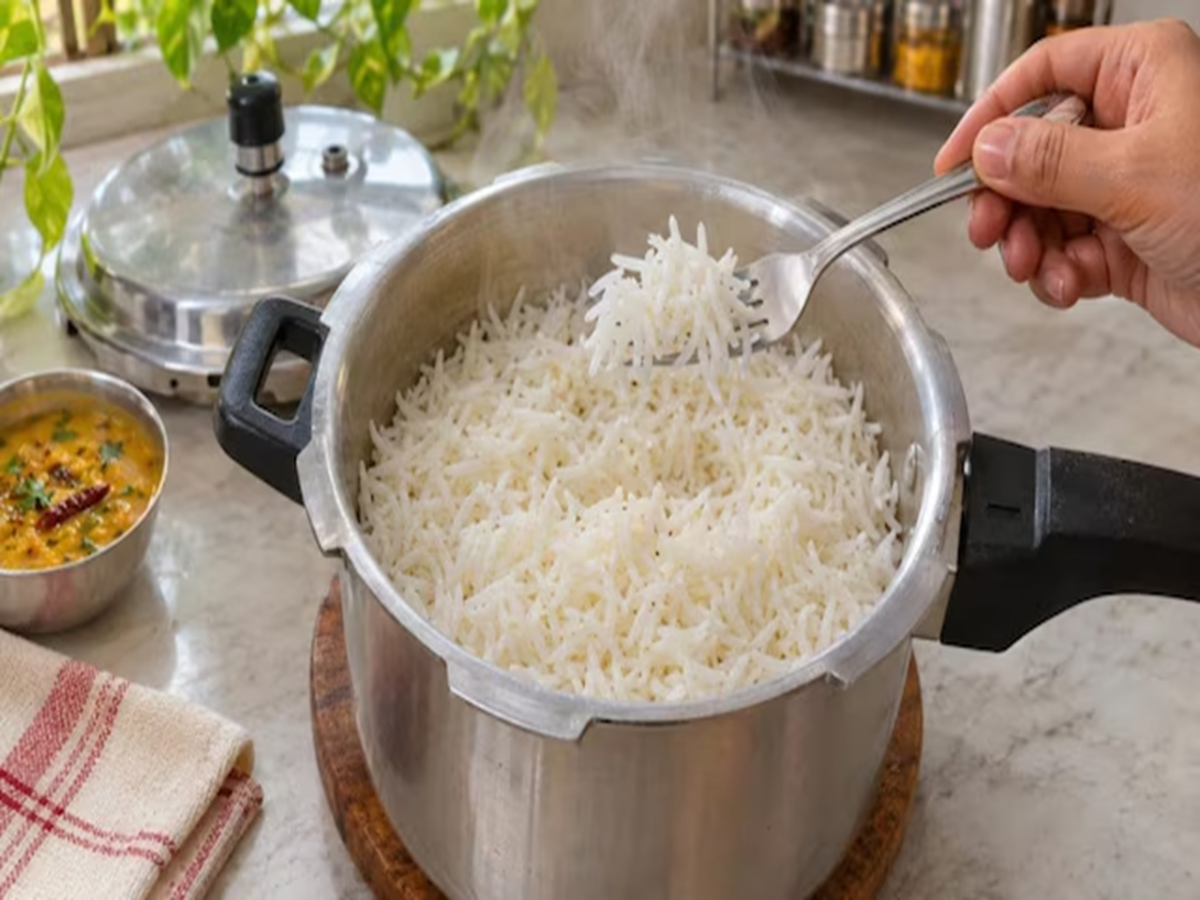
To separate the grains, use a fork or a thin spoon to gently lift the rice from the edges. There is no need to press the grains down or stir them repeatedly; the goal is to loosen the rice, not to mash it. If the rice has already become too soft due to excess water or overcooking, using a fork will not restore its original texture. In such cases, instead of stirring it further, serve it carefully and adjust the water-to-rice ratio and cooking time next time.
Do not rely on ghee or lemon as a fix-all solution.
Adding a little ghee to plain rice can enhance its aroma and flavor, but it will not correct the mistake of using too much water or overcooking. Similarly, it is a misconception that adding a few drops of lemon juice will always result in perfectly separated grains. To achieve well-separated, fluffy rice, focus primarily on choosing the right variety, using the correct amount of water, and ensuring the proper cooking time. Once you master these factors, even everyday rice cooked in a pressure cooker will consistently turn out with the texture you desire.
PC Social Media