Business
8th Pay Commission: Government Shares Report Deadline, Salary and Pension Revision Update in Parliament
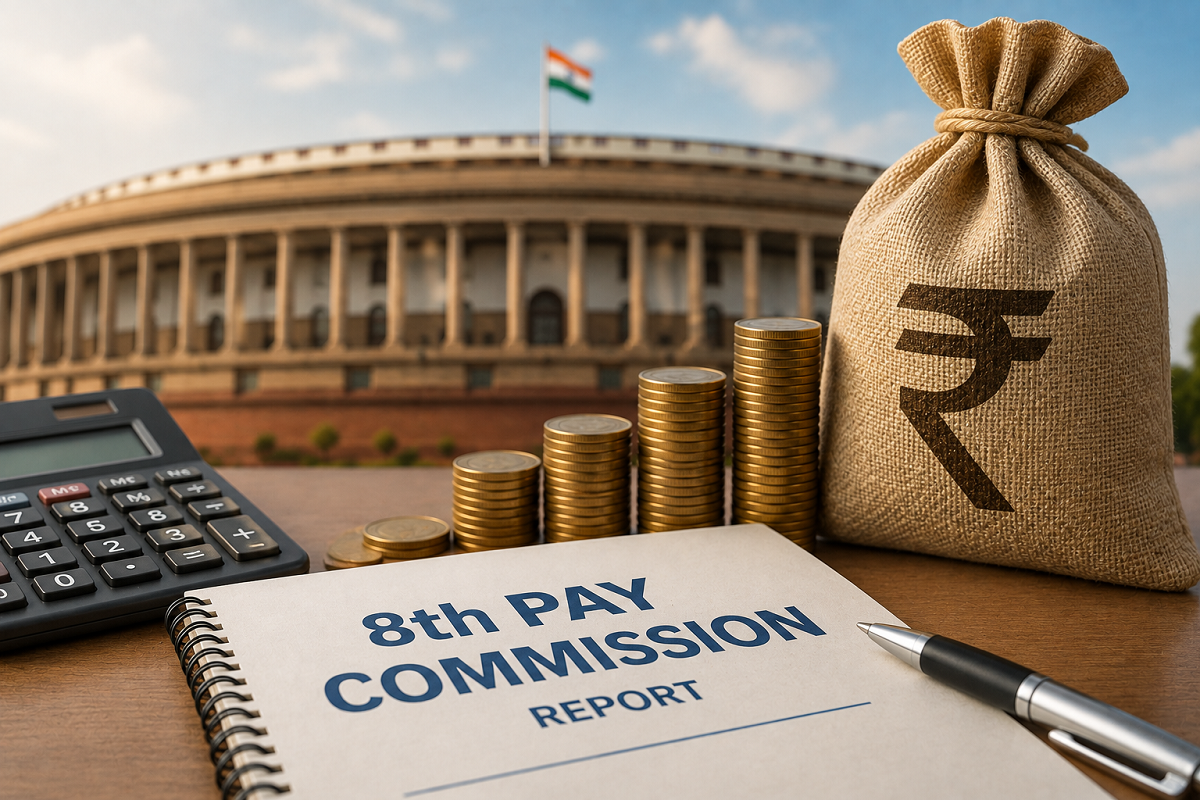
8th Pay Commission Latest Update, August 11, 2026: Central government employees and pensioners waiting for clarity on the 8th Central Pay Commission have received a fresh update from the government in Parliament. Minister of State for Finance Pankaj Chaudhary, responding to a written question in the Lok Sabha, shared details about the commission's formation, timeline and current status.
The government has confirmed that the 8th Pay Commission has been given 18 months from the date of its constitution to prepare and submit its recommendations. However, employees hoping for an immediate announcement on revised basic pay, allowances, pensions or the effective date will have to wait longer.
Here is what the latest parliamentary update means for central government employees and pensioners.
When Will the 8th Pay Commission Submit Its Report?
According to the government's statement in Parliament, the 8th Central Pay Commission was formally constituted through a resolution issued on November 3, 2025.
The commission has been provided an 18-month period to complete its work and submit its recommendations.
Based on this timeline, the panel is expected to submit its final report by around May 2027, unless the schedule is subsequently changed.
This timeline is important because major decisions regarding revised salaries, allowances and pensions are expected to become clearer only after the commission completes its review and presents its recommendations to the government.
When Will the 8th Pay Commission Be Implemented?
One of the biggest questions among employees is when the revised pay structure will actually come into force.
The government has not yet announced a confirmed implementation date.
According to the parliamentary response, the effective date of the recommendations cannot be finalised until the commission submits its report and the government considers its proposals.
This means claims suggesting that a particular salary increase, fitment factor or revised pay scale has already been finalised should be treated cautiously unless officially confirmed.
The government will ultimately decide which recommendations to accept and from what date the approved changes will become applicable.
Who Is Leading the 8th Pay Commission?
The 8th Central Pay Commission is headed by Justice Ranjana Prakash Desai.
The panel also includes Professor Pulak Ghosh and Pankaj Jain.
The commission has been tasked with examining the existing compensation framework for central government employees and making recommendations covering pay, allowances, pensions and related service conditions.
Its work is expected to play an important role in determining the next major restructuring of central government compensation.
What Could Change Under the 8th Pay Commission?
Under the Terms of Reference notified on November 3, 2025, the commission is expected to examine multiple components of the existing pay and pension framework.
One of the most closely watched areas will be the basic salary and pay matrix. Any restructuring of basic pay could also influence several allowances and retirement-related benefits linked to salary.
The commission is also expected to examine the framework surrounding Dearness Allowance (DA) and Dearness Relief (DR).
Allowances such as House Rent Allowance (HRA), Travel Allowance (TA) and other benefits available to eligible central government employees may also come under review.
Another major area is pensions. Recommendations concerning pensions and family pensions will be particularly important for retired employees and eligible family pensioners.
Service conditions and other aspects of the employment framework may also be examined as part of the commission's mandate.
Has the Government Announced the Salary Hike?
No final salary increase has been announced yet.
This is an important distinction because several estimates regarding the 8th Pay Commission have been circulating, including projections based on different fitment factors and proposed minimum basic salaries.
At present, such figures should not be treated as the government's final decision.
The actual increase in basic pay will depend on the commission's recommendations and the government's subsequent decision on those proposals.
Therefore, employees should wait for the official report before assuming that any particular fitment factor or percentage salary hike is guaranteed.
Nearly 70 Lakh Employees and Pensioners Could Be Affected
The new pay commission is expected to have a significant financial impact because of the large number of people covered by the central government's pay and pension system.
According to figures cited in the parliamentary update, there were approximately 35.77 lakh civilian central government employees as of March 1, 2026.
Separately, around 33.76 lakh pensioners and family pensioners were recorded as of December 31, 2025.
Taken together, these figures indicate that close to 70 lakh serving employees, pensioners and family pensioners could be affected by decisions linked to the 8th Pay Commission.
The eventual impact on each individual, however, will depend on factors including pay level, existing basic salary, applicable allowances, pension category and the final formula accepted by the government.
What About Arrears?
Another major question concerns arrears.
If the government eventually decides that revised pay and pension benefits should take effect from a date earlier than the actual implementation date, eligible employees and pensioners could potentially become entitled to arrears for the intervening period.
However, there is currently no confirmed government announcement establishing such an arrangement.
The possibility, calculation and payment of arrears will depend on the effective date ultimately approved by the government.
Will States Automatically Follow the 8th Pay Commission?
The recommendations of the Central Pay Commission do not automatically become binding on state governments.
According to the parliamentary update, the Centre has not issued any advisory directing states to adopt the 8th Pay Commission recommendations.
State governments generally make their own decisions regarding salary and pension revisions for their employees after considering factors such as their financial position and the recommendations adopted by the Centre.
Therefore, state government employees should not assume that central recommendations will automatically apply to them on the same date or under identical terms.
What Happens Next?
The 8th Pay Commission will continue examining the existing pay structure, allowances, pensions and other service-related matters before finalising its recommendations.
Once the report is submitted, the government will have to study the proposals and decide which recommendations should be accepted, modified or rejected.
Only after this process will there be firm clarity on the new basic salary, revised pay matrix, allowances, pension increase, fitment formula, implementation date and possible arrears.
For now, the most important confirmed timeline is the commission's 18-month mandate following its constitution on November 3, 2025, placing its expected report deadline around May 2027.
Until the final report and subsequent government decision are available, employees and pensioners should distinguish between official announcements and estimates circulating about the possible salary hike.
Disclaimer: This article is based on the parliamentary update and information provided in the source material. Final salary, pension, allowance, fitment factor, arrears and implementation details will depend on the 8th Pay Commission's recommendations and subsequent decisions taken by the Government of India.