
LIFESTYLE
Why is thyroid disease on the rise among women? Could 'staying silent' be the reason? Find out the truth..

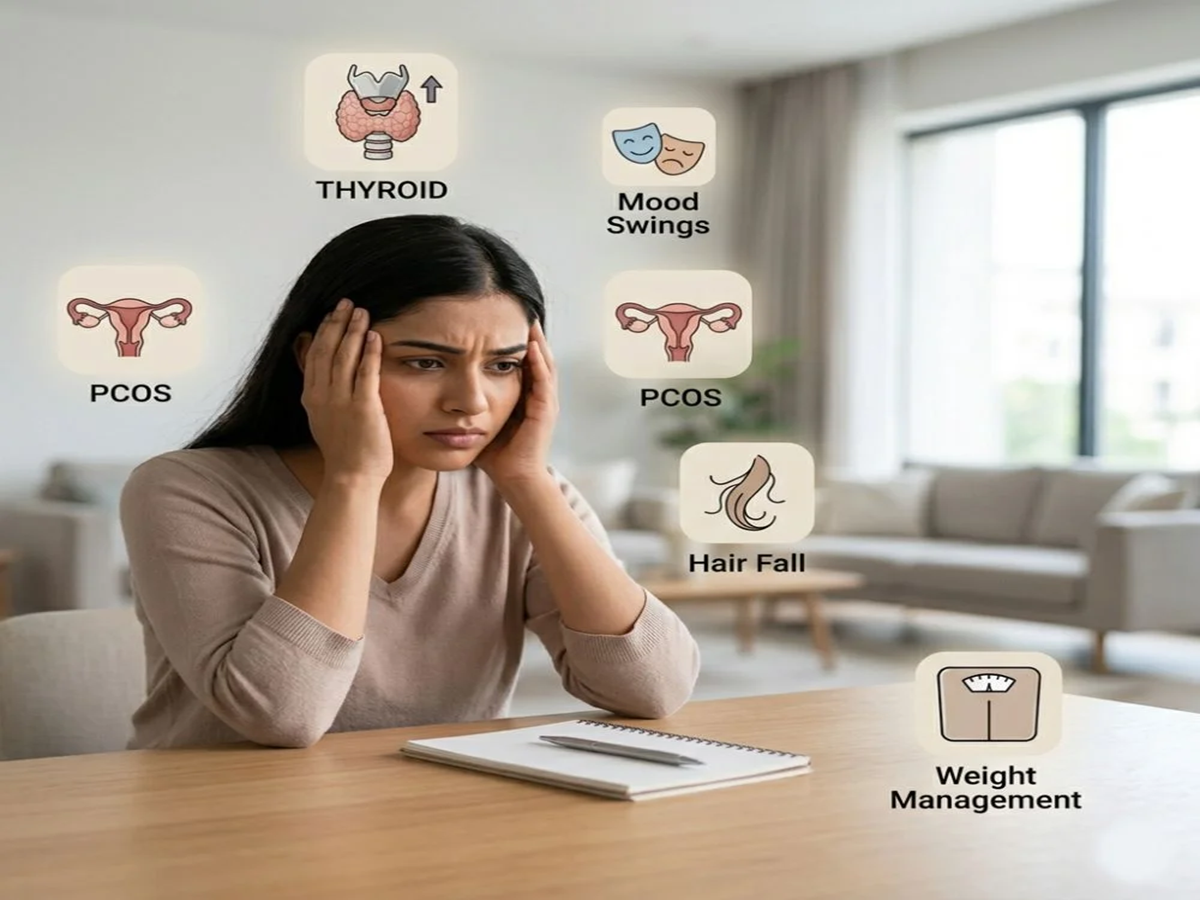
Emotional Suppression and the Thyroid: In today’s world, thyroid issues among women are spreading like an epidemic. Women are significantly more susceptible to this condition than men. But the most pressing question is: why is this disease rising so rapidly among women? Is it solely due to hormonal changes, or is it also linked to women’s temperament and their suppressed emotions?

Medical science and data from various global health organizations (such as the American Thyroid Association) confirm that hypothyroidism and autoimmune thyroid disorders are 5 to 8 times more common in women than in men. The primary reasons for this are believed to be the complex hormonal changes that occur in the female body—such as those related to pregnancy, the menstrual cycle, and menopause—as well as the specific structure of the female immune system.
When an individual experiences extreme stress, the body’s levels of stress hormones, such as cortisol and adrenaline, rise. This elevated cortisol disrupts the brain’s hypothalamic-pituitary-adrenal (HPA) axis, which directly impairs the balance of thyroid hormones (TSH, T3, and T4).
When a woman is unable to express herself openly over a long period, or continues to internalize her mental stress, it directly impacts her hormonal balance and the function of her thyroid gland. Dr. Alok Gupta, a prominent endocrinologist (Senior Consultant) in the country, states, “The rapid rise in thyroid disorders—particularly hypothyroidism—among women is not driven solely by physiological factors. It is deeply linked to their lifestyle, escalating stress levels, and the tendency to suppress emotions. When a woman is unable to express herself openly over a long period, or continues to internalize mental stress, it directly impacts her hormonal balance and the thyroid gland.”
Is ‘remaining silent’ (a suppressed voice) truly a cause?
According to a report published by *Medium*, fields such as psychosomatic medicine and psychoneuroimmunology suggest that the persistent suppression of emotions, anger, or one’s own thoughts creates a significant form of internal stress within the body. When women consistently suppress their emotions—often due to social or familial pressures—their nervous system remains in a perpetual ‘fight-or-flight’ mode, which adversely affects the hormonal system.
Sabine Horner, a nutritionist and Ayurvedic yoga therapist, notes that in yoga and ancient traditions, the throat region—known as the *Vishuddha Chakra*—is considered the center for expression and communication. It is believed that a lack of communication or a sense of being ‘stifled’ energetically impacts this area. While modern medical science does not frame it in these specific terms, it does recognize the physical manifestations of mental stress.
What is the scientific reason?
According to medical science, the following are the primary scientific reasons behind the development of thyroid issues in women:
Hormonal fluctuations:
Throughout a woman’s life—during puberty, pregnancy, and menopause—significant changes occur in estrogen and progesterone levels, which can make the thyroid gland more sensitive.
Autoimmune diseases:
The female immune system is more complex than that of men. Autoimmune conditions, such as ‘Hashimoto’s Thyroiditis’—where the body’s own cells begin to attack the thyroid—are most common among women.
The burden of multitasking:
In the constant effort to balance responsibilities at home and work, women often neglect their mental health, which can disrupt the body’s cortisol levels.
Prevention and solutions:
Experts believe that medication alone is not enough to address this issue; lifestyle changes are also essential:
Express yourself: Do not suppress your emotions; share your feelings openly with loved ones or seek support through therapy.
Stress management is crucial: Incorporate yoga, meditation, and regular exercise into your daily routine.
Get tested on time: Ensure that you undergo TSH, T3, and T4 tests at least once a year.
PC Social Media