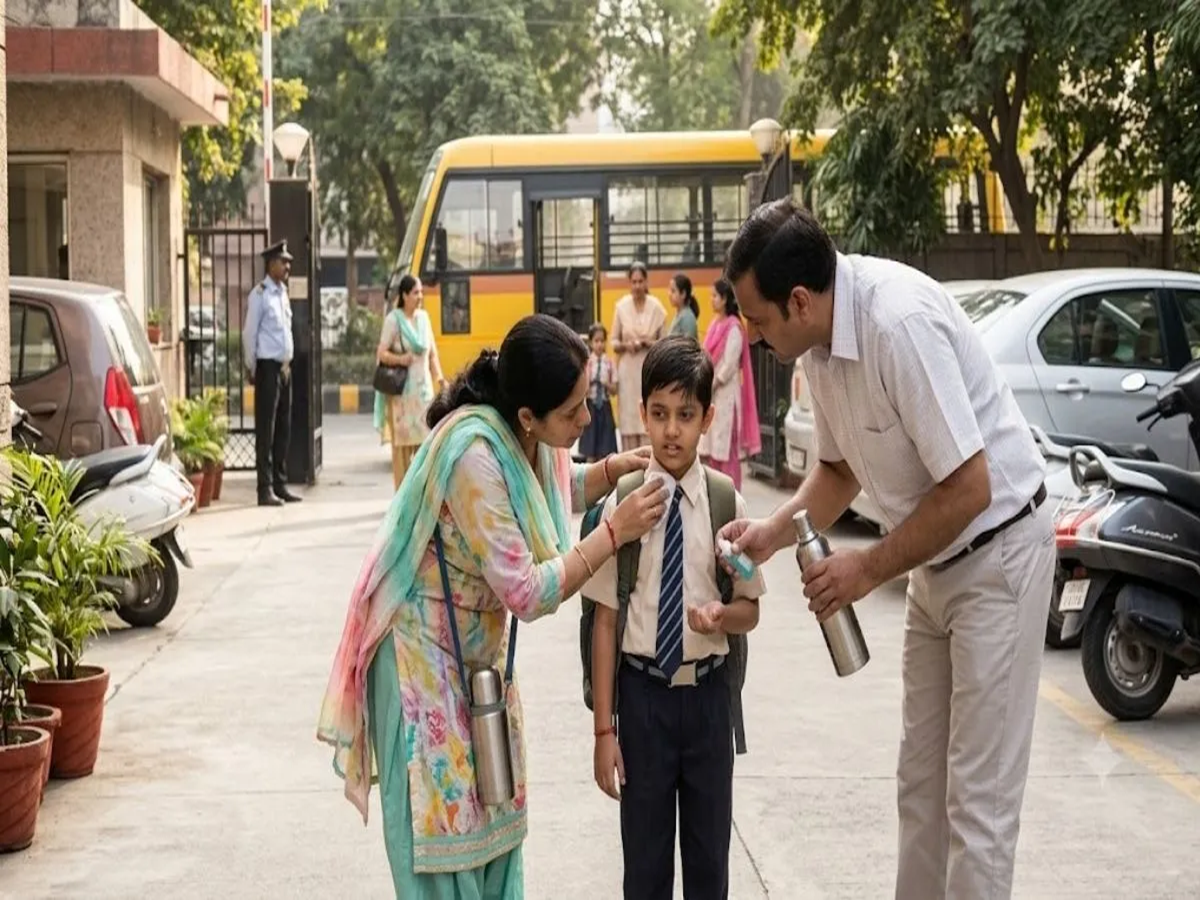
Parenting
Parenting Tips: Distance can disturb children, working parents must know how to avoid separation anxiety..

After a career break of four years, she is ready to go back to the office. Neha has only one worry. Her four-year-old daughter Tara knocks on the bathroom door two to three times while taking a bath, or if she is out of sight for a while, she starts crying.

In such a situation, how will she be away for seven to eight hours a day? Neha's mother is there to take care of Tara, but Tara has some extra separation anxiety. Neha knows that this anxiety caused by separation is a part of the development of children, which usually starts between the ages of eight and 10 months and subsides by the age of three years.
However, in some children, this fear does not go away easily. It can increase, which disrupts their daily routine and also affects family relationships.
This fear in children's minds is very dangerous
A level of anxiety caused by separation in children lasts for some time, like when you leave your child at daycare or play school, he cries there for a while, but as soon as you leave, he gets busy with his classmates. But sometimes this anxiety takes the form of a disorder after a while. This is a fear that lasts for a long time and is more than the prescribed age for children, lasting for weeks or months.
In this, the child may refuse to go to school, or he may have nightmares about separation. If the symptoms persist for more than four weeks, then it is different from normal. If the child's reaction is so strong that he refuses to participate in normal activities or there is a condition like frequent headache, nausea, or excessive fatigue, then these are signs of the seriousness of the situation. In such a situation, immediately consult a child psychologist or counselor.
Understand their feelings
It would be better if you recognize the child's feelings with empathy and tell him that even though you are leaving now, you will be with him soon, or that it is equally important for you to go to work. When you understand the child's feelings in this way, the child feels that you understand their feelings.
By assuring safety with confidence, you can also create comfort in children. Often, parents make the mistake of pausing too long to console or say goodbye to the child, assuming his fear to be true, but doing so strengthens the child's thinking that separation is unsafe.
It is not just about children.
The anxiety caused by separation is not limited to children. Parents also feel guilt, worry, or helplessness when leaving their child. If these feelings are expressed openly, the child's fear can increase even more.
Therefore, it would be better if you adopt a short, definite way of saying goodbye, such as saying goodbye with a hug. When parents control their emotions, children also internalize it and understand that separation is normal and safe.
How to prevent separation anxiety?
Don't go away secretly; doing so breaks the trust.
Don't show your guilt too much.
Don't suppress the child's feelings; statements like 'stop crying, nothing happened' will make them submissive.
When the child handles himself well for the whole day, praise his efforts.

Practice like this
Infants and young children (6 months - 3 years) - Go to another room for a few minutes and then come back. This builds confidence in them that you will return.
Pre-school children (3-5 years) - Reading stories about goodbye helps them take it normally.
School-going children (6+ years) - Talk together about what they do when they miss you. You could give them a small token to take with you (such as a family photo or a note in their lunchbox).
PC Social media