LIFESTYLE
Did you indulge in plenty of sweets and pooris during the festivities? Adopt these 5 habits starting today..
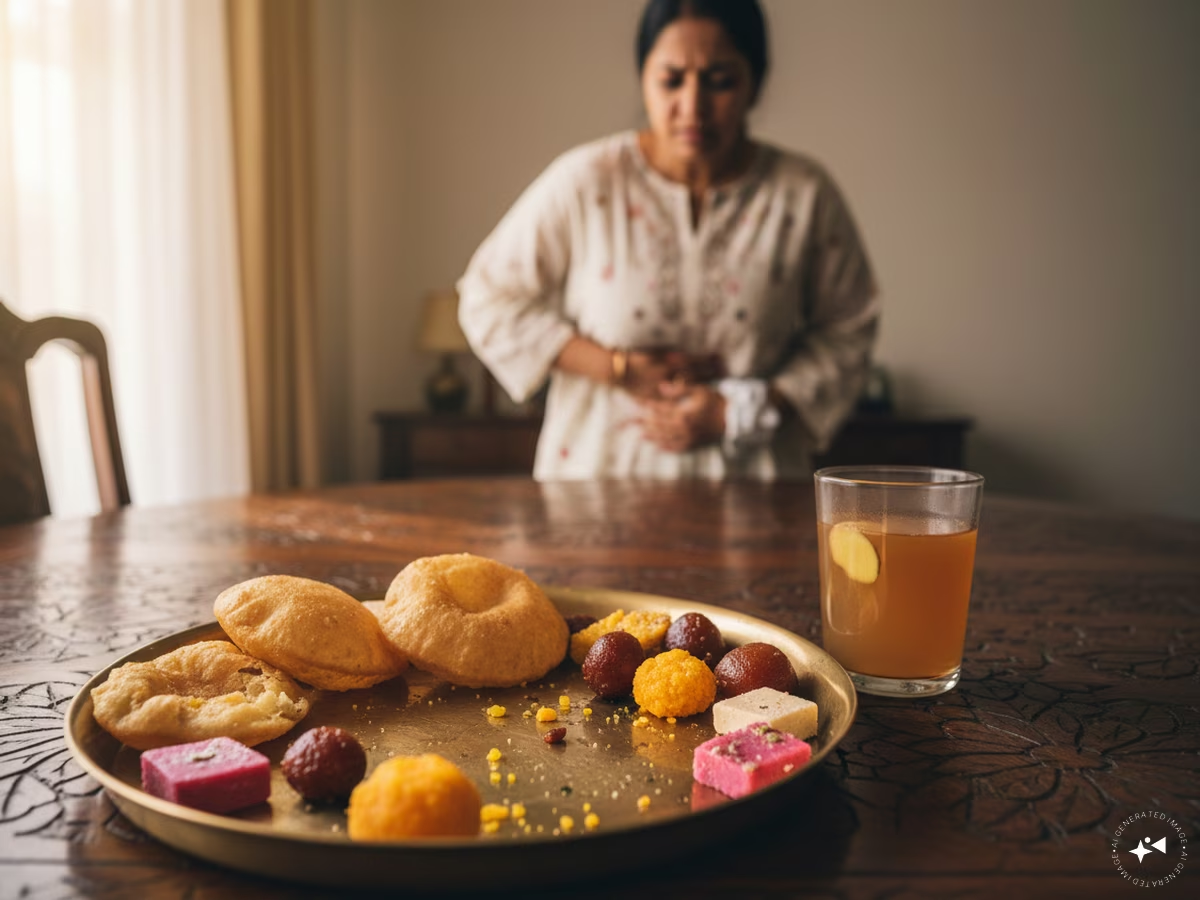
Remedies for Overeating During Festivals: During festivals, when faced with piping hot *puris*, *kachoris*, sweets, and a variety of other delicacies, it is not easy to exercise restraint. Often, in the pursuit of taste, we end up overeating. This can lead to discomforts such as a heavy feeling in the stomach, gas, acidity, bloating, and constipation. Naturally, one might wish to do something the following day to "detox" the body and prevent weight gain.

But is it necessary to starve yourself, consume only juices, or rely on "detox drinks"? No. Organs like the liver and kidneys are already tasked with eliminating waste products from the body. Therefore, rather than following a specific "detox diet" after the festivities, it is far better to simply return to your regular, everyday eating habits. According to the NHS, consuming excessive fried or oily food can exacerbate indigestion and acidity. Eating regular meals, chewing your food slowly, and finishing your last meal 3–4 hours before bedtime can be very helpful. Let’s look at 5 habits that can help keep your digestion on track after overeating.
Start your morning with water—no special "detox drink" required.
Consuming large amounts of salty, sweet, or fried foods during festivals can increase thirst; dehydration, in turn, can worsen constipation. Start your day with plain water and continue to drink enough throughout the day, as per your thirst. If you find plain water unappealing, you can add a few drops of lemon juice to it.
However, keep in mind that lemon water—or any other "detox drink"—cannot magically flush out excess body fat. Water is simply essential for the body’s normal functioning and digestion. It is better to drink water in smaller, frequent amounts rather than consuming a large quantity all at once.
Opt for a balanced meal instead of skipping meals.
Avoid staying hungry the day after indulging in sweets or *puris*. Skipping meals for long periods can lead to intense hunger, increasing the likelihood of overeating later. Instead, stick to your regular schedule and opt for light, balanced, homemade meals.
For breakfast, consider options like porridge (dalia), oats, or *poha* (flattened rice) with vegetables. Include lentils (*dal*), vegetables, *roti*, and yogurt in your lunch. For dinner, enjoy a balanced meal tailored to your hunger levels. There is no need to "punish" yourself or drastically cut down on food just because you overate on a particular day.
Increase your fiber intake—but do so gradually.
During festivals, the consumption of refined flour (*maida*), sweets, and fried foods often leads to a decrease in dietary fiber. Fiber is essential for maintaining regular bowel movements and preventing constipation. To ensure adequate intake, incorporate green vegetables, fruits, lentils, whole grains, and other fiber-rich foods into your meals.
However, increasing fiber intake too suddenly can cause gas and bloating. Therefore, increase the amount gradually and ensure you drink plenty of water. Rather than relying on a single fruit or vegetable as a "miracle" detox solution, focus on consuming a variety of nutritious foods.
Take a short walk after meals.
Instead of lying down immediately after a heavy meal, going for a leisurely walk is a better choice. Light physical activity aids digestion and can also help keep blood sugar levels stable after eating.
Try walking at a gentle pace for 10–15 minutes after your meal. There is no need to jump straight into intense workouts or vigorous exercise. If you are prone to acidity, avoid lying down right after eating.
Get enough sleep and return to your regular routine.
During festivals, it is common to stay up late, eat at irregular times, and reduce physical activity. These changes can disrupt your appetite, energy levels, and digestive patterns. Therefore, try to normalize your sleep-wake and meal schedules starting the very next day.
Adults are generally advised to get at least 7 hours of sleep each night. Adequate sleep, a balanced diet, and regular physical activity can help in maintaining a healthy weight over the long term.
Does overeating for one day lead to weight gain?
Not necessarily. While the scale might show a higher number the day after overeating, it does not necessarily mean that your body has gained fat.
Therefore, do not panic if you see a change in your weight the next day, and do not try to compensate by starving yourself. Simply return to your regular eating habits and physical activity. If you experience severe abdominal pain, persistent vomiting, blood in your stool, or digestive issues that last for an extended period, consult a doctor.
Remember: After indulging in your favorite festive dishes, your body does not need a harsh detox; rather, it requires balanced meals, adequate water intake, light physical activity, and a return to your regular daily routine.
PC Social Media