LIFESTYLE
Why does the bride knock over a vessel filled with rice before entering the groom's house after the wedding?
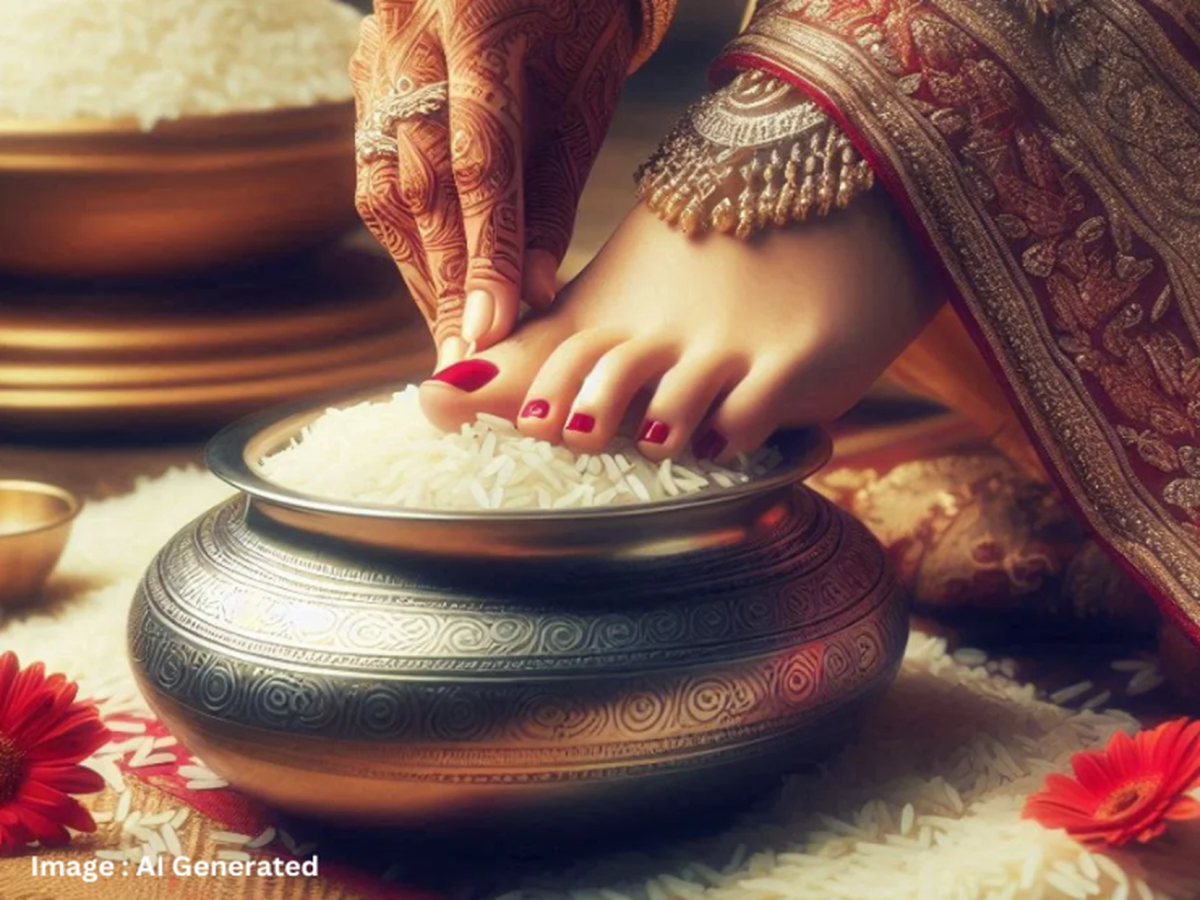
LifestyleHindu weddings are replete with rituals and customs that have been observed for centuries. Some of these rituals are considered auspicious signs of a household's prosperity. Some rituals have been followed for generations, even though their true significance may not always be understood.
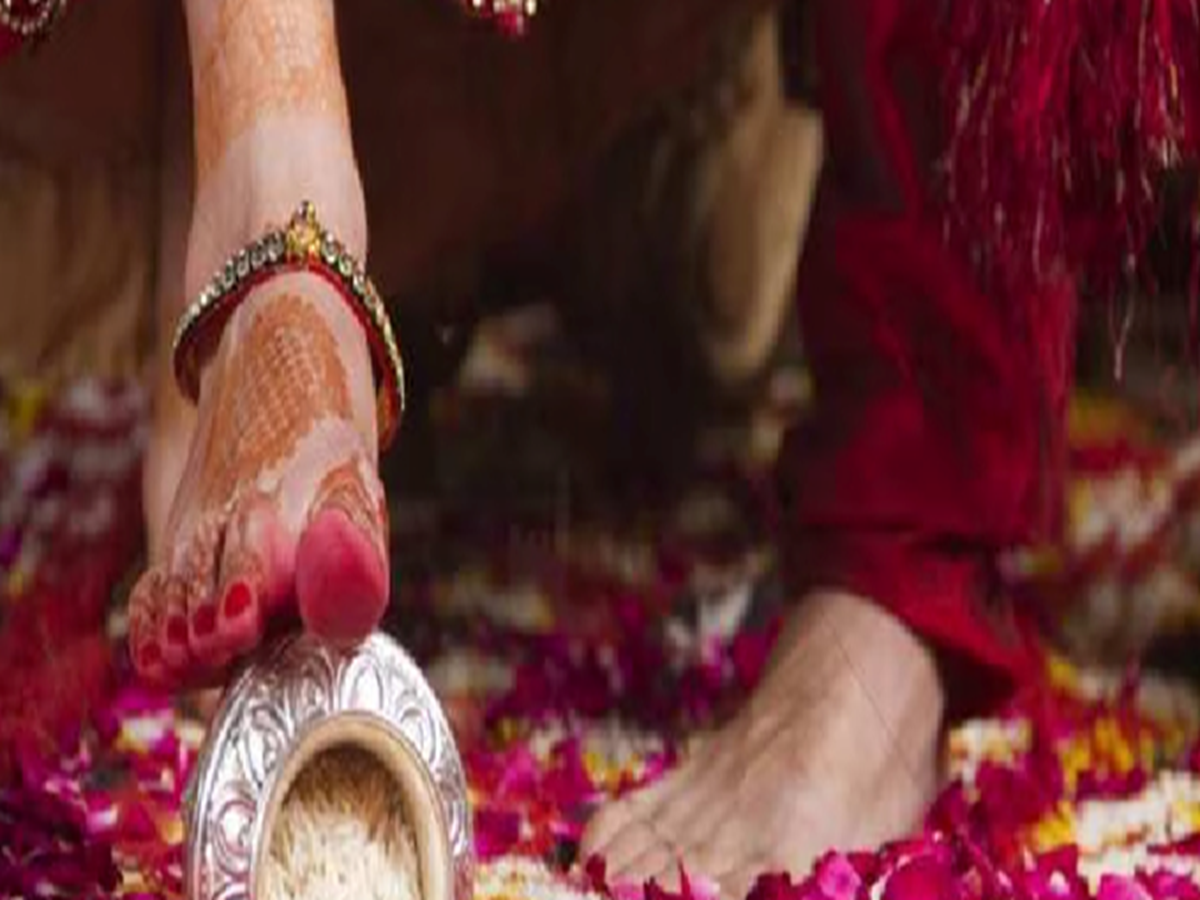
One such tradition involves the bride tipping over a vessel (kalash) filled with rice using her right foot as she enters the groom's home after the wedding. This custom has existed in Hindu weddings for ages and is viewed as a way to foster harmony between the bride's maternal home and her new marital home.
Often referred to as the 'Kalash Rasam' (vessel ritual), the wedding is considered complete only after this ceremony is performed. Let us explore this Hindu wedding ritual and the reasons behind it.
**The Bride Enters as an Embodiment of Goddess Lakshmi**
When a bride enters her new home after the wedding, it is believed that Goddess Lakshmi herself is entering in the form of the bride. The act of tipping the rice-filled vessel forward with her foot symbolizes the arrival of wealth, happiness, and prosperity.
The rice inside the vessel represents the prosperity of both the bride's maternal and marital families; its spilling signifies that the household will never face a shortage of food or wealth.
The bride enters the home by tipping the rice with her right foot, as this foot is considered to represent the auspicious steps of Goddess Lakshmi. This ritual is described in the *Grihya Sutras*, which state that by entering in this manner, the bride pledges to uphold the new customs and traditions of her marital home.
**Why Does the Bride Tip Over a Vessel of Rice?**
In Indian culture, a bride is regarded as 'Grihalakshmi' (the Goddess of the home). When she tips over the vessel of rice, she brings good fortune by ushering abundance—symbolized by the spilled grain—into the home.
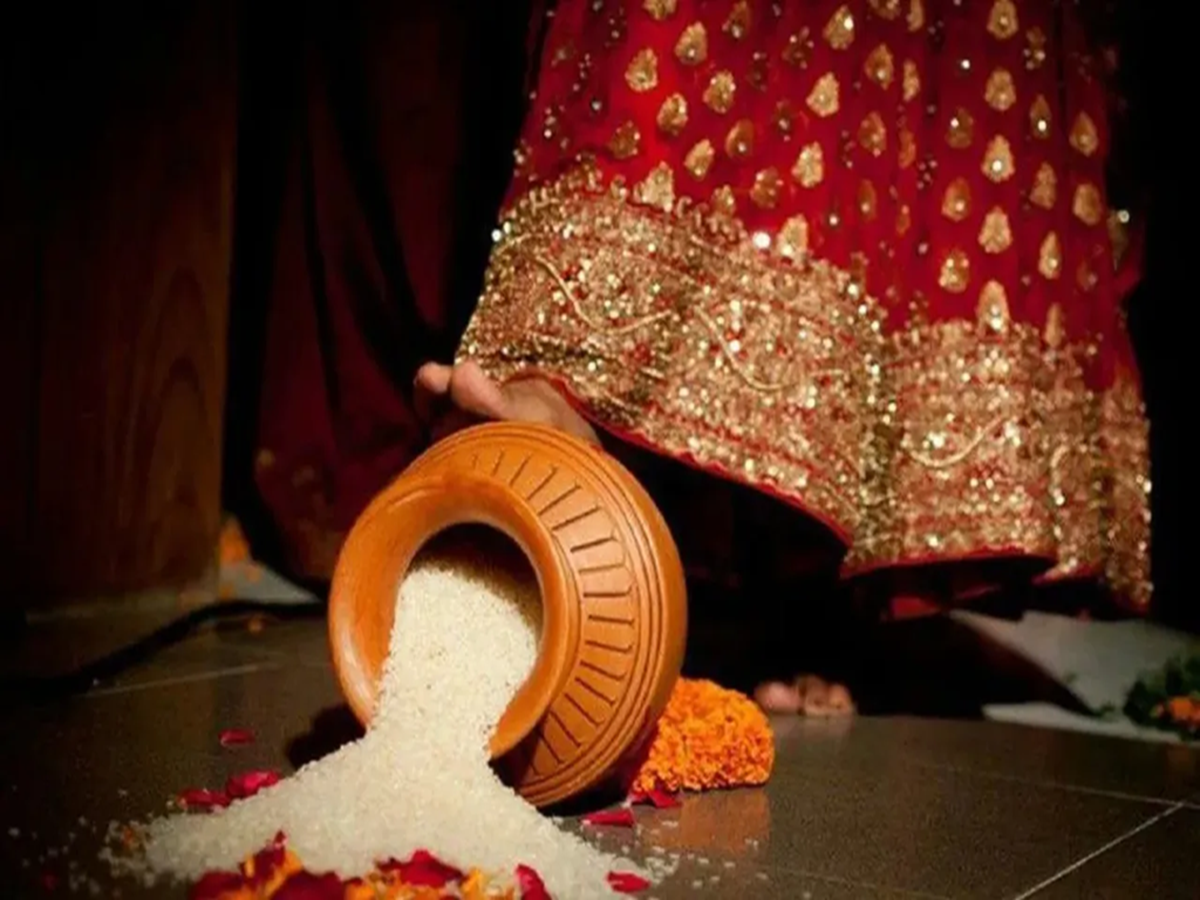
Thus, this ritual becomes a unique blend of Vedic traditions, cultural symbols, and beliefs, serving as a means to foster harmony between the bride and the groom. Furthermore, the *Kalash* is considered a symbol of the universe and represents the beginning of new life, akin to the womb. The grain placed inside the *Kalash* during the bride's *Griha Pravesh* (entry into the new home) symbolizes Goddess Annapurna, life energy, and everlasting prosperity. Therefore, when the bride nudges the *Kalash* inward, she ushers all that positive energy into the home.
A bride's entry into her new home after the wedding is considered highly auspicious, bringing both prosperity and happiness.
PC Social Media