
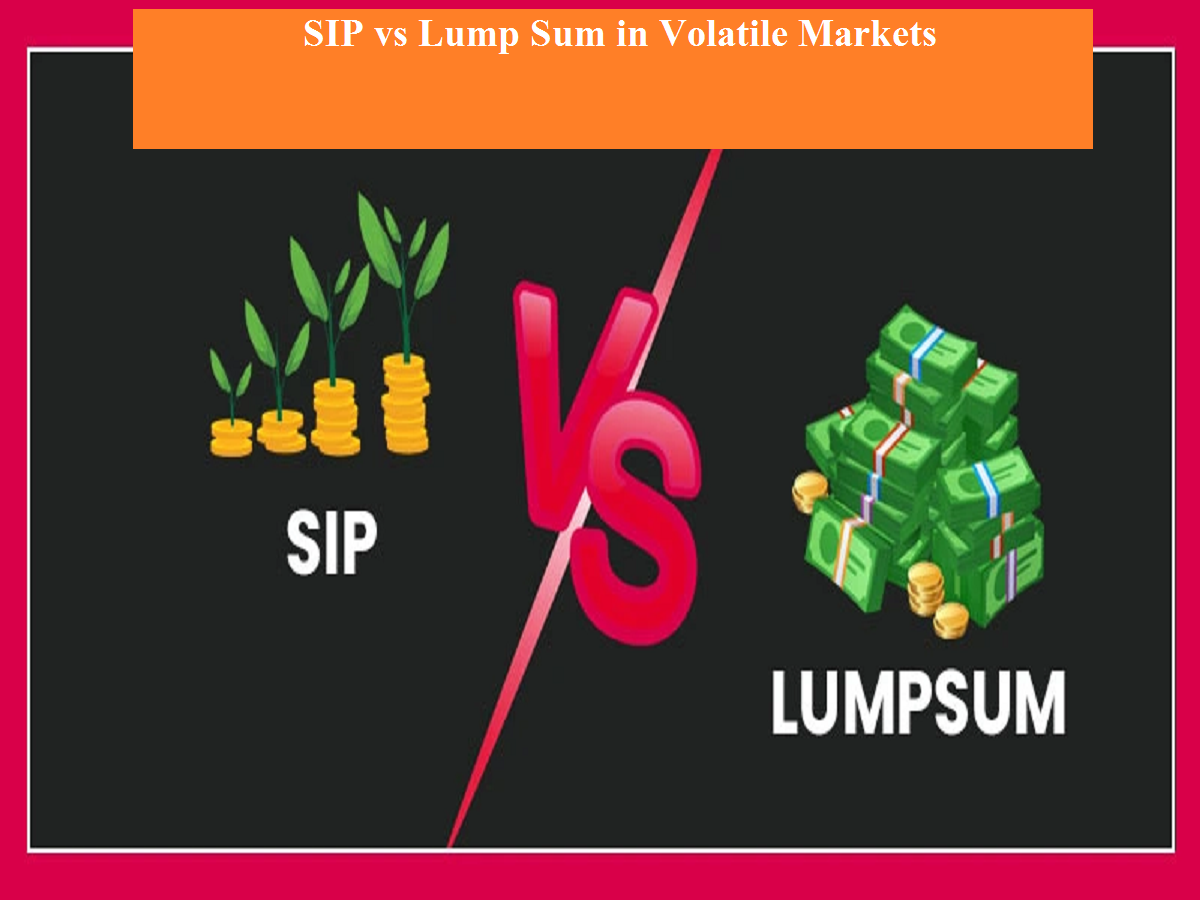
Sharp ups and downs in the stock market can shake even experienced investors. One day your portfolio may look healthy, and the next it may appear uncertain. During such volatile phases, a common dilemma arises — should you invest a large amount at once or spread your investment over time?
Both Systematic Investment Plans (SIPs) and lump sum investments are widely used mutual fund strategies. Each method has unique advantages, particularly when markets are unpredictable. Understanding how these approaches work can help you make a smarter, goal-aligned investment decision.
Understanding SIP: The Power of Consistent Investing
A Systematic Investment Plan (SIP) allows investors to put a fixed amount into a mutual fund at regular intervals, typically monthly. One of the biggest benefits of SIP investing is rupee cost averaging.
How rupee cost averaging helps
When markets decline, your fixed SIP amount purchases more units. When markets rise, the same amount buys fewer units. Over time, this averaging effect can reduce the overall cost of investment and smooth out market volatility.
Example scenario
Suppose you want to invest ₹1.2 lakh in a year. Instead of investing the full amount in one go, you start a monthly SIP of ₹10,000.
- If markets fall during some months, you accumulate more units at lower prices.
- When markets recover later, your average purchase cost may be lower than someone who invested the entire amount at once.
Who should consider SIP?
SIPs are particularly suitable for:
- Salaried individuals with regular monthly income
- New investors who want to avoid timing the market
- Investors seeking disciplined, long-term wealth creation
- Those who prefer lower emotional stress during market swings
Because investments continue automatically, SIPs help maintain consistency even during uncertain market phases.
Lump Sum Investment: Maximising Opportunities During Market Dips
Lump sum investing involves deploying a large amount of money into the market in a single transaction. This strategy can deliver strong returns when investments are made at attractive market levels.
When lump sum works well
If markets have corrected significantly and show signs of recovery, a lump sum investment can capture the full upside.
Illustration:
If you invest ₹1 lakh after a 15–20% market correction and the market rebounds by 20% over the next year, your investment could grow to around ₹1.2 lakh. Since the entire amount was invested at lower levels, the benefit of the recovery is maximised.
Who should consider lump sum?
This strategy may suit:
- Investors with surplus idle funds
- Individuals receiving bonuses or windfall gains
- Experienced investors comfortable with market timing
- Investors with high risk tolerance
However, the risk is higher. If markets fall further after investing, the portfolio may face short-term losses.
What Experts Recommend During High Volatility
Market professionals often suggest that during uncertain or highly volatile conditions, SIPs tend to be the safer and more balanced approach. Regular investing reduces emotional decision-making and cushions the impact of sudden market movements.
That said, lump sum investing can be attractive during deep market corrections — especially when there are credible signs of recovery.
The balanced strategy many investors use
Experienced investors often combine both approaches:
- Invest a portion immediately
- Deploy the remaining amount through SIPs over time
This hybrid method is sometimes structured through a Systematic Transfer Plan (STP), where funds are gradually moved from a low-risk fund to an equity fund. It offers a mix of stability and growth potential.
SIP vs Lump Sum: How to Decide
There is no one-size-fits-all answer. Your ideal strategy depends on:
- Financial goals
- Investment horizon
- Risk tolerance
- Cash flow situation
- Comfort with market volatility
Choose SIP if you:
- Prefer steady, disciplined investing
- Want to reduce timing risk
- Invest from monthly income
- Are a long-term wealth builder
Consider lump sum if you:
- Have surplus funds ready
- Believe markets are attractively valued
- Can tolerate short-term volatility
- Understand market cycles reasonably well
The Bottom Line
In volatile markets, patience and consistency often matter more than perfect timing. SIPs provide stability and discipline, while lump sum investing can deliver powerful gains when timed well.
The smartest approach is the one that aligns with your financial goals and risk comfort. Stay focused on long-term investing principles, avoid emotional decisions, and remain committed to your investment journey.
Disclaimer: This article is for informational and educational purposes only and does not constitute financial advice. Mutual fund and equity investments are subject to market risks. Readers should consult a certified financial advisor and review scheme documents carefully before making any investment decisions.