
LIFESTYLE
SBI Security Alert 2026: Bank Customers Warned Against OTP, UPI PIN and KYC Scams After Reported Data Exposure
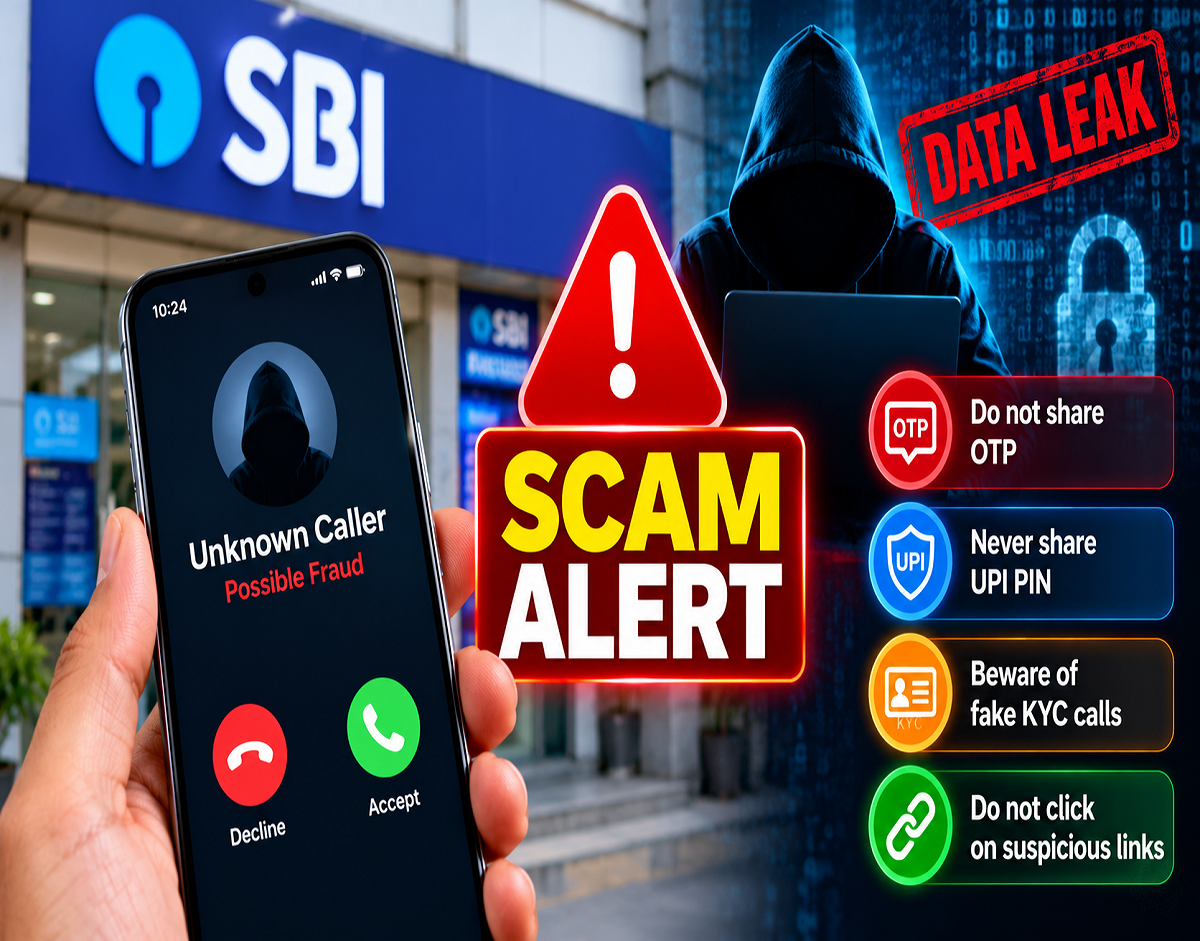
SBI Banking Safety Update 2026: State Bank of India (SBI) customers are being urged to remain cautious about suspicious phone calls, messages and emails that attempt to obtain confidential banking information. The warning comes amid reports of a cybersecurity incident involving customer-related records and growing concerns about digital payment fraud.
According to reports published on October 23, 2026, an examination of approximately 3.75 lakh records reportedly identified 3,897 entries containing personal customer information. The information was said to include names, dates of birth, contact numbers, addresses and email details.
The reports also stated that customer funds remained secure and regular banking operations were unaffected. However, the precise circumstances and scope of the reported exposure should be assessed against official bank disclosures.
Regardless of the incident, SBI customers should never disclose their OTP, ATM PIN, UPI PIN or internet banking passwords to anyone, including callers claiming to represent the bank.
Cybercriminals frequently impersonate banking officials and use urgent messages about account suspension, KYC verification or suspicious transactions to trick customers into revealing sensitive information.
SBI Customer Safety Alert 2026: Key Information
| Particulars | Details |
|---|---|
| Bank | State Bank of India |
| Report date | October 23, 2026 |
| Reported records examined | Approximately 3.75 lakh |
| Records reportedly containing personal data | 3,897 |
| Information reportedly involved | Names, dates of birth, phone numbers, addresses and email IDs |
| Reported banking operations status | Unaffected |
| Main security advice | Never share OTPs, PINs or passwords |
| National cybercrime helpline | 1930 |
| Official SBI website | sbi.co.in |
The incident figures are based on the supplied media report and should not be interpreted as an independently verified final assessment.
What Happened in the Reported SBI Data Incident?
According to the report, SBI examined approximately 375,000 records following concerns about possible exposure of customer-related information.
Of these, around 3,897 records were reportedly found to contain personal details.
The information mentioned in the report included customer names, dates of birth, mobile numbers, residential addresses and email addresses.
Such information can be valuable to cybercriminals even when it does not directly provide access to a bank account.
For example, fraudsters may use a customer's name and contact details to make a phishing message appear more convincing.
They may also attempt to impersonate a bank representative by referring to information that seems familiar to the customer.
However, the presence of personal details in a reported dataset does not automatically establish that bank account passwords, PINs or funds were compromised.
The report stated that customer money remained secure and banking services continued normally.
Customers should follow official SBI communications for any further clarification about the incident.
Why Should SBI Customers Remain Alert?
Cybercriminals often use social engineering rather than directly attacking banking systems.
Social engineering involves manipulating people into revealing confidential information or performing actions that benefit the fraudster.
A scammer may call a customer and claim that their account has been temporarily blocked.
Another common tactic is sending a message that says the customer's KYC documents have expired and must be updated immediately.
Some messages promise cashback, government benefits or rewards in exchange for completing a verification process.
These communications may include links to websites designed to resemble legitimate banking portals.
Once a customer enters login credentials, card details or OTPs, the information may be misused.
This is why customers should verify unexpected banking communications independently rather than trusting the sender's claims.
1. Never Share Your OTP With Anyone
A One-Time Password, commonly called an OTP, is used to verify certain banking transactions, login attempts and account-related activities.
Fraudsters may attempt to obtain OTPs by pretending to be customer service executives or fraud-prevention officers.
They may claim that sharing the code is necessary to cancel a transaction or prevent an account from being blocked.
Customers should not follow such instructions.
An OTP should be entered only in the legitimate banking or payment process that the customer personally initiated.
If an unexpected OTP arrives without any action from the customer, it may indicate that someone is attempting to use their details.
In such cases, the customer should avoid sharing the code and review their account security.
2. Keep Your ATM PIN and UPI PIN Confidential
ATM PINs and UPI PINs are security credentials used to authorise specific financial activities.
An ATM PIN helps protect card-based transactions, while a UPI PIN authorises payments through supported UPI applications.
Customers should never reveal these numbers over the phone, through WhatsApp or in response to an email.
A particularly important precaution concerns UPI payment requests.
You do not need to enter your UPI PIN simply to receive money into your bank account.
If someone asks you to enter a UPI PIN to collect a prize, receive a refund or accept an incoming payment, treat the request as suspicious.
Customers should also check the recipient's name and payment amount before authorising any UPI transaction.
3. Beware of Fake KYC Update Messages
Fraudsters frequently send messages claiming that a bank account will be suspended unless KYC information is updated immediately.
These messages may include shortened links or requests to install unfamiliar applications.
Customers should avoid clicking on such links without verifying their authenticity.
If KYC verification is genuinely required, the safest approach is to use SBI's official website, authorised banking application or branch services.
Do not upload Aadhaar, PAN or banking documents to websites reached through unexpected messages.
Customers should also avoid sharing identity documents with unknown individuals who claim to be handling KYC updates on behalf of the bank.
4. Verify Banking Messages Received Through WhatsApp, SMS or Email
Fraudulent messages may use SBI's name, logo or branding to appear legitimate.
Some may even resemble genuine banking alerts.
However, the appearance of a familiar logo does not establish that the communication is authentic.
Before responding to a message, customers should examine whether it contains unusual links, requests for confidential information or threats of immediate account closure.
The safest option is to independently open SBI's official website or banking application.
Do not rely on a telephone number or website address supplied in a suspicious message.
5. Regularly Monitor Bank Account Transactions
Customers should review their account activity regularly through official banking channels.
Transaction alerts, account statements and mobile banking applications can help identify unexpected withdrawals or transfers.
If an unfamiliar transaction appears, it should be reported immediately.
Delaying a complaint may make it more difficult to investigate a fraudulent transfer or prevent further losses.
Customers should also ensure that their registered mobile number and email address are current so that important banking notifications reach them.
What Should You Do if Money Is Debited Fraudulently?
Anyone who notices an unauthorised transaction should act without delay.
Contact SBI through official channels
Report the suspicious transaction and request appropriate protective action on the affected account or payment instrument.
Call the cybercrime helpline at 1930
Provide accurate details about the suspected fraud and follow the instructions for registering the complaint.
File an online cybercrime complaint
Visit cybercrime.gov.in and submit the required information.
Secure your banking credentials
Change compromised passwords, review account access and follow the bank's guidance about blocking affected cards or services.
Customers should preserve relevant transaction references, screenshots and communication records for the investigation.
Can Customers Recover Money Lost to Banking Fraud?
The possibility of recovering money depends on several factors, including the nature of the transaction, how quickly the fraud is reported and the applicable regulatory rules.
The Reserve Bank of India has established a framework governing customer liability in certain unauthorised electronic banking transactions.
Depending on the circumstances, customers may qualify for zero or limited liability.
However, the applicable protection depends on factors such as whether credentials were shared, the cause of the transaction and the time taken to report the incident.
Customers should not assume that every fraudulent payment will automatically be refunded.
Prompt reporting remains essential.
How to Identify a Potential Banking Scam
| Suspicious Message or Request | Recommended Response |
|---|---|
| Your account will be blocked unless you share an OTP | Do not share the OTP; verify with SBI |
| Enter your UPI PIN to receive a refund | Do not enter the PIN |
| Download this app to complete KYC | Use only verified official channels |
| Share your ATM PIN to reverse a transaction | Refuse and report the caller |
| Click this link to claim a banking reward | Avoid the link and verify independently |
| Transfer money to a safe account immediately | Do not transfer funds based on an unsolicited instruction |
Final Takeaway
The latest reports concerning SBI customer information highlight the importance of maintaining strong digital banking habits.
Even when a reported incident does not involve direct access to customer funds, personal information can potentially be misused in phishing attempts and impersonation scams.
SBI customers should never disclose OTPs, ATM PINs, UPI PINs or banking passwords, regardless of who requests them.
Customers should verify unexpected communications through official SBI channels, monitor account transactions and report suspected financial fraud promptly.
For official banking information, visit State Bank of India's website.
Disclaimer: The reported cybersecurity incident figures are based on the supplied October 23, 2026 media report and have not been independently verified here. Customers should consult SBI's official statements for confirmed incident details and current security instructions.