
Business
PM Surya Ghar Yojana 2026: Delhi Households Can Get Up to ₹1.56 Lakh Solar Subsidy, Zero Upfront Cost Offer
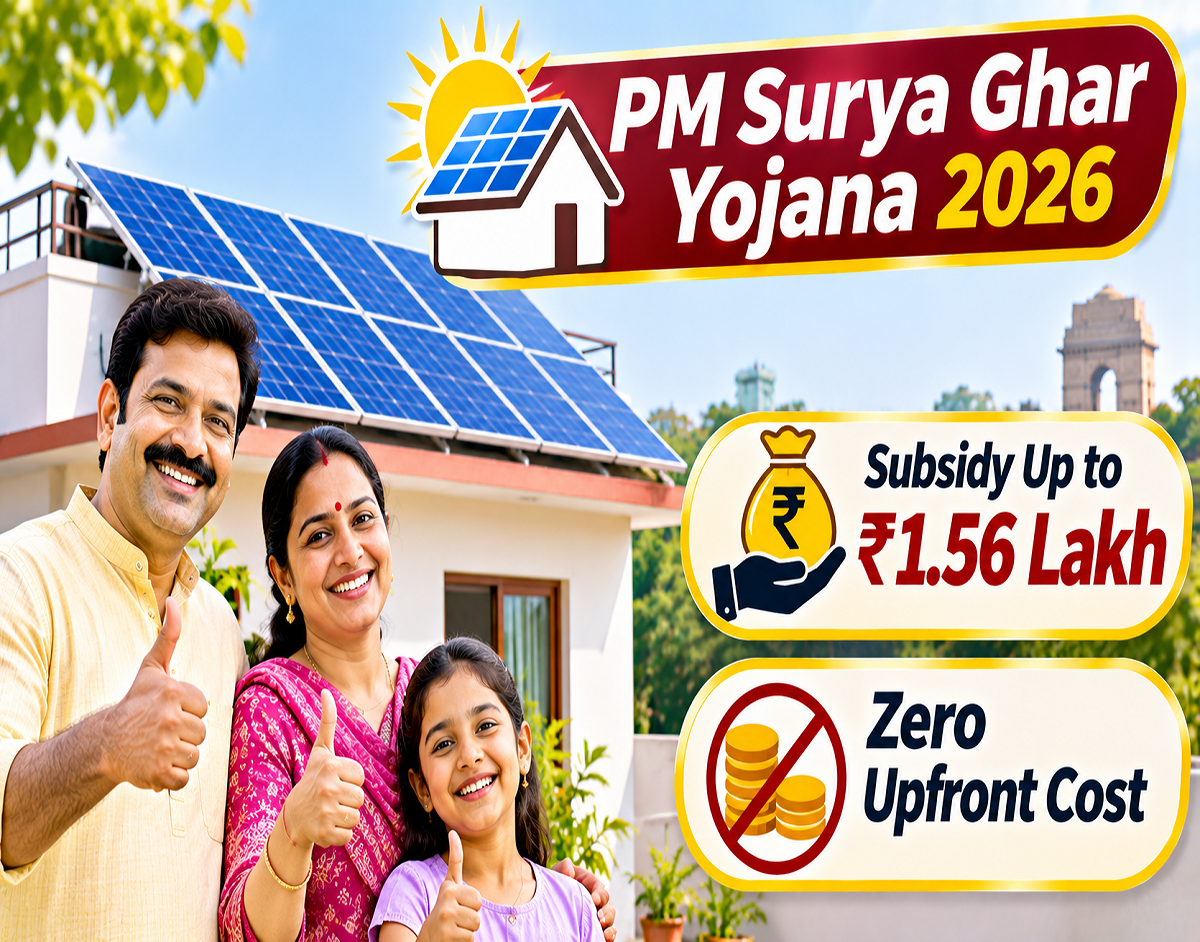
PM Surya Ghar Solar Subsidy 2026: Installing rooftop solar panels could become more affordable for eligible households in Delhi, with combined government subsidies of up to ₹1.56 lakh being promoted under the PM Surya Ghar: Muft Bijli Yojana and the Delhi Government's Solar Policy.
According to a public awareness message shared by electricity distribution company BSES, eligible households installing rooftop solar systems with capacities of up to 3 kilowatts (kW) may also be able to benefit from a zero-upfront-cost arrangement.
The initiative is intended to encourage residential consumers to generate clean electricity, reduce their dependence on grid power and potentially lower their monthly electricity expenses.
BSES has highlighted three major benefits: combined subsidies of up to ₹1.56 lakh, zero upfront installation costs for eligible households and the possibility of electricity bills falling to zero, depending on electricity generation, consumption and applicable charges.
However, consumers should understand the eligibility requirements, installation arrangements and financial conditions before applying.
PM Surya Ghar Yojana: What Is the Rooftop Solar Scheme?
PM Surya Ghar: Muft Bijli Yojana is a central government initiative designed to encourage residential households to install rooftop solar power systems.
The programme provides financial assistance to eligible consumers for installing approved rooftop solar systems.
Solar panels generate electricity from sunlight, allowing households to use a portion of the power produced on their rooftops.
Depending on the system configuration and applicable electricity regulations, surplus generation may be exported to the grid through an approved metering arrangement.
The scheme aims to make residential solar installations more accessible while supporting the wider adoption of renewable energy.
In Delhi, additional benefits under the state government's solar policy may be available alongside central assistance, subject to applicable conditions.
Delhi Solar Subsidy 2026: Up to ₹1.56 Lakh in Combined Benefits
The BSES announcement states that eligible consumers may receive combined subsidies of up to ₹1.56 lakh.
This figure refers to the maximum benefit highlighted in the promotional message and should not be interpreted as a fixed payment available to every household.
The actual assistance depends on the installed system capacity, applicable central and state subsidy rules and fulfilment of eligibility requirements.
Under the standard central PM Surya Ghar subsidy structure, financial assistance for eligible residential systems is generally calculated as follows:
| Rooftop Solar Capacity | Standard Central Subsidy |
|---|---|
| 1 kW | ₹30,000 |
| 2 kW | ₹60,000 |
| 3 kW or above | ₹78,000 maximum |
The Delhi-specific additional assistance and the precise calculation leading to the advertised ₹1.56 lakh combined maximum should be verified through the current BSES offer and Delhi Government Solar Policy terms.
What Does Zero Upfront Cost Mean?
One of the most attractive features mentioned in the announcement is the possibility of installing rooftop solar systems without an upfront payment.
According to BSES, the zero-upfront-cost arrangement is available to eligible households installing systems of up to 3 kW.
However, zero upfront cost does not necessarily mean that the entire solar installation is free.
Such arrangements may involve financing, third-party ownership, service agreements or other approved payment structures.
The supplied announcement does not specify which financing or installation model applies.
Consumers should therefore confirm whether they will own the solar system, whether any recurring payments are required and what contractual obligations apply.
They should also check the maintenance responsibilities, warranty conditions and treatment of government subsidies.
Can Electricity Bills Really Become Zero?
BSES states that rooftop solar installations could reduce household electricity bills to zero in certain circumstances.
However, this outcome is not guaranteed.
The amount payable depends on several factors, including electricity consumption, solar generation, seasonal weather conditions, the metering arrangement and applicable fixed or other charges.
For example, a household that produces enough eligible solar electricity to offset its billed consumption may experience a substantial reduction in energy charges.
However, fixed charges, taxes, adjustments or other applicable amounts may still appear on the electricity bill.
Consumers should review their existing electricity usage and the estimated output of the proposed solar system before making a decision.
How Much Electricity Can a 3 kW Rooftop Solar System Generate?
A 3 kW rooftop solar system can generate electricity during daylight hours when sufficient sunlight is available.
Actual generation depends on the location, panel orientation, shading, weather conditions, system efficiency and maintenance.
For illustration, a 3 kW system producing an average of four units per installed kW per day would generate approximately 12 units daily.
Over 30 days, this would amount to around 360 units.
This is only an illustrative calculation, not a guaranteed output figure for Delhi households.
Illustrative monthly solar generation calculator
Solar system capacity
3 kW
Daily generation per kW
4.0 units
Estimated daily output
12.0 units
Estimated 30-day output
360 units
Illustrative electricity generation only. Actual production and bill savings will vary.
Who Can Apply for PM Surya Ghar Solar Subsidy in Delhi?
The central scheme generally targets eligible residential electricity consumers seeking rooftop solar installations.
Applicants typically need a suitable rooftop or other approved installation space and an eligible electricity connection.
The proposed system must comply with the applicable technical and scheme requirements.
Delhi residents should also confirm whether their electricity distribution area is covered by the particular BSES arrangement.
Eligibility for the advertised zero-upfront-cost offer may be narrower than eligibility for the general central subsidy.
Consumers living in rented accommodation, apartment buildings or shared residential properties may need additional permissions or arrangements.
How to Apply for PM Surya Ghar Yojana Online
Interested consumers can begin by visiting the official national rooftop solar portal.
PM Surya Ghar Official Portal
pmsuryaghar.gov.in
Open Portal
The general application process involves registering with the required electricity consumer details, submitting the rooftop solar application and following the applicable technical approval procedure.
Applicants may then select an eligible vendor and proceed with installation under the relevant scheme conditions.
After installation, inspection, metering and commissioning requirements must be completed as applicable.
Subsidy processing follows the prescribed verification and approval procedures.
Consumers interested specifically in the BSES zero-upfront-cost offer should contact BSES through its verified official channels to understand the separate terms.
Documents That May Be Required
Applicants may need to provide information such as their electricity consumer number, identity details, bank account particulars and installation address.
Additional documents may be required depending on the property type, ownership arrangement and applicable scheme provisions.
The precise documentation requirements should be checked through the official application portal or authorised electricity distribution company.
Applicants should ensure that their electricity connection details are accurate.
They should also avoid sharing OTPs, banking passwords or confidential credentials with unauthorised agents.
Benefits of Installing Rooftop Solar Panels
Rooftop solar systems can provide several advantages to eligible households.
The most direct benefit is the ability to generate electricity from sunlight and reduce the amount of power purchased from the grid.
Solar installations can also help households manage a portion of their long-term electricity expenses.
From an environmental perspective, solar generation can reduce reliance on electricity produced from fossil fuels.
However, the financial return depends on installation costs, electricity consumption, system performance, maintenance and the applicable subsidy arrangements.
Consumers should obtain a detailed financial estimate before entering into an installation agreement.
Important Questions to Ask Before Choosing the Zero-Cost Offer
Consumers should carefully examine the terms of any zero-upfront-cost solar arrangement.
Important questions include whether the system will be owned by the household, whether monthly payments apply and who receives the government subsidy.
Applicants should also ask who will be responsible for maintenance and repairs.
The agreement should clearly explain the contract duration, warranties, insurance responsibilities and any conditions for transferring or terminating the arrangement.
Consumers should not assume that the phrase zero upfront cost means zero total financial obligation.
PM Surya Ghar and Delhi Solar Policy: Key Benefits at a Glance
| Feature | Details |
|---|---|
| Central scheme | PM Surya Ghar: Muft Bijli Yojana |
| Additional policy | Delhi Government Solar Policy |
| Combined subsidy advertised | Up to ₹1.56 lakh |
| Zero upfront cost | For eligible households installing systems up to 3 kW |
| Electricity bill savings | Could fall to zero, depending on applicable conditions |
| Solar power source | Rooftop solar panels |
| Application channel | Official PM Surya Ghar portal and relevant BSES channels |
| Central subsidy for 3 kW | Up to ₹78,000 under the standard structure |
| Additional Delhi benefit | Subject to current policy and eligibility |
| Main objective | Affordable residential solar adoption and clean electricity generation |
Final Takeaway: Delhi Rooftop Solar Subsidy 2026
The BSES announcement highlights a potentially attractive opportunity for eligible Delhi households considering rooftop solar installations.
Combined subsidies of up to ₹1.56 lakh, zero-upfront-cost arrangements for qualifying systems of up to 3 kW and the possibility of significantly lower electricity bills are the major advertised benefits.
However, the actual subsidy, installation cost and financial savings will depend on the household's eligibility, system capacity, electricity usage and applicable contractual conditions.
Residents should verify the latest scheme terms through the official PM Surya Ghar portal and BSES before applying or signing an installation agreement.
Source Credit: BSES public awareness campaign promoting the PM Surya Ghar: Muft Bijli Yojana and Delhi Government Solar Policy, including advertised combined subsidies of up to ₹1.56 lakh, zero-upfront-cost options and potential electricity bill savings. Additional information about central subsidy rates, rooftop solar generation and application precautions is provided for public awareness.