Parenting
It is important to let children get ‘bored’ too! Find out why this parenting mindset is gaining popularity..
Dealing with Kids' Boredom: If a child sits quietly for a while without a mobile phone, TV remote, or toy in hand, many parents immediately ask, "What happened? Are you bored?" Attitudes toward children's free time are gradually shifting. In the past, sitting idle was a normal part of daily life at home. Children would sit on the terrace, play in the street, or simply lose themselves in their own worlds without any specific agenda.
Nowadays, children's days are packed with school, homework, classes, screen time, and various activities. Consequently, some parents are consciously choosing not to schedule an activity for every single moment. They are allowing their children the opportunity to experience boredom and spend time on their own.
Why it isn't necessary to keep children busy every moment
There has long been a belief in parenting circles that keeping a child busy is a good habit—moving from studies to a class, then sports, screen time, or a creative activity. This gives parents the impression that the child is doing something productive and not wasting time.
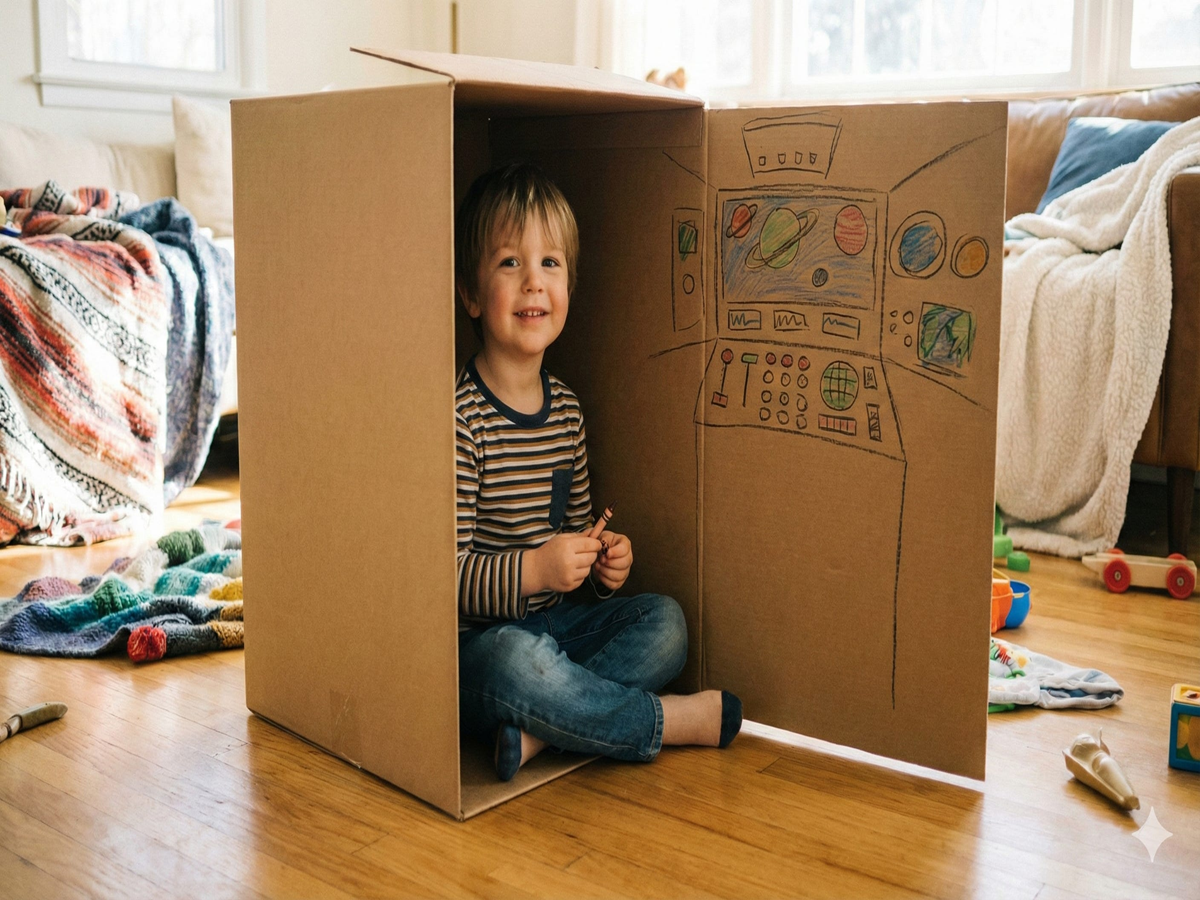
However, it is not essential to fill every idle moment. When a child has no assigned task, they get the chance to observe their surroundings, think, and initiate a game of their own choosing. They might build a fort out of cushions, draw something on paper, or invent their own story.
Boredom doesn't necessarily have to transform into a major creative activity every time. Sometimes, a child might simply gaze out the window or sit quietly for a while. This, too, is a normal part of childhood.
No need to offer an immediate solution upon hearing "I'm bored"
Let the child find their own way
When a child says, "I'm bored," parents often rush to offer alternatives: "Watch cartoons," "Take the phone," or "Play with this toy." This can lead the child to develop a habit of relying on external sources for entertainment. At such times, parents can ask the child what they would like to do; if the child cannot think of anything, common items—such as art supplies, paper, books, blocks, or old boxes—can be made available. The child can then be encouraged to take the initiative.
This does not mean leaving the child entirely alone; supervision remains necessary depending on the child's age, safety, and needs. The goal is simply to ensure that parents are not the ones deciding on the entertainment every single time.
**Free time offers space to discover personal preferences**
Children's interests are not always predetermined. Often, they do not even know what they like themselves. Free time provides an opportunity for this kind of exploration.
For instance, a child might start dismantling toys while playing with them to see how they work, or another might draw continuously on paper. One child might enjoy storytelling, while another might like watering plants. Such small interests can emerge when the day is not strictly bound by a schedule.
Here, the parents' role is not just to issue instructions constantly, but to observe and understand the child. What a child does during free time can reveal small insights into their interests and temperament.
**The importance of free time amidst screen usage**
Screens have become an easy solution for children's free time today. Turning on a video, game, or cartoon seems like the simplest option when a child is bored; however, if the screen becomes the default response to boredom every time, the child may find it difficult to spend time without digital entertainment.
Therefore, parents can set aside time at home for the child to play as they please or simply sit quietly, without being provided with new entertainment every few minutes. Instead of suggesting activities constantly, parents can allow the child some freedom during these periods.
**Parents, too, need to adjust their expectations**
A child getting bored is not always a sign of a problem. Often, this simply indicates that the child has no specific task at the moment. Leaving such time somewhat unstructured, rather than filling it immediately, can represent a different approach to parenting.
PC Social Media