
Business
Home Loan: Fixed, Floating, or Hybrid? Which home loan is best for you, and which one offers lower EMIs?
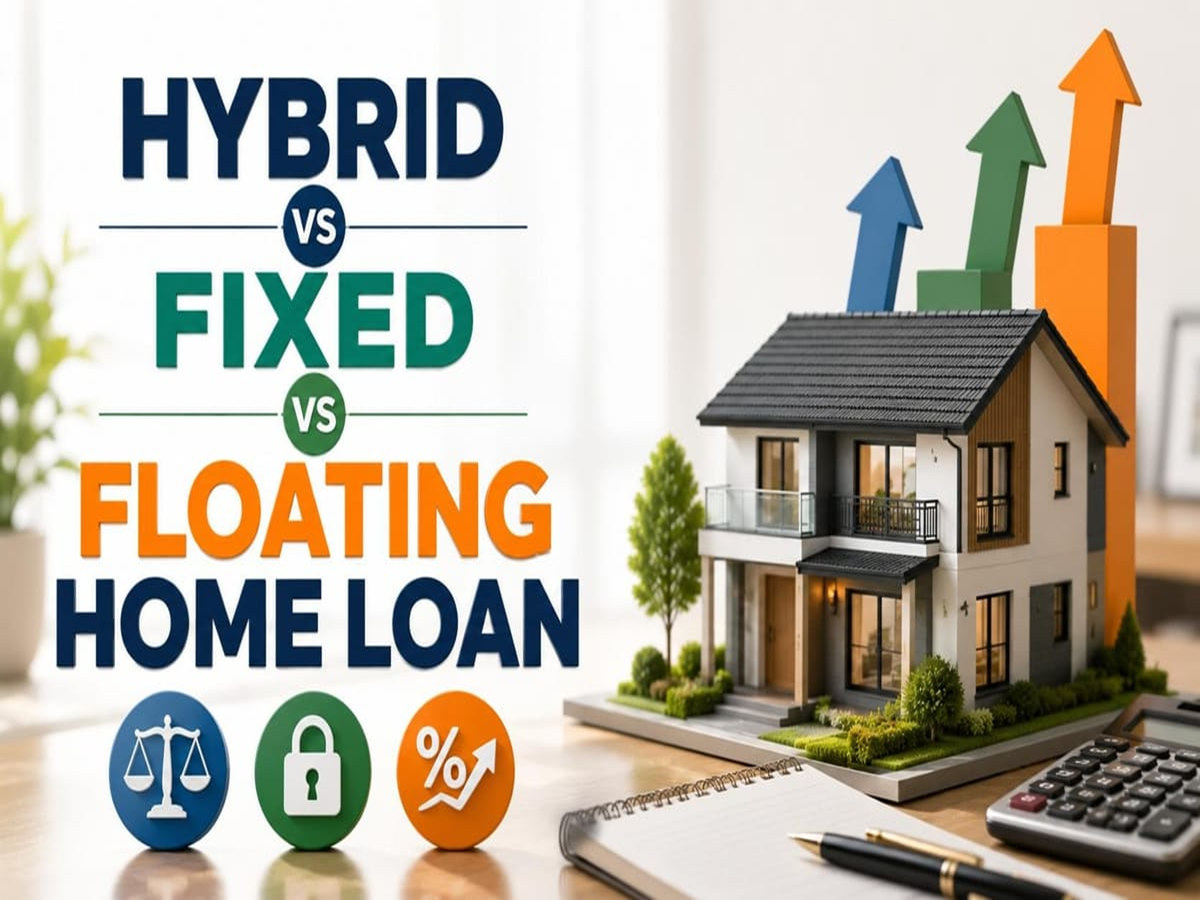
Buying one's own home is a dream for everyone, but choosing the right home loan to fulfill this dream is a major challenge. When you approach a bank for a home loan, you are typically presented with three main options regarding interest rates: fixed, floating, or hybrid home loans.
Failing to choose the right option could result in paying lakhs of rupees in additional interest in the future. Let us understand the differences between these three options in detail and determine which one is best suited to your financial situation.
1. Fixed Home Loan (Fixed interest rate home loan)
As the name suggests, the interest rate on this loan remains constant throughout the entire tenure. Regardless of whether market interest rates rise or fall, your EMI remains unaffected.
A key advantage is that you know from day one exactly how much your monthly EMI will be, making household budgeting much easier. You are also completely shielded from the impact of any sharp rise in interest rates in the future.
However, banks rarely offer purely fixed-rate home loans these days, as they prefer floating rates to mitigate the risks associated with market interest rate fluctuations.
2. Floating Rate Home Loan (Floating Interest Rate Home Loan)
The majority of homebuyers in India opt for floating rates. In this case, the interest rate is not fixed; instead, it fluctuates based on market conditions and the RBI's repo rate.
One advantage is that it is significantly cheaper than a fixed-rate loan at the outset. A major benefit is that, in accordance with RBI regulations, there are no penalties for prepayment or foreclosure on floating-rate home loans.
However, this option does come with an element of uncertainty. If inflation rises and the RBI continuously hikes the repo rate, the burden of your EMI or the loan tenure—or both—could increase.
3. Hybrid Home Loan
This loan is a combination of fixed and floating interest rate structures. The interest rate remains fixed for the initial years of the loan (usually 3 to 5 years). Once this fixed period ends, the loan automatically switches to a floating interest rate.
In terms of benefits, this is a good option for those who incur significant expenses when buying a new home and wish to avoid any risks or fluctuations in their EMI during the initial years. However, once the fixed period ends and the loan switches to a floating rate, your EMI could see a sudden, sharp increase.
Which option is right for you?
Floating Rate Home Loan: Choose this if you want a lower initial interest rate and plan to pay off the loan early by making lump-sum payments using bonuses or savings. Experts consider this the best option for the long term.
Fixed Rate Home Loan: Choose this if you believe current interest rates are at their lowest and are likely to rise in the future, and you want to avoid any surprises regarding your EMI.
Hybrid Rate Home Loan: Choose this if you want a secure, fixed EMI for the initial 3–5 years and are willing to accept the risk of market fluctuations (floating rates) thereafter.
PC Social Media