
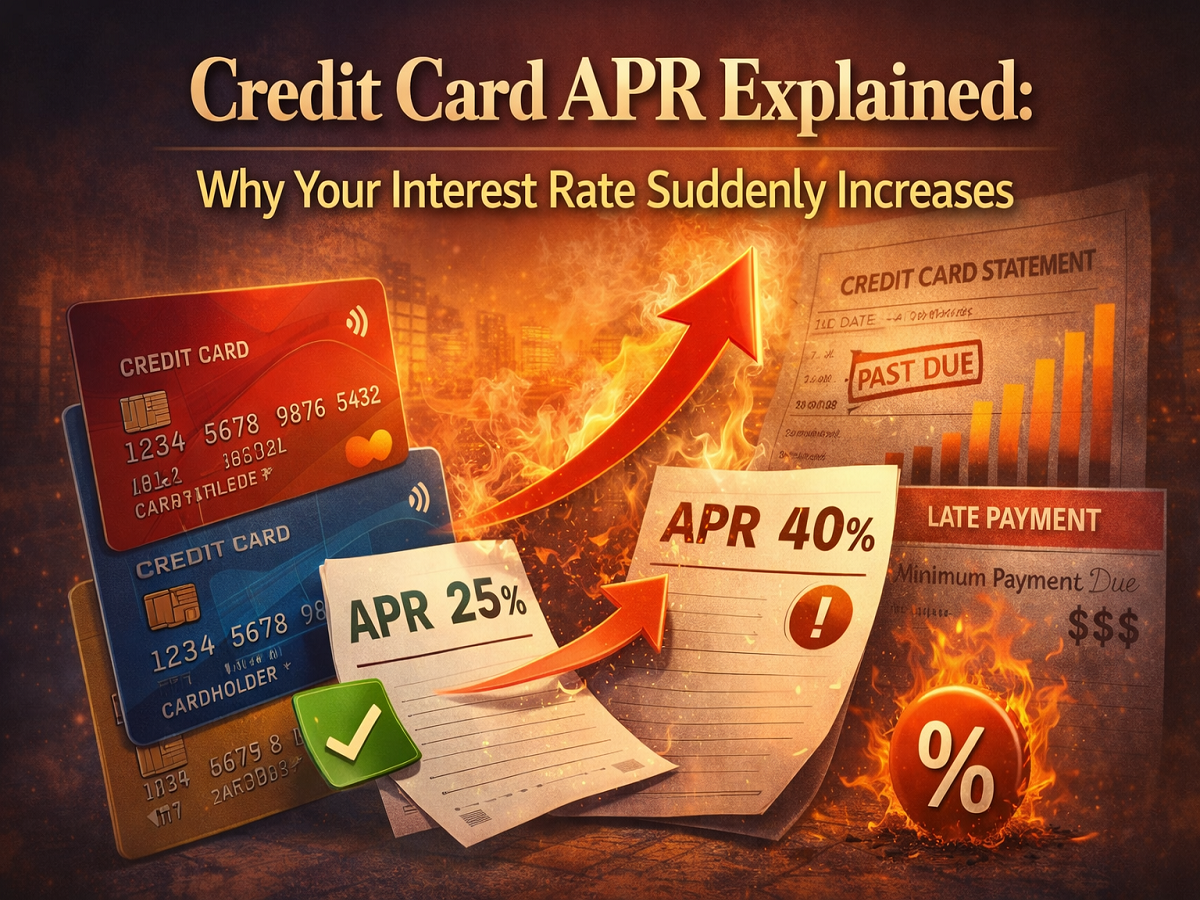
Credit cards offer convenience, reward points, cashback deals, and short-term financial flexibility. However, many users are caught off guard when their credit card interest rate suddenly rises or when outstanding dues grow faster than expected. The key factor behind this increase is the Annual Percentage Rate, commonly known as APR.
Understanding how APR works and why it changes can help you avoid unnecessary interest charges and maintain better financial control.
What Does APR Mean in a Credit Card?
APR stands for Annual Percentage Rate. It represents the yearly interest rate charged by banks on any unpaid balance on your credit card. If you do not pay your total outstanding bill by the due date, the remaining balance begins to attract interest at the applicable APR.
In India, most credit cards charge an annual interest rate ranging between 30% and 45%, depending on the bank and the customer’s credit profile. This may seem manageable at first glance, but the impact becomes significant when balances are carried forward month after month.
For example, if you only pay a part of your total bill and leave the rest unpaid, interest starts accumulating on that remaining amount. Over time, this can substantially increase your total dues.
How the Compounding Effect Increases Your Dues
One of the most important aspects of credit card interest is compounding. In most cases, credit card interest is compounded monthly. This means that interest is added to your outstanding balance every month, and the next month’s interest is calculated on the new, higher amount.
Simply put, you start paying interest on both the original balance and the previously added interest. Even a small unpaid amount can grow into a large liability if it remains unpaid for several billing cycles.
This compounding effect is one of the main reasons why credit card dues can escalate quickly.
Why Does Credit Card Interest Suddenly Increase?
There are several reasons why your credit card APR may rise:
1. Changes in Monetary Policy
Interest rates in the financial system are influenced by policy decisions made by the Reserve Bank of India. When policy rates change, banks may revise their lending rates, including credit card APRs.
2. Expiry of Promotional Offers
Many credit cards offer introductory low-interest rates, no-cost EMI options, or limited-period schemes. Once these promotional benefits end, the standard APR automatically applies, which can feel like a sudden increase.
3. Carrying Forward Outstanding Balances
If you regularly carry unpaid balances, you will continue to incur interest. Over time, this adds up and increases the total payable amount.
4. Late Payments or Defaults
Missing due dates can attract penalty interest rates in addition to late payment fees. Repeated delays may also lead to higher applicable interest rates based on your credit behavior.
Smart Ways to Avoid High APR Charges
Credit cards are not harmful by default. The key lies in using them responsibly. Here are some practical steps to protect yourself from high interest costs:
Pay the Full Outstanding Amount
Always aim to clear your entire credit card bill before the due date. This helps you avoid interest charges altogether.
Avoid Paying Only the Minimum Due
While paying the minimum due prevents late fees, it does not stop interest from being charged on the remaining balance. This can significantly increase your overall debt over time.
Never Miss the Due Date
Late payments may result in penalty charges and higher interest rates. Setting reminders or activating auto-debit can help ensure timely payments.
Clear Pending Dues Quickly
If you have already carried forward a balance, try to repay it in full as soon as possible. The longer it remains unpaid, the more interest it attracts.
Final Thoughts
Credit cards are powerful financial tools when used wisely. They offer flexibility, rewards, and emergency support. However, a lack of understanding about APR and compounding can lead to rising debt.
By understanding how Annual Percentage Rate works and by consistently paying your dues on time, you can avoid unnecessary interest charges and maintain financial stability. Responsible credit usage not only saves money but also strengthens your overall financial health.
Disclaimer: This article is for informational purposes only. Interest rates and credit card policies may vary depending on the bank and regulatory guidelines. Readers are advised to check with their respective banks for specific terms and conditions before making financial decisions.