
Business
Buying a House? Check These 7 Property Documents Before Paying Any Advance to Avoid Costly Mistakes
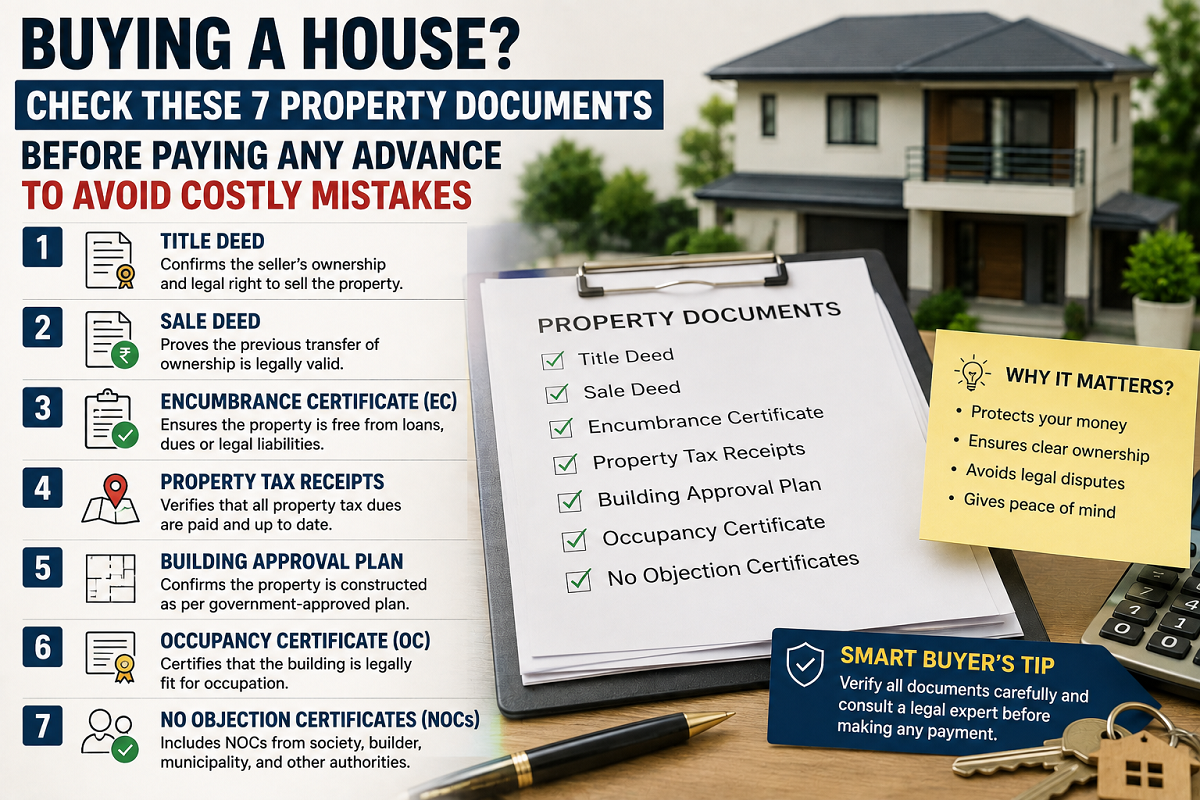
Property Buying Guide: Purchasing a home is one of the biggest financial decisions most people make. While buyers often focus on the location, price and amenities, overlooking legal paperwork can lead to expensive disputes later. Before paying a booking amount or signing any agreement, make sure you carefully verify the property's legal documents. Here's a checklist of seven essential documents every homebuyer should examine before completing the deal.
Why Property Document Verification Matters
A beautiful apartment or an attractive price does not always guarantee a safe investment.
Many buyers rely on verbal assurances from builders, brokers or property owners without verifying the legal status of the property. This can create serious problems, including ownership disputes, pending loans, unauthorized construction or delays in possession.
Conducting proper due diligence before making any payment can help protect your investment and reduce legal risks.
1. Title Deed: Confirm Legal Ownership
The title deed is one of the most important documents in any property transaction.
It establishes whether the seller has the legal right to transfer ownership of the property.
Instead of checking only the latest sale deed, buyers should examine the complete chain of ownership to ensure there are no gaps, disputes or conflicting claims.
It is also advisable to have the title documents reviewed by an experienced property lawyer who can identify any legal issues before the transaction proceeds.
2. Encumbrance Certificate
An Encumbrance Certificate (EC) helps determine whether the property carries any financial or legal liabilities.
The document can indicate whether the property has:
- A registered home loan
- Mortgage obligations
- Court attachment
- Legal claims
- Registered financial encumbrances
Do not rely solely on the seller's assurance that the property is free from debt.
Obtaining an Encumbrance Certificate from the relevant registration authority provides greater confidence regarding the property's legal status.
3. Verify RERA Registration
If you are purchasing a new or under-construction property, checking its registration under the Real Estate (Regulation and Development) Act (RERA) is essential.
The respective state RERA portal generally provides information such as:
- Project registration number
- Developer details
- Approved layout plans
- Construction progress
- Project completion timeline
- Regulatory approvals
Under RERA provisions, developers are generally required to execute a registered Agreement for Sale before collecting more than the permitted advance amount from buyers.
Reviewing project details on the RERA portal helps ensure greater transparency.
4. Approved Building Plan and Permissions
Do not depend only on brochures, advertisements or model apartments.
Verify that the building has received approval from the competent local authority.
Buyers should ensure that:
- Construction matches the approved layout.
- The building complies with sanctioned plans.
- Necessary development permissions have been obtained.
Unauthorized construction may later create difficulties related to regularization, municipal action, financing or resale.
5. Occupancy Certificate (OC) and Completion Certificate (CC)
For ready-to-move properties, Occupancy Certificate (OC) and Completion Certificate (CC) are extremely important.
These certificates indicate that the building has been completed according to approved plans and complies with applicable regulations.
Purchasing a property without these documents may create problems involving:
- Utility connections
- Home loan approval
- Property resale
- Municipal compliance
Always request copies of these certificates before finalizing the purchase.
6. Read the Agreement for Sale Carefully
Many buyers sign the Agreement for Sale without reading every clause carefully.
However, this agreement defines the rights and responsibilities of both parties.
Before signing, verify important details including:
- Carpet area
- Sale consideration
- Payment schedule
- Possession timeline
- Maintenance charges
- Parking allocation
- Delay compensation
- Default clauses
- Cancellation terms
If any clause appears unclear, seek clarification before executing the agreement.
7. Verify the Seller's Identity and Authority
Confirm that the individual selling the property is legally authorized to do so.
Check:
- Government-issued identity documents
- Ownership records
- PAN details, where applicable
- Authorization documents
If the property is being sold through a Power of Attorney (PoA) holder, verify the authenticity and legal validity of the Power of Attorney.
Similarly, if the property has been inherited, examine succession documents and ensure all legal heirs have provided the necessary consent wherever required.
Additional Checks Before Buying a Property
Apart from these seven documents, buyers should also consider verifying:
- Property tax payment receipts
- Water and electricity bill status
- Society maintenance dues
- Pending litigation, if any
- Home loan clearance from the lender
- Mutation records where applicable
These checks can help identify hidden liabilities before ownership changes hands.
Consult a Property Lawyer Before Making Payment
Even if all documents appear genuine, obtaining an independent legal opinion remains one of the safest steps.
An experienced real estate lawyer can:
- Verify ownership records
- Examine legal risks
- Review agreements
- Identify missing approvals
- Detect title defects
- Advise on compliance issues
The cost of legal verification is often insignificant compared to the financial losses that may arise from purchasing a disputed or unauthorized property.
Final Takeaway
Buying a house involves much more than selecting the right location or negotiating the best price. Careful verification of legal documents can protect buyers from ownership disputes, hidden loans, unauthorized construction and future litigation.
Before paying any booking amount or signing sale documents, ensure you have reviewed the Title Deed, Encumbrance Certificate, RERA registration, approved building plan, Occupancy Certificate, Completion Certificate, Agreement for Sale and the seller's legal authority. Taking these precautions can make your property purchase significantly safer and more secure.
Disclaimer: This article is intended for general informational purposes only and should not be treated as legal advice. Property laws, registration procedures and documentation requirements may vary across states. Buyers should consult a qualified property lawyer or legal expert before completing any real estate transaction.