LIFESTYLE
What are the correct rules for carrying a power bank on a flight? A single oversight could cause chaos..
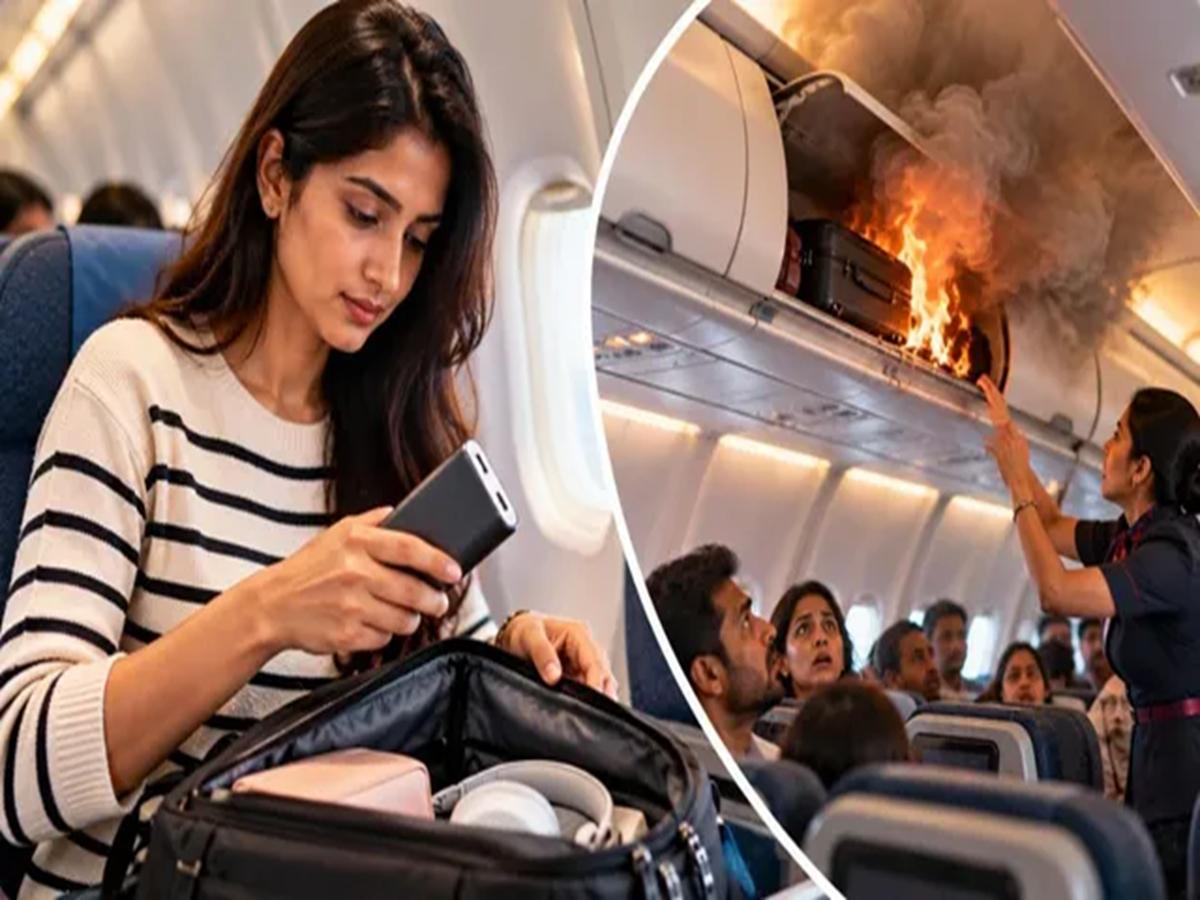
Imagine traveling comfortably on a flight when, suddenly, smoke starts pouring out of the overhead luggage bin right above you—panic is only natural in such a situation. In fact, passengers aboard an IndiGo flight experienced exactly this on October 11.
The cause of this entire commotion wasn't a major technical glitch, but a simple power bank that a passenger had stowed in the overhead bin; it suddenly caught fire. Due to this minor oversight, the flight had to be diverted to Hyderabad mid-journey.
Nowadays, we can hardly imagine traveling without a power bank. However, even a moment of carelessness regarding how you carry or use one on a flight can land you and your fellow passengers in serious trouble. Keeping this in mind, aviation regulators (DGCA) and airlines have established strict rules. Let’s look at the precautions you should take when traveling with a power bank.
A mistake that could prove fatal on a flight
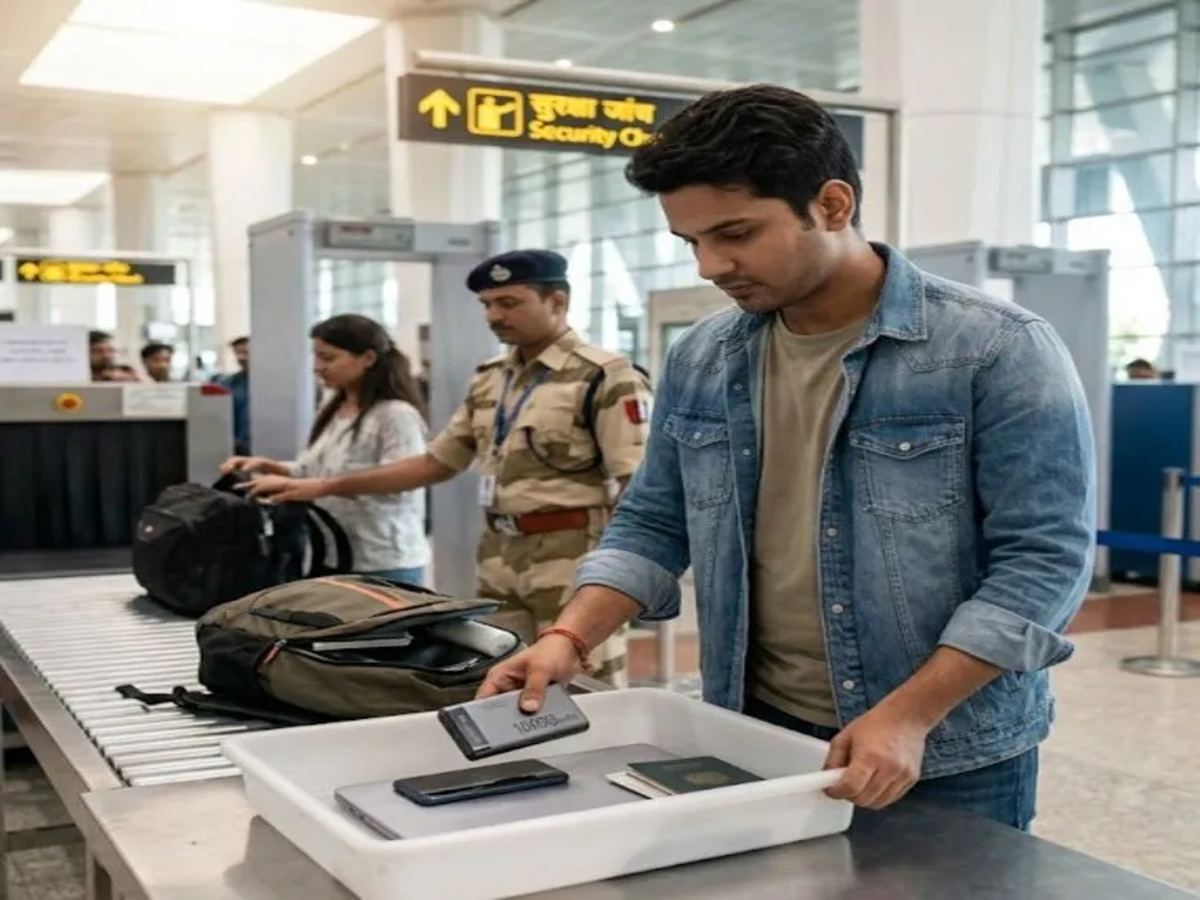
The primary rule is that a power bank should never be packed in a suitcase destined for the cargo hold—the aircraft's lower compartment. You must always carry it with you in your cabin bag or handbag. The logic is simple: if a power bank in the cargo hold catches fire, it would be impossible for the crew to reach the area quickly and extinguish the flames.
Never make the mistake of stowing it in the overhead bin
The fire incident on the IndiGo flight was caused by a power bank kept in the overhead bin—the storage space above the seats. According to regulations, power banks should never be left in the overhead bin, as smoke rising from there might not be noticed immediately.
Therefore, always keep it within sight—either in the seat pocket in front of you or under your seat. This ensures that any issues, such as the device overheating or emitting smoke, are detected immediately.
A costly mistake: From take-off to landing
Many of us have a habit of plugging our phones into power banks as soon as we board a flight. However, the DGCA has issued clear instructions that power banks must remain switched off throughout the entire flight—from take-off to landing. You cannot charge your phone using a power bank, nor can you charge the power bank itself using the power outlets provided in the aircraft seats.
What power ratings are permitted?
You cannot simply carry a power bank of any capacity onto a flight; specific limits have been established:
Capacity up to 100 Wh: Considered completely safe; you can easily carry it with you.
Between 100 Wh and 160 Wh: Requires special permission from your airline prior to travel.
Above 160 Wh: Devices with this capacity are strictly prohibited on flights.
How to check your power bank's capacity?
The capacity of your power bank is usually marked in 'mAh'. There is a simple formula to convert this to 'Wh': (mAh × 3.7) ÷ 1000 = Wh.
For example, a 20,000 mAh power bank equates to 74 Wh (which is within the 100 Wh limit). Conversely, a 30,000 mAh power bank equates to 111 Wh, requiring airline permission to carry it.
IndiGo vs. Air India: Are there differences in the rules?
While the core DGCA regulations apply to all, individual airlines may have their own specific terms and conditions. IndiGo, SpiceJet, and Akasa Air allow passengers to carry power banks of up to 100 Wh in the cabin without any hassle, while those up to 160 Wh are permitted with special approval.
On the other hand, Air India’s policy is somewhat stricter; it allows a passenger to carry a maximum of two power banks, both of which must be within the 100 Wh limit.
Do keep these rules in mind the next time you pack your bags for air travel. The safety of both you and the hundreds of fellow passengers traveling with you depends on this small measure of prudence.
PC Social Media