
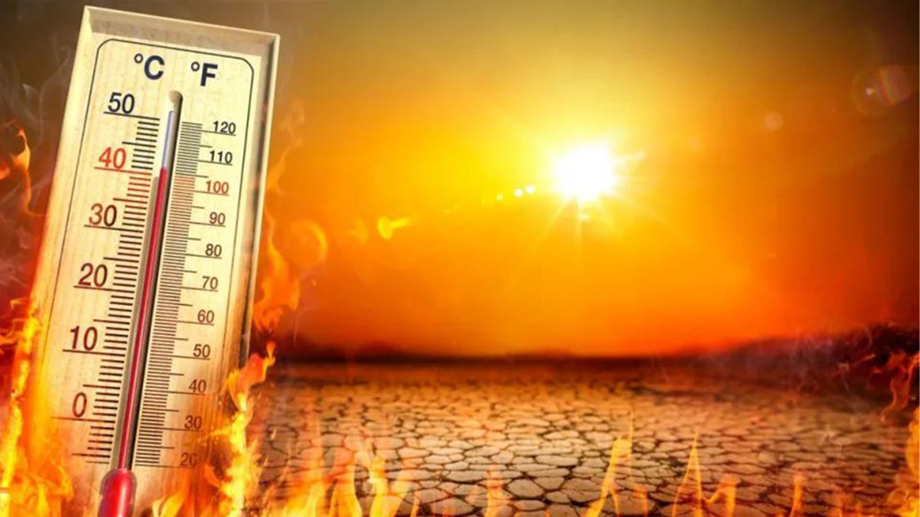
According to the Meteorological Department, heatwave-like conditions have developed in some parts of the country in the second week of March itself. The maximum temperature in some areas of Gujarat and Rajasthan is reaching 40 to 42 degrees Celsius. Hot winds are also blowing in different areas of Odisha, Vidarbha, Konkan, and Goa. Heatwave is expected in Vidarbha on the 13th and 14th and in Odisha on 13-15th March. A red alert has also been declared regarding heatwave in some parts of Gujarat. According to the Indian Meteorological Department, 536 heatwave days were recorded in India last summer (combining different days in all states), which was the highest in 14 years. At the same time, a recent study conducted in ten big cities of the country has claimed that on average 1116 deaths occurred every year due to heatwaves in a decade. According to scientists, the increasing heat every year will create health emergency-like situations in the coming days. We have to prepare for this from now on. Meteorologists are also predicting that the summer season will be long this year. People may have to face severe heat in many areas of the country.
Bharat Rawal, a businessman associated with the salt business in Kutch, Gujarat, says that the temperature in Kutch suddenly reached 40 to 42 degrees. This has increased a lot of difficulties. This is unusual. Many people are facing health problems due to this temperature change. A red alert has been issued in many districts of Gujarat. The temperature reached close to 38 to 39 degrees at 11 am itself. Rajasthan businessman and President of Laghu Udyog Bharati Ghanshyam ji Ojha says that the temperature in Barmer and Jaisalmer has already reached close to 40 degrees. At the same time, the temperature is reaching 37 to 38 degrees in most parts of Rajasthan. Such a temperature has been recorded in March for the last few years. This points towards climate change. There is a need to make a large-scale policy to control the temperature.
Scientists have found sufficient evidence of an increase in daily mortality due to the impact of heat waves in their study. A sharp increase in mortality is observed when heatwaves persist for a long time. Abhiyant Tiwari, Lead, Climate Resilience and Health, NRDC India, who was involved in the study, says that we conducted a study in ten big cities of the country between 2008 and 2019. We found that on average 1116 people died due to heatwaves every year. He said that the increasing heat every year can create big problems in the coming times. We have to prepare for this from today itself. Immediate steps need to be taken to provide relief to the common people in a situation like heatwave. At the same time, work will also have to be done on a long-term plan. The increasing heat affects humans as well as animals, birds, industry, economy. In such a situation, immediate steps will have to be taken keeping in mind the heat and ensuring health facilities. Children, the elderly, and people who need special care will have to be taken care of. Under long-term plans, we will have to increase green cover, increase the number of water reservoirs, and reduce the use of concrete. Cities become urban heatlands in summer, steps will have to be taken to reduce the temperature there.
According to Soumya Swaminathan, former chief scientist of the World Health Organization (WHO) and advisor to the Ministry of Health, there is no concrete data on deaths due to heatwaves in India. In such a situation, the number of heat-related deaths in India is probably being underreported. He said that heatwaves are becoming a major reason for the increase in mortality. Practically everyone in India is now vulnerable to the effects of climate change, whether it is extreme heat or vector-borne diseases. More than 80 percent of India's population now suffers from climate-related health problems, ranging from respiratory diseases to malnutrition.
Deaths increase by 33.3 percent if there is a heatwave for five consecutive days
A study was conducted on the data of 10 big cities on the topic 'Impact of heatwave on mortality in India' by many scientists from India and the world. These cities include Delhi, Mumbai, Chennai, Hyderabad, Bengaluru, Ahmedabad, Pune, Varanasi, Shimla and Kolkata. Scientists found that if heatwave-like conditions are recorded in a city for one day, the daily mortality rate increases by 12.2%. If the heatwave conditions persist for two consecutive days, the daily mortality rate increases to 14.7%. If the heatwave continues for three consecutive days, it increases to 17.8%. If extreme heat conditions are recorded for five consecutive days, the mortality rate can increase to 33.3%.
PC Social media