Business
Gold Silver Price: Gold Falls ₹5,768, Silver Drops ₹15,087; Will Prices Decline Further Next Week?
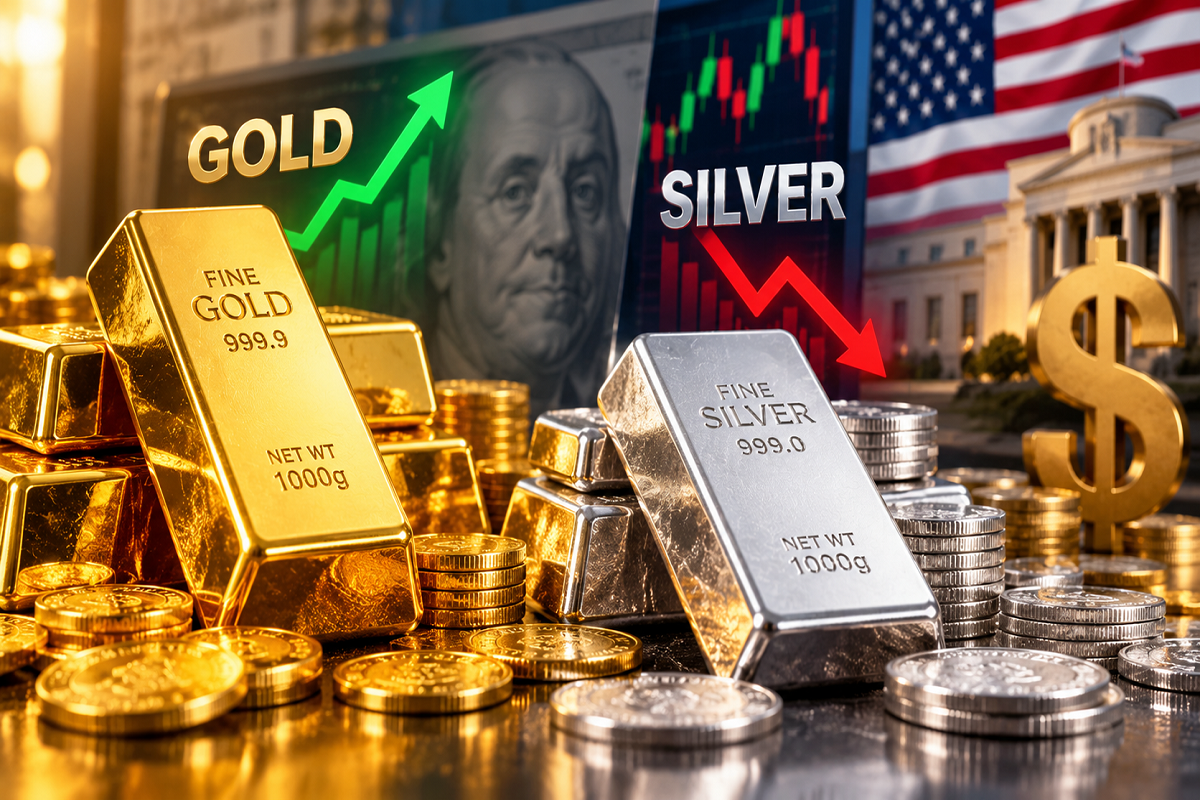
Gold Silver Price Today, October 25, 2026: Gold and silver prices recorded a sharp decline in the domestic futures market last week, raising questions about whether precious metals will recover or face further selling pressure in the coming days.
According to the reported weekly market figures, gold futures on the Multi Commodity Exchange (MCX) declined by ₹5,768 per 10 grams, while silver became cheaper by ₹15,087 per kilogram.
The weakness was also visible in international markets, where both metals experienced significant selling pressure.
Market participants are now focusing on the upcoming US Federal Reserve policy meeting, movements in the US dollar, bond yields and rising crude oil prices.
These developments could influence the direction of gold and silver prices during the final week of October.
Gold and Silver Prices: How Much Did Rates Fall Last Week?
The domestic commodity market witnessed a substantial correction in precious metal futures.
MCX gold futures for December delivery reportedly declined by approximately 4% during the week, ending near ₹1.42 lakh per 10 grams.
Silver experienced an even steeper fall.
The white metal lost ₹15,087 per kilogram, equivalent to a weekly decline of approximately 7.14%.
Following the correction, silver futures were reported near ₹1.96 lakh per kilogram, slipping below the ₹2 lakh mark.
Weekly Gold and Silver Price Performance
| Commodity | Reported weekly decline | Weekly percentage change | Closing level |
|---|---|---|---|
| MCX Gold (December futures) | ₹5,768 per 10 grams | Around 4% | Around ₹1,42,000 per 10 grams |
| MCX Silver | ₹15,087 per kg | 7.14% | Around ₹1,96,000 per kg |
| COMEX Gold (December futures) | — | 4.14% | $4,007.90 per ounce |
| International Silver | — | Around 6% | $53.95 per ounce |
Note: These are reported futures-market figures for the preceding trading week, not live retail jewellery prices. Prices may vary by contract, exchange and trading session.
Gold Prices Fall in International Markets
The decline was not limited to Indian commodity exchanges.
International gold futures also came under pressure during the week.
December gold futures on COMEX reportedly fell 4.14%, closing at approximately $4,007.90 per troy ounce.
During Friday's trading session, gold briefly slipped to around $3,989 per ounce.
Silver also weakened significantly in the international market, declining by approximately 6% to $53.95 per ounce.
The simultaneous decline in domestic and overseas markets indicates that global financial developments have played an important role in the recent correction.
Why Are Gold and Silver Prices Falling?
Several factors have contributed to the weakness in precious metals.
One important factor is the strength of the US dollar.
Gold is internationally priced in dollars, and a stronger dollar can make the metal more expensive for buyers using other currencies.
This can reduce demand and put downward pressure on prices.
Another important factor is the movement in US Treasury bond yields.
Gold does not provide regular interest income. When bond yields rise, interest-bearing assets may become relatively more attractive to some investors.
Consequently, higher yields can create challenges for gold prices.
Market expectations regarding future interest rate decisions also influence investment flows into precious metals.
Rising Crude Oil Prices Add Another Challenge
Crude oil prices have emerged as another major concern for commodity markets.
According to the report, Brent crude closed above $117 per barrel.
Higher oil prices can increase transportation, production and energy costs across the global economy.
If these pressures persist, they may contribute to higher inflation.
Central banks could then become more cautious about reducing interest rates.
This creates a complicated situation for gold.
Although gold is sometimes considered a hedge against inflation, higher interest rates and stronger bond yields can reduce its investment appeal.
Therefore, rising inflation does not automatically lead to higher gold prices.
The overall market reaction depends on the balance between inflation expectations, monetary policy and investor demand.
US Federal Reserve Meeting in Focus
The upcoming US Federal Reserve policy meeting is expected to be one of the most closely watched events for bullion traders.
The meeting is scheduled for October 27–28, according to the supplied market report.
Investors will pay attention not only to the interest rate decision but also to the Federal Reserve's commentary on inflation, economic growth and future monetary policy.
A more restrictive policy outlook could support the dollar and Treasury yields.
Such a development may increase pressure on gold and silver.
On the other hand, a less restrictive policy outlook could weaken the dollar or reduce yields, potentially supporting precious metal prices.
However, market reactions are not guaranteed and may depend on how the announcement compares with investor expectations.
What Are Market Experts Saying?
According to the report, LKP Securities research analyst Jatin Trivedi identified the strength of US bond yields and the dollar as important reasons for gold's recent weakness.
He indicated that the Federal Reserve's upcoming policy communication could influence whether bullion prices stabilise or continue declining.
Meanwhile, Pranav Mer of JM Financial Services highlighted weakness in industrial metals and softer demand for silver at elevated price levels.
Silver is influenced by both investment demand and industrial consumption.
This dual role can make its price movements more volatile than gold during periods of economic uncertainty.
Why Has Silver Fallen More Than Gold?
Silver often experiences larger percentage movements than gold.
One reason is that silver has substantial industrial applications, including electronics, solar technology and other manufacturing activities.
When concerns emerge about industrial demand, silver prices can come under additional pressure.
At the same time, silver is also traded as a precious metal and investment asset.
This means it can react to changes in monetary policy, investor sentiment and industrial activity simultaneously.
During periods of market uncertainty, these combined influences can produce sharper price corrections.
The reported weekly decline of 7.14% in MCX silver futures illustrates this volatility.
What Could Happen to Gold and Silver Prices Next Week?
The direction of precious metals during the coming week will depend on several developments.
If the US dollar strengthens further and bond yields remain elevated, gold and silver could face continued selling pressure.
Persistent strength in crude oil prices may also keep inflation concerns alive.
However, a shift towards expectations of easier monetary policy could provide some support to bullion prices.
Traders will also assess whether the recent correction encourages fresh physical buying.
The impact of festive-season demand in India could be relevant, although domestic retail demand alone may not offset major international market movements.
At present, the available information does not establish whether prices will definitely fall further or recover.
Other Global Events Investors Should Watch
Apart from the Federal Reserve, decisions by other major central banks could influence financial markets.
Investors will monitor policy developments involving the European Central Bank and the Bank of Japan.
Important US economic indicators, including inflation, economic growth and consumer confidence data, may also affect expectations about interest rates.
Stronger-than-expected economic data could influence bond yields and currency markets.
Weaker data may lead investors to reconsider the outlook for monetary policy.
These developments can produce significant fluctuations in gold and silver futures.
Should You Buy Gold During the Price Correction?
With Dhanteras and Diwali approaching, many Indian households may be considering gold purchases.
A decline in market prices can make jewellery purchases comparatively less expensive than during previous sessions.
However, buyers should remember that futures-market prices and retail jewellery prices are not identical.
Retail gold prices depend on factors such as purity, local market conditions, making charges and applicable taxes.
Consumers should compare prices across reputable jewellers and check BIS hallmark information before purchasing.
Those buying gold for investment purposes should consider their financial goals and risk tolerance rather than making decisions based solely on short-term market movements.
Final Update
Gold and silver experienced substantial losses during the previous trading week, with MCX gold futures reportedly falling ₹5,768 per 10 grams and silver declining ₹15,087 per kilogram.
International bullion markets also recorded weakness as investors assessed the impact of higher bond yields, a stronger dollar and rising crude oil prices.
The US Federal Reserve's October 27–28 policy meeting could become a major factor in determining the next direction of gold and silver prices.
While further volatility is possible, the market's response will depend on actual policy announcements, economic data and investor expectations.
Disclaimer: The market figures and analyst comments in this article are based on the supplied October 25, 2026 report and have not been independently verified against exchange closing records. Commodity prices fluctuate, and this article is for informational purposes only, not investment advice.