
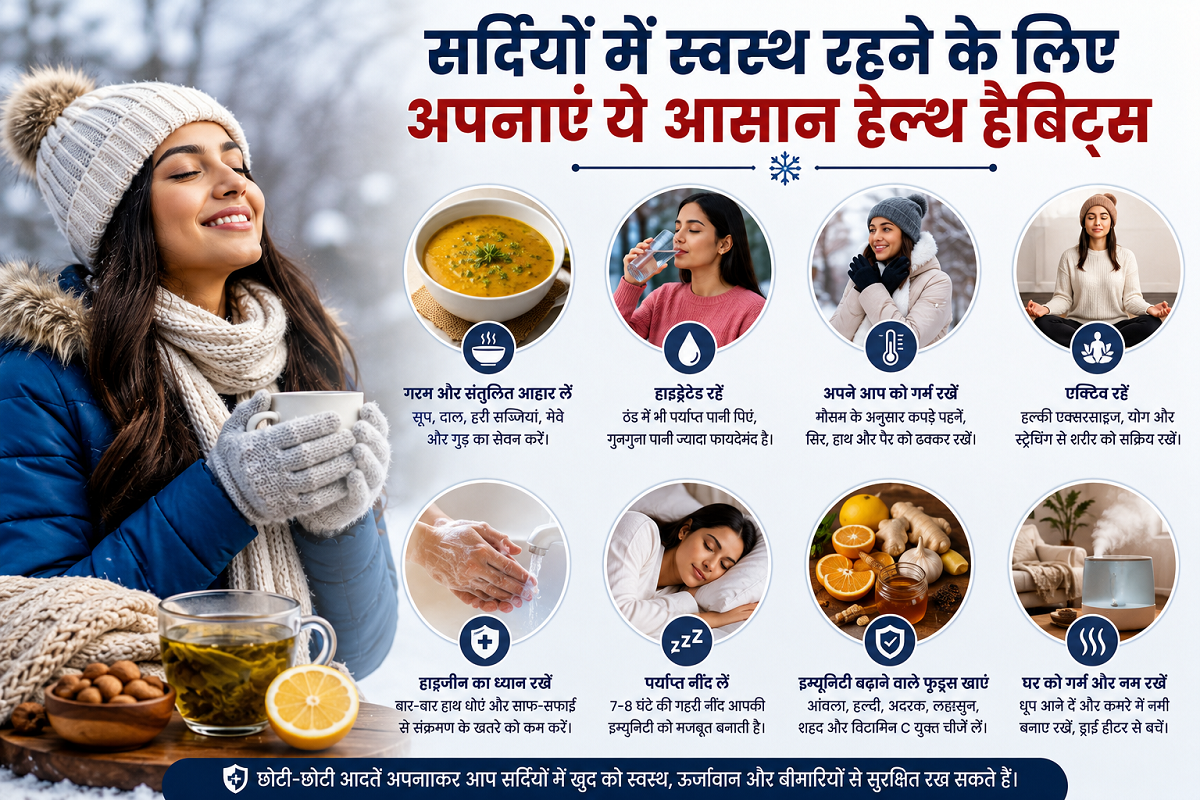
Winter Health Tips: Winter is a favorite season for many, but it also brings an increased risk of colds, flu, joint pain, dry skin, and seasonal fatigue. As temperatures drop, the body's nutritional and lifestyle needs change. Staying healthy during winter isn't just about wearing warm clothes—it also requires a balanced diet, regular exercise, quality sleep, and good hygiene. Here are some simple habits that can help you stay fit and energetic throughout the season.
Focus on Nutrition Along With Staying Warm
During winter, the body burns more energy to maintain its temperature. A nutrient-rich diet can help support immunity and overall health.
Include foods such as:
- Seasonal vegetables like spinach, carrots, fenugreek, and mustard greens
- Fresh fruits rich in vitamin C
- Whole grains and pulses
- Nuts and seeds in moderation
- Jaggery and sesame-based foods for seasonal nutrition
Although people often feel less thirsty during winter, staying hydrated is equally important. Drink enough water throughout the day, along with warm soups and herbal teas if preferred.
Stay Active to Beat Winter Fatigue
Cold weather often discourages people from exercising, leading to reduced physical activity and sluggishness.
Simple activities such as:
- Brisk walking
- Yoga
- Stretching exercises
- Indoor workouts
can improve blood circulation, strengthen the immune system, and boost energy levels.
If early mornings are too cold, consider exercising during the afternoon or early evening.
Get Enough Sunlight and Quality Sleep
Shorter days during winter mean less exposure to natural sunlight, making it important to spend some time outdoors whenever possible.
Benefits of morning sunlight include:
- Supporting vitamin D production
- Promoting bone health
- Strengthening immunity
In addition, aim for 7–8 hours of quality sleep every night. Proper sleep allows the body to recover, repair tissues, and maintain a healthy immune system.
Protect Yourself From Seasonal Infections
Cold weather increases the spread of viral infections because people spend more time indoors.
To reduce your risk:
- Wash your hands regularly.
- Cover your mouth and nose while coughing or sneezing.
- Avoid close contact with sick individuals whenever possible.
- Keep indoor spaces properly ventilated.
Good hygiene habits can significantly reduce the spread of seasonal illnesses.
Dress According to the Weather
Layering your clothing helps retain body heat while allowing flexibility as temperatures change throughout the day.
Choose:
- Warm but breathable clothing
- Woolen caps and gloves during extreme cold
- Comfortable footwear to keep your feet dry and warm
Avoid staying in damp or sweaty clothes for extended periods.
Why Winter Health Habits Matter More Than Ever
Changing weather patterns, rising pollution levels, and busy lifestyles have made winter-related health issues more common than before. Children, older adults, and individuals with chronic health conditions need extra care during the colder months.
Health experts suggest that simple lifestyle habits—such as eating nutritious meals, exercising regularly, sleeping well, staying hydrated, and maintaining personal hygiene—can go a long way in preventing seasonal illnesses and improving overall well-being.
By making a few healthy adjustments to your daily routine, you can enjoy the winter season while keeping yourself active, healthy, and protected from common health problems.