
LIFESTYLE
Why were courtyards built in old houses? It wasn't just tradition; there was sound logic behind it..
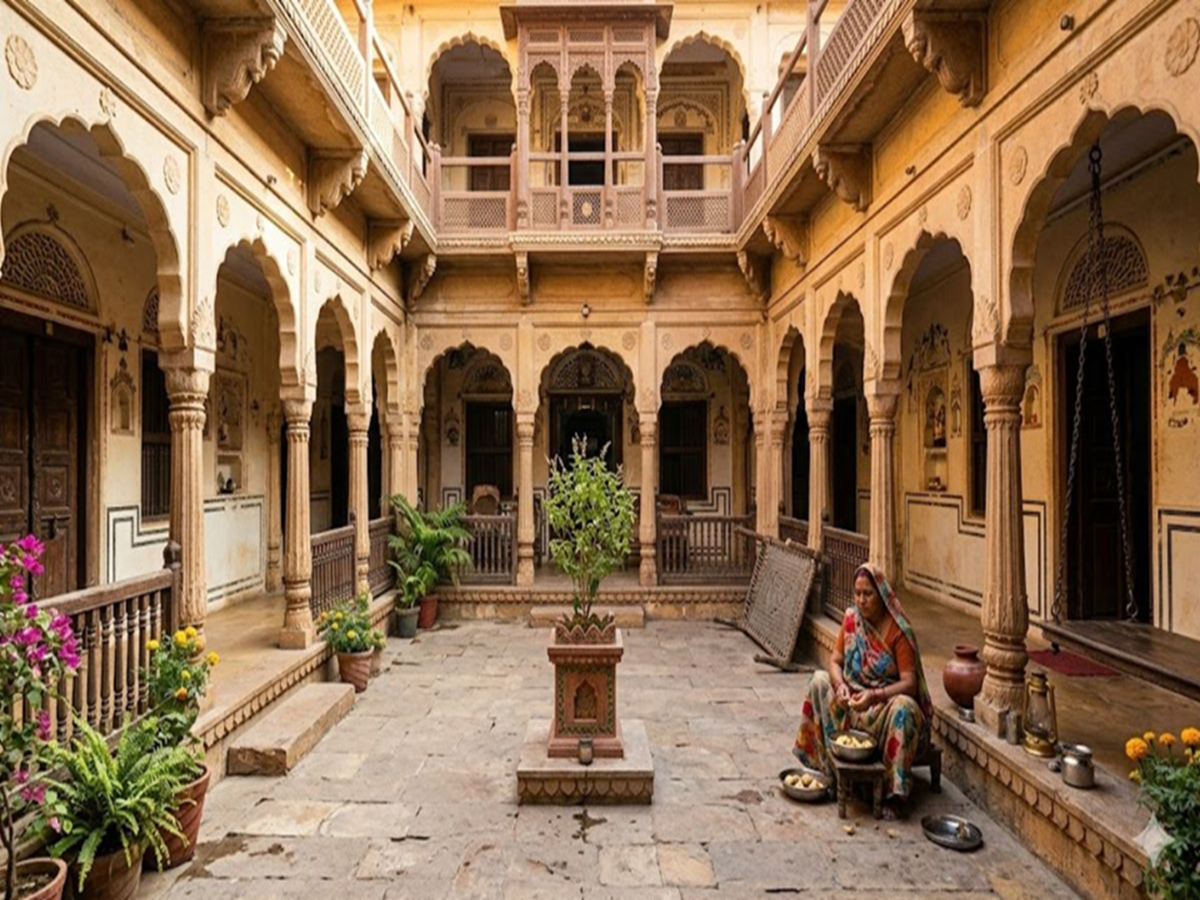
When one mentions old houses, the first image that comes to mind is a large central courtyard. If we look back at the time of our grandparents or earlier generations, almost every home featured a courtyard; however, as architectural styles evolved over time, the courtyard gradually disappeared.

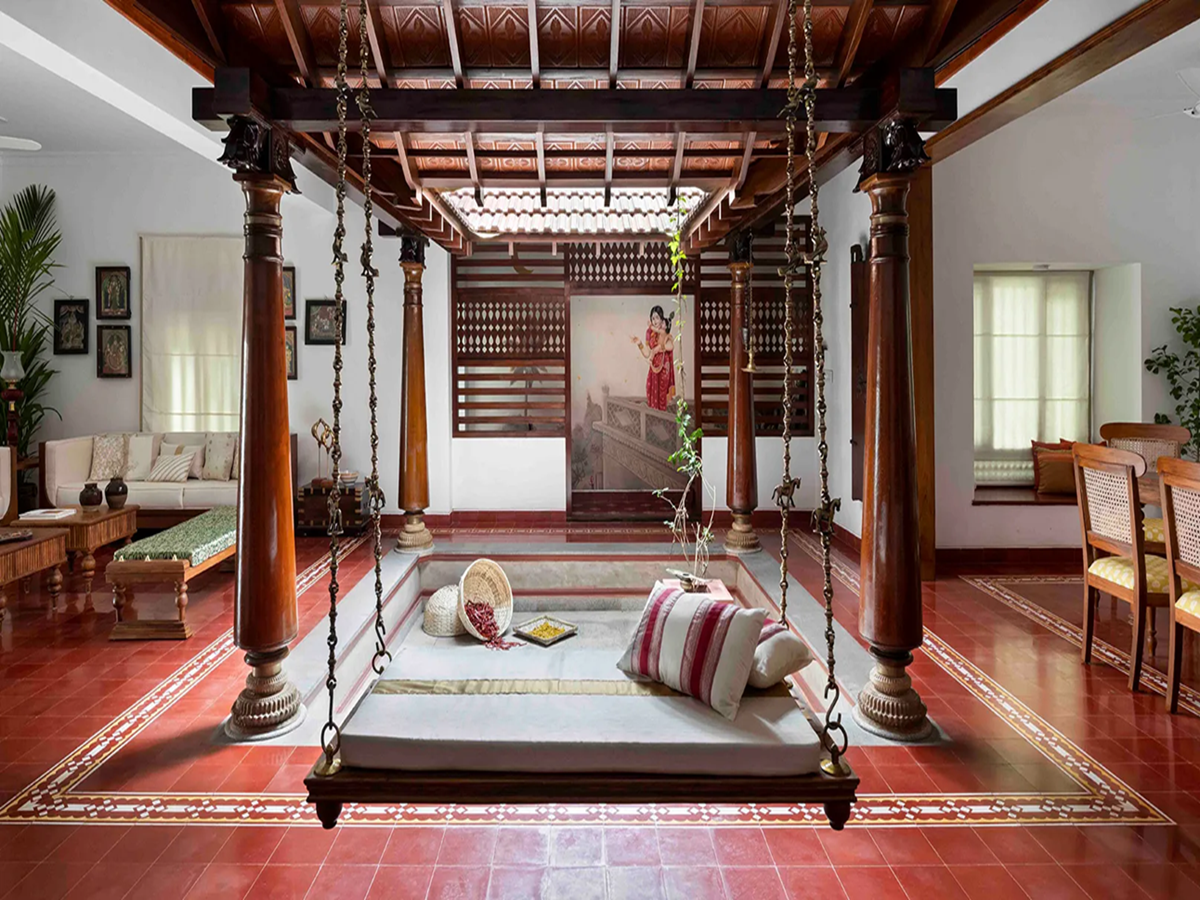
Today, one rarely finds a house with a courtyard in cities. Even in villages, this feature is slowly vanishing. But have you ever wondered why having a courtyard was considered so essential in traditional homes? Whether it was the *aangan* of North India or the *Nadumuttam* of Kerala, our ancestors designed this open central space with great thought. Let us explore why the courtyard was considered such a vital part of traditional homes.
**Ventilation and Natural Light**
The primary reason for incorporating a courtyard was to ensure a proper balance of air and light within the home. In those days, round-the-clock electricity was not available, so courtyards were created to provide natural illumination and ventilation. The courtyard also acted as a natural thermal regulator. People often planted small shrubs and plants there, which helped keep the indoor atmosphere cool while allowing ample natural light to flood the home throughout the day.
**Social and Familial Bonding**
In the past, most people lived in joint families. The courtyard served as a space that united the entire family. During the day, women would spread mats in the courtyard to sit and chat; they would also carry out chores like preparing for dinner, drying *papad* and pickles, and chopping vegetables there.
At night, family members would sit together and converse; grandmothers would tell stories to the children, or people would gather in the courtyard to enjoy the cool air during hot summer days. Furthermore, family celebrations—such as weddings, the *Mundan* (first hair-shaving) ceremony, and festivals—were all hosted in this courtyard. Women from the village community would gather there to celebrate these occasions together.
**Religious Significance**
Almost every Hindu household had a *Tulsi* (holy basil) plant in the center of the courtyard. Worshipping the plant and lighting a lamp there morning and evening, as well as plastering the courtyard floor with cow dung or mud, were considered highly auspicious practices.
Connection with Nature
The presence of a courtyard ensured the house never felt stifled or enclosed. From within the home, one could gaze at the open sky, watch the raindrops, and admire the stars at night. The sight of birds visiting the courtyard to peck at grain, combined with the cool breeze from the trees, fostered a sense of closeness to nature.
Privacy for Women
In the past, women lived in seclusion (*purdah*). Consequently, the courtyard served as a private sanctuary where they could go about their daily chores and move around freely, away from the prying eyes of outsiders.
PC Social Media