
LIFESTYLE
When is Tulsi Vivah? The wedding ritual is performed with Lord Shaligram; find out the date..
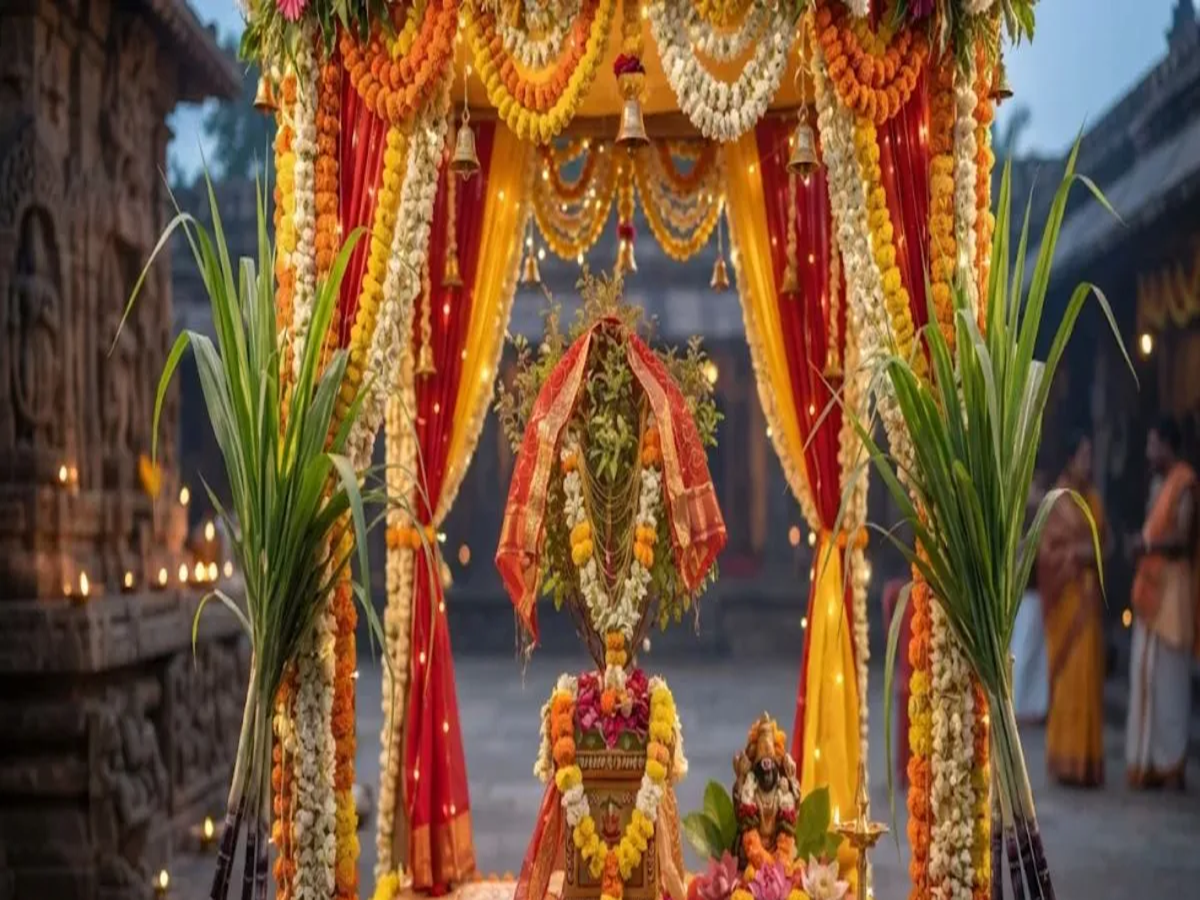
Tulsi Vivah 2026 Date: Tulsi Vivah is observed during the month of Kartika, wherein the ceremonial marriage of the sacred Tulsi plant to Lord Vishnu—in his Shaligram form—is performed. Traditionally, this ritual takes place during the *Pradosh Kaal* (the twilight period) on the *Dwadashi* (twelfth day) of the *Shukla Paksha* (waxing phase of the moon) in the month of Kartika. However, if the *Pradosh Kaal* does not coincide with the *Dwadashi* *tithi*, the ceremony is instead held on the evening of *Devutthana Ekadashi*. It is a widely held religious belief that for those facing delays in marriage or experiencing difficulties in their marital life, performing the ceremonial marriage of Mother Tulsi to Lord Shaligram—following the prescribed Vedic rituals—can help fulfill their wishes and create favorable conditions for marriage. When is Tulsi Vivah this year, and what is the auspicious timing (*muhurta*) for the ceremony?
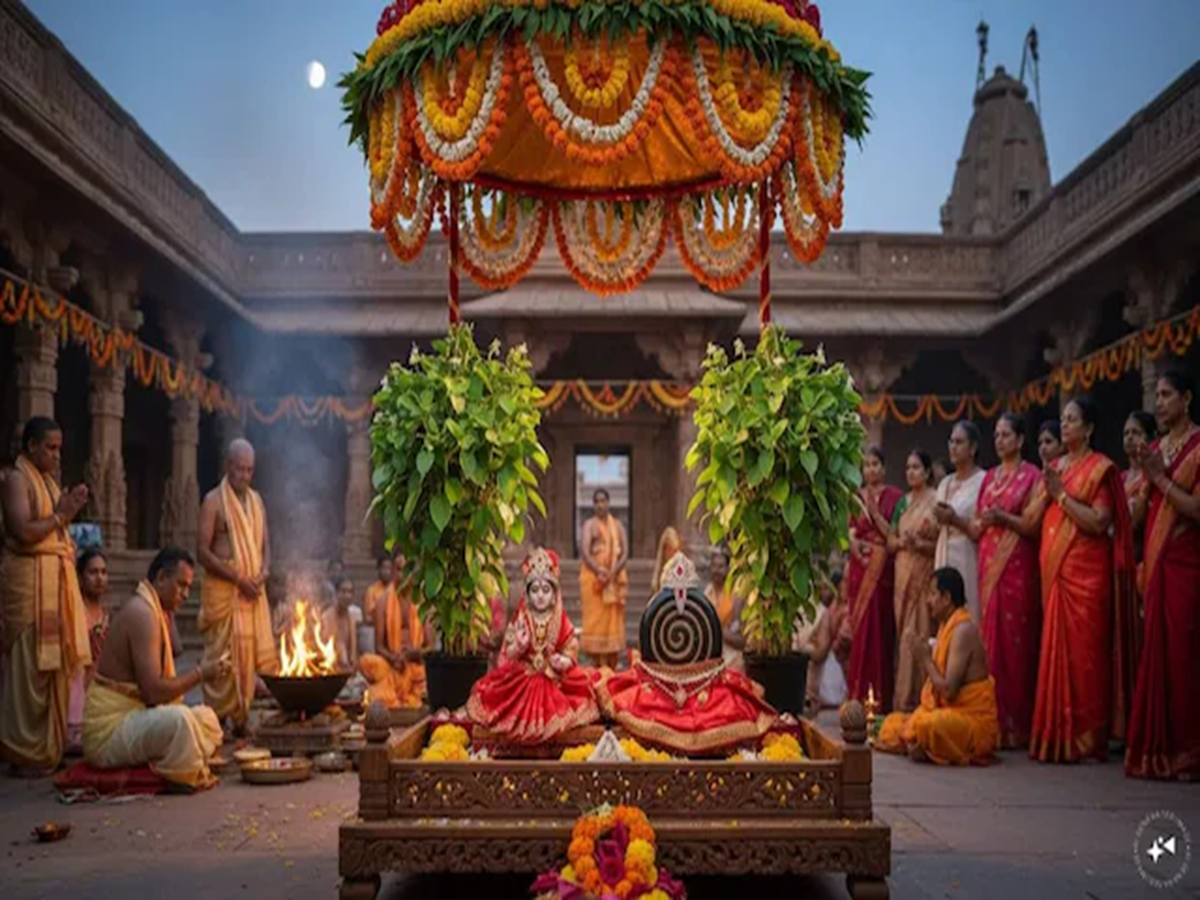
Tulsi Vivah 2026 Date
According to the Vedic *Panchang* (almanac), the *Dwadashi tithi* of the *Shukla Paksha* in the month of Kartika begins at 6:31 AM on Saturday, November 21, and concludes at 4:56 AM on Sunday, November 22. Based on the *Udaya Tithi* (the *tithi* prevailing at sunrise) and the auspicious timing for the ceremony, Tulsi Vivah will be observed on Saturday, November 21.
While the *Padma Purana* mentions that Tulsi Vivah takes place on the *Navami* (ninth day) of the *Shukla Paksha* of Kartika, other scriptures suggest that performing the ceremony anytime between *Ekadashi* and *Purnima* (full moon) of the month of Kartika yields greater spiritual merit.
Tulsi Vivah 2026 Auspicious Timing (*Muhurta*)
This year, the auspicious time for Tulsi Vivah begins at 5:25 PM. This coincides with sunset and the onset of the *Pradosh Kaal*—the period traditionally considered most appropriate for conducting the Tulsi Vivah ceremony.
On that day, the *Brahma Muhurta* will last from 5:01 AM to 5:55 AM, while the *Abhijit Muhurta* will occur between 11:46 AM and 12:28 PM. The *Godhuli Muhurat* (twilight period) is from 05:25 PM to 05:52 PM. The *Nishita Muhurat* (midnight period) is from 11:40 PM to 12:34 AM. The *Godhuli Muhurat* is also considered significant for *Tulsi Vivah*.
*Tulsi Vivah* during two auspicious *Yogas* (astrological alignments)
On November 21, the day of *Tulsi Vivah*, two auspicious *Yogas*—*Ravi Yoga* and *Siddha Yoga*—will occur. While *Ravi Yoga* will last for only 3 minutes, *Siddha Yoga* will persist throughout the day. *Ravi Yoga* will be active from 06:48 AM to 06:50 AM, whereas *Siddha Yoga* will continue from early morning until 02:31 AM on November 22. Tasks performed during these *Yogas* are believed to be successful.
On the day of *Tulsi Vivah*, the *Uttara Bhadrapada Nakshatra* will be active from early morning until 06:50 AM, followed by the *Revati Nakshatra*, which will continue until 05:54 AM on November 22. Thereafter, the *Ashwini Nakshatra* will begin.
Why is *Tulsi Vivah* performed?
The origin of Mother Tulsi is linked to Vrinda, a woman of absolute devotion to her husband (*pativrata*), who was also a supreme devotee of Lord Vishnu. For the defeat of her husband, Jalandhara, it was necessary for Vrinda’s vow of marital devotion to be broken. Consequently, Lord Vishnu assumed the form of Jalandhara and approached Vrinda. Believing that her husband—the demon king Jalandhara—had returned from battle against the gods, Vrinda approached the figure she thought was her husband. This act broke her vow of marital devotion, leading to the death of Jalandhara.
Deeply hurt by this deception, Vrinda cursed Lord Vishnu to turn into a stone. Lord Vishnu then transformed into the *Shaligram* stone, while Vrinda relinquished her physical form; the *Tulsi* plant emerged from that very spot. Pleased by her devotion, Lord Vishnu blessed her, promising that she would always remain by his side. The presence of Tulsi is mandatory in His worship.
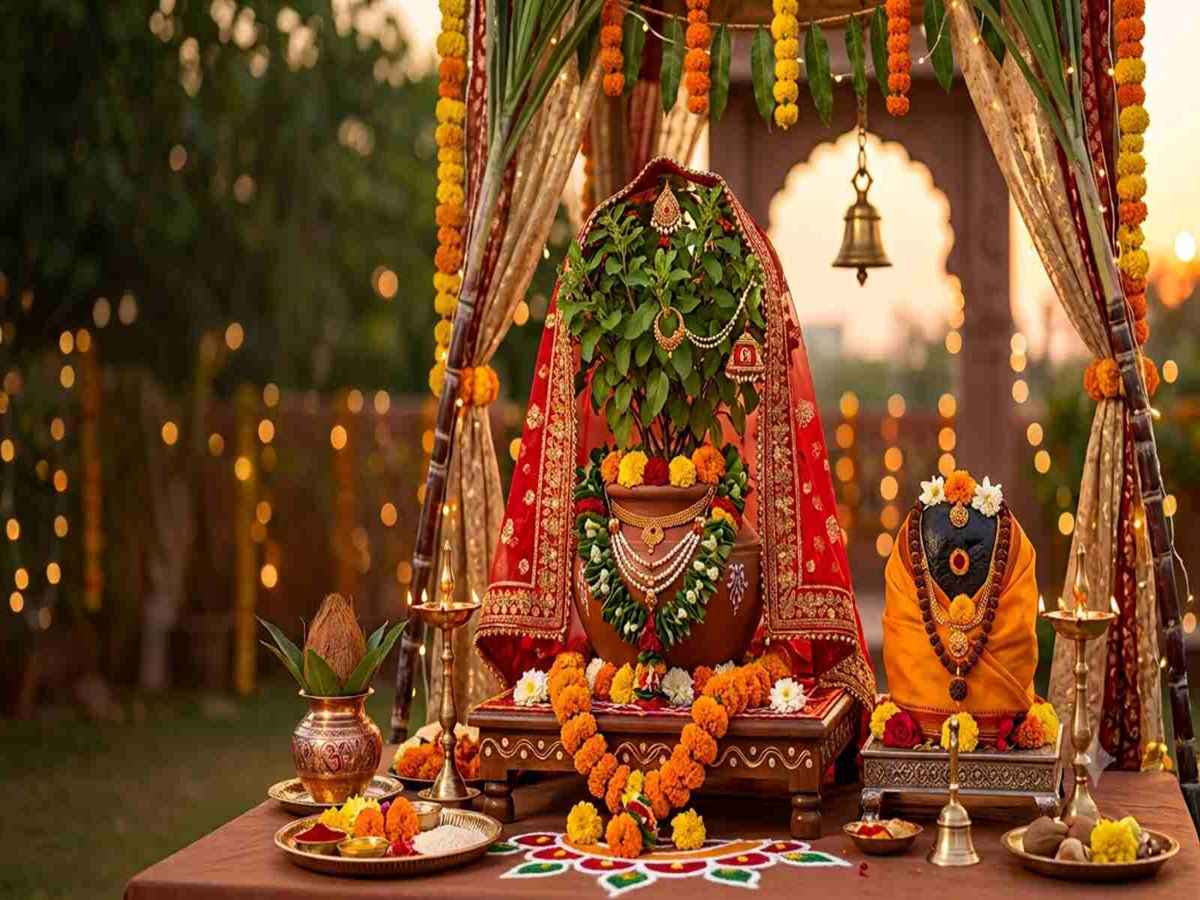
Ever since, Tulsi leaves have been an essential part of the worship of Lord Vishnu. On the twelfth day of the bright fortnight (Shukla Dwadashi) of the month of Kartika, the ceremonial marriage of Tulsi with Lord Shaligram is performed. This facilitates the prospect of marriage and leads to a blissful married life.
PC Social Media