LIFESTYLE
What is the right time and method to offer the *Janeu* (sacred thread) to Bajrangbali? Learn about the complete religious beliefs..

Offering the *Janeu* (Sacred Thread) to Hanuman Ji: When worshipping in a temple, people often offer flowers, vermilion (*sindoor*), jasmine oil, coconuts, *laddus*, and the *Janeu* (sacred thread) according to their devotion. However, regarding the worship of Hanuman Ji, a question often arises: should the *Janeu* be offered to Bajrangbali or not? While some people offer the *Janeu* every Tuesday and Saturday, others do not consider it appropriate. It is important to have the correct information so that the worship can be performed with proper rituals and devotion. According to religious beliefs, Hanuman Ji is considered an *avatar* (incarnation) of Lord Shiva and was also a highly learned Brahmin.
In the *Ramayana*, he is described as a scholar well-versed in the Vedas and scriptures. This is why the tradition of offering the *Janeu* exists in many customs. However, rules may vary across different temples and sects. Therefore, rather than using any ritual offering without knowledge, it is more important to understand the underlying belief.
Should the *Janeu* be offered to Hanuman Ji?
According to religious beliefs, the *Janeu* can be offered to Hanuman Ji because he is regarded as a *Brahmachari* (celibate), a scholar, and a knower of the Vedas. In many temples and worship traditions, there is a custom of offering a new *Janeu* on Tuesdays or Saturdays. It is considered a symbol of respect and devotion. However, this is not a mandatory rule; even if you do not offer the *Janeu*, worship performed with sincere faith and devotion is accepted.
The correct way to offer the *Janeu*
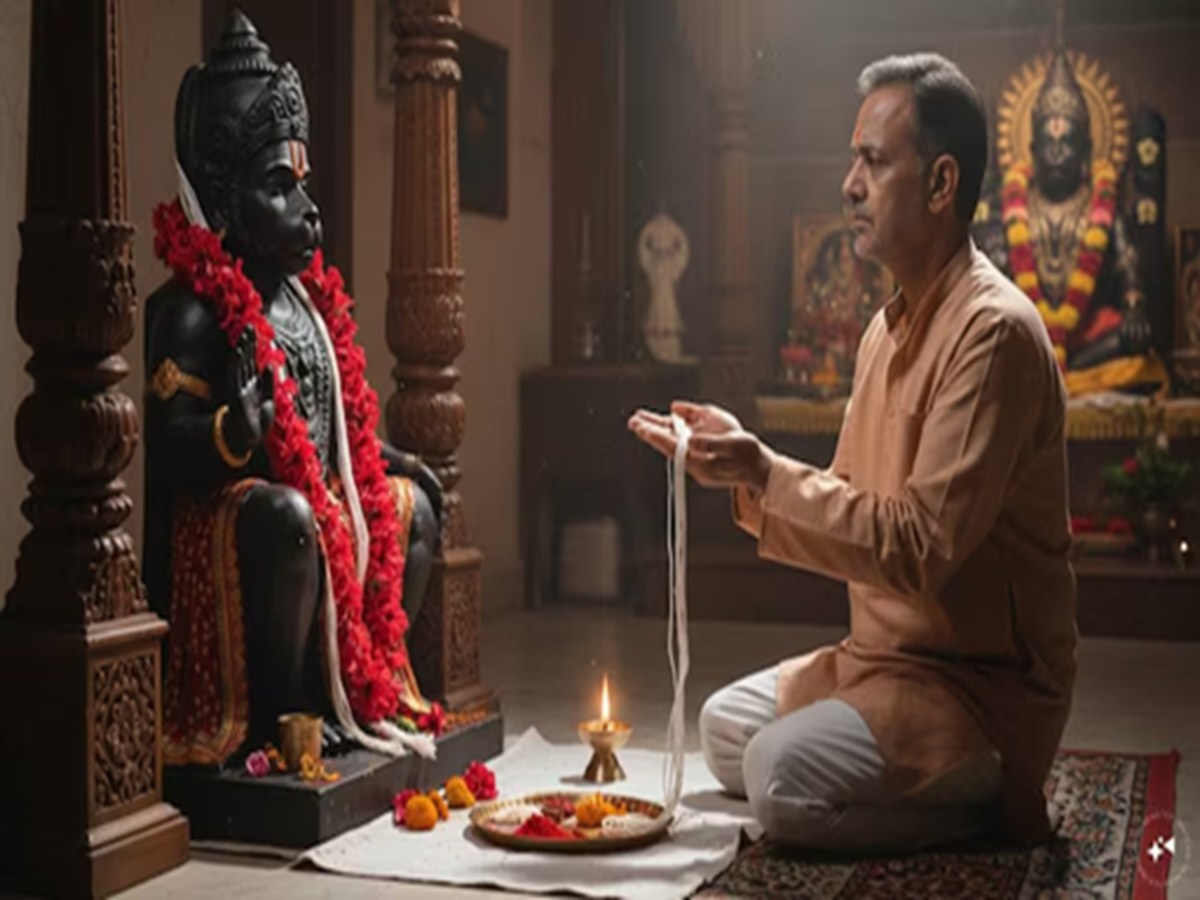
If you wish to offer the *Janeu* to Hanuman Ji, first bathe and wear clean clothes. Clean the place of worship and offer vermilion, jasmine oil, red flowers, and *Prasad* to Hanuman Ji. Afterward, offer a new and clean *Janeu* with reverence. You may also recite the *Hanuman Chalisa* or *Bajrang Baan* during the worship. Ensure that the *Janeu* is not broken, dirty, or previously used.
What points should be kept in mind?
In the worship of Lord Hanuman, the purity of the heart is valued far more than outward displays. Therefore, if you are offering a *Janeu* (sacred thread), the intent should be rooted in religious faith rather than mere showmanship. Pay special attention to cleanliness during the worship. It is also considered important to respect the traditions of the temple or your family; if a particular place does not have a custom of offering the *Janeu*, it is best to adhere to the local rules.
**Does offering a *Janeu* alone fulfill one's wishes?**
Religious scriptures nowhere state that merely offering a *Janeu* will fulfill every desire. The true foundation of worship lies in devotion, regular spiritual practice, and righteous actions. It is believed that if a person remembers Lord Hanuman with a sincere heart, recites the Hanuman Chalisa, and upholds truth, service, and discipline in their life, they gain mental strength and positive energy.
**What offerings are considered auspicious for Lord Hanuman?**
In the worship of Lord Hanuman, it is considered auspicious to offer vermilion (*sindoor*), jasmine oil, red or orange flowers, jaggery and roasted gram (*gur-chana*), *Boondi* or *Besan* *Laddus*, *Tulsi* (in some traditions), a coconut, and a red flag. Along with these, offering a *Janeu* with devotion is also considered auspicious in many traditions.
**Respecting every tradition is also essential**
Worship practices in India vary according to different regions and traditions. While some customs involve offering a *Janeu* to Lord Hanuman, others involve offering only vermilion and jasmine oil. Therefore, rather than regarding any single tradition as the absolute truth, it is considered appropriate to worship according to your family's customs, the guidance of a *Guru*, or the traditions of the local temple. Ultimately, the most important foundation of worship is sincere devotion, humility, and faith in the Divine. It is this sentiment that gives meaning to any act of worship.
PC Social Media