
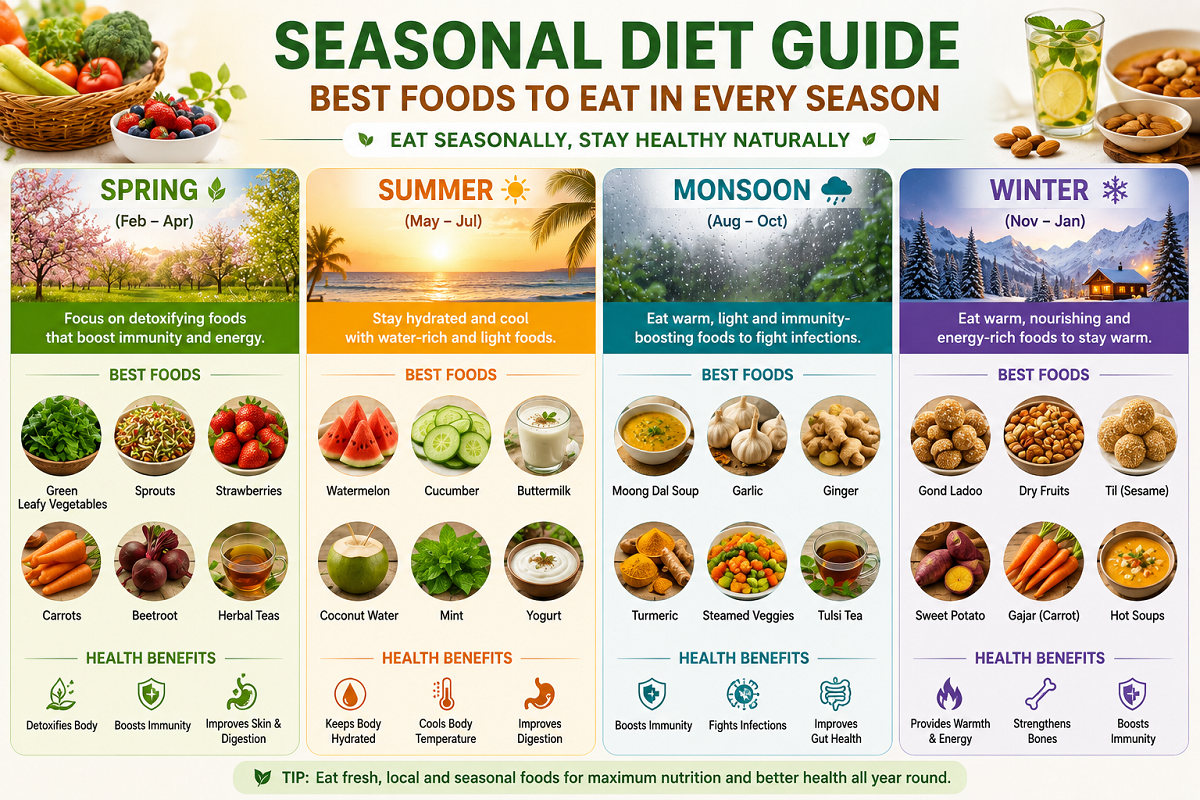
Seasonal Diet Tips: Most people choose their meals based on taste and convenience, but eating according to the season can play an important role in maintaining good health. Seasonal fruits, vegetables, and grains are naturally available when the body needs them the most, making them a valuable part of a balanced diet. Here's a guide to the best foods for every season and why adapting your diet throughout the year can support overall well-being.
Summer: Stay Cool and Hydrated
Hot weather increases sweating, causing the body to lose water and electrolytes more quickly. Including water-rich foods in your daily diet can help maintain hydration and support digestion.
Some of the best summer foods include:
- Watermelon
- Muskmelon
- Cucumber
- Coconut water
- Yogurt
- Buttermilk
- Lemon water
These foods help replenish fluids, provide essential nutrients, and keep the body feeling refreshed during hot weather.
Monsoon: Choose Fresh and Light Meals
The rainy season creates conditions where bacteria and fungi can multiply more easily. Eating freshly prepared, hygienically cooked meals can help lower the risk of foodborne illnesses.
Healthy monsoon food choices include:
- Moong dal
- Khichdi
- Fresh vegetable soups
- Steamed vegetables
- Home-cooked meals
It's also advisable to avoid food that has been left uncovered for long periods, as well as cut fruits sold in open areas.
Traditional kitchen ingredients like ginger, turmeric, and garlic are commonly included in monsoon diets because they add flavor and complement a healthy meal.
Winter: Eat Foods That Provide Warmth and Energy
During colder months, the body uses more energy to maintain its temperature. Nutrient-rich seasonal foods can help meet these increased energy needs.
Some excellent winter foods are:
- Carrots
- Spinach
- Fenugreek leaves
- Mustard greens
- Pearl millet (Bajra)
- Sesame seeds
- Jaggery
- Dry fruits and nuts
These foods supply vitamins, minerals, healthy fats, and fiber that support overall health during winter.
Eat a Balanced Diet Throughout the Year
While seasonal eating is beneficial, maintaining a balanced diet is equally important regardless of the season.
A healthy plate should include:
- Fresh fruits
- Seasonal vegetables
- Whole grains
- Pulses and legumes
- Protein-rich foods
- Plenty of water
Limiting processed foods, sugary snacks, and deep-fried items throughout the year can contribute to better long-term health.
Why Seasonal Eating Matters Today
Modern lifestyles and the growing popularity of processed foods have reduced people's reliance on seasonal produce. However, nutrition experts continue to recommend eating locally grown seasonal foods because they are generally fresher, naturally available, and often retain more nutrients.
Seasonal foods also require less storage and transportation, making them a more sustainable and environmentally friendly choice.
The Bottom Line
Changing your diet with the changing seasons is a simple yet effective way to support your body's natural needs. Hydrating foods during summer, light and freshly cooked meals during the monsoon, and nutrient-rich foods during winter can help maintain energy levels, improve digestion, and support overall health.
Making seasonal eating a part of your lifestyle not only adds variety to your meals but also helps you enjoy the nutritional benefits that each season naturally offers.