LIFESTYLE
Sawan Shivratri 2026: Perform the puja at home on Sawan Shivratri using this method; find out everything..

Sawan Shivratri 2026: The month of Sawan is considered extremely auspicious and sacred for devotion to Lord Shiva. Throughout this month, devotees strive to please Bholenath through the worship of Shiva, fasting, and the ritual of *Jalabhishek* (offering water). Sawan Shivratri, which falls during this period, holds special significance. In 2026, this fast will be observed on Tuesday, August 11. On this day, devotees observe a fast, offer water to the *Shivling*, and perform rituals with devotion during all four *Prahars* (watches) of the night.
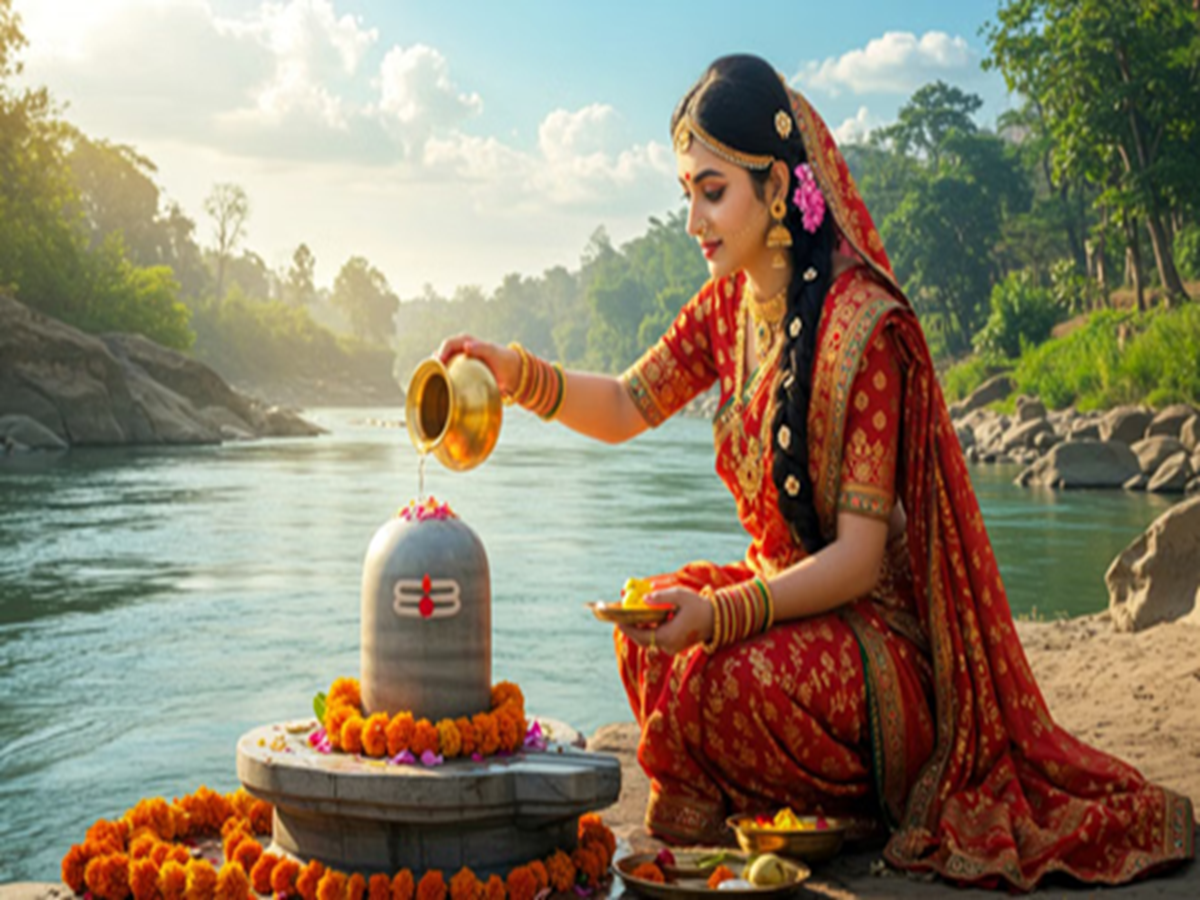
It is believed that worship performed with a sincere heart on Sawan Shivratri blesses the individual with mental peace, positive energy, and the fulfillment of their wishes. A unique aspect of this festival is the special importance placed on night-time worship alongside daytime rituals, distinguishing it from other fasts.
**Mythological Significance of Sawan Shivratri**
Sawan Shivratri is linked to the famous legend of the *Samudra Manthan* (Churning of the Ocean). According to the Puranas, when the deadly poison *Halahal* emerged during the churning, its intensity put the entire creation in peril. Lord Shiva then held the poison in His throat; this turned His throat blue, earning Him the name 'Neelkanth' (the Blue-Throated One).
It is said that the gods offered water to the *Shivling* to soothe the burning heat of the poison. This is why the tradition of *Jalabhishek* holds such special significance during Sawan.
According to another belief, Goddess Parvati attained Lord Shiva as her husband after performing severe penance. Therefore, worshipping Shiva and Parvati on this day is also associated with marital bliss and the strengthening of relationships.
**Worship Materials for Sawan Shivratri**
It is advisable to gather all necessary materials before the worship begins. Items kept for the *Abhishek* (ritual bathing) include *Gangajal* (water from the Ganges), clean water, milk, curd, honey, and ghee. Additionally, sandalwood paste, *Akshat* (unbroken rice grains), *Belpatra* (Bilva leaves), *Dhatura*, *Shami* leaves, and *Bhasma* (sacred ash) are used.
For the *Aarti*, arrange for incense, a lamp (*Diya*), camphor, and ghee or oil. Fruits or sweets may be offered as *Bhog* (sacred offering). When offering *Belpatra*, ensure that the leaves are not torn or damaged.
Rules for the Sawan Shivratri Fast
This fast is not limited merely to abstaining from food; purity of mind and conduct is considered equally important. On this day, it is advised to adopt a *Sattvic* (pure and wholesome) lifestyle and stay away from anger and negative thoughts.
During the fast, one consumes *Phalahar* (fasting-friendly foods), which may include milk, fruits, and water. Grains, salt, onions, garlic, and *Tamasic* foods (foods that induce lethargy or dullness) should be avoided.
Staying awake at night (*Ratri Jagaran*) is also a crucial part of this fast, during which devotees meditate on Lord Shiva through the chanting of mantras and *Bhajans* (devotional songs).
Sawan Shivratri Puja Rituals
After bathing in the morning and wearing clean clothes, take a vow (*Sankalp*) to observe the fast while remembering Lord Shiva.
Purify the place of worship with *Gangajal* (holy water from the Ganges) and offer water and *Gangajal* to the *Shivling*.
Then, perform *Abhishek* (ritual bathing of the deity) using milk, curd, honey, ghee, and sugar, and finally offer clean water.
Offer *Belpatra* (wood apple leaves), *Dhatura*, *Aak* flowers, sandalwood paste, *Akshat* (unbroken rice grains), and white flowers to Lord Shiva.
Thereafter, offer *Bhog* (sacred food offering) consisting of fruits and sweets.
Chant ‘Om Namah Shivaya’ and the *Mahamrityunjaya Mantra* 108 times, and recite the *Shiv Chalisa*.
Conclude by performing the *Aarti* of Lord Shiva and Goddess Parvati and seeking their blessings.
Worship During the Four *Prahars* (Time Segments)
First *Prahar*: 7:04 PM to 9:45 PM
Second *Prahar*: 9:45 PM to 12:26 AM
Third *Prahar*: 12:26 AM to 3:07 AM
Fourth *Prahar*: 3:07 AM to 5:49 AM
It is believed that performing worship during all four *Prahars* paves the way for attaining *Dharma* (righteousness), *Artha* (prosperity), *Kama* (fulfillment of desires), and *Moksha* (liberation). If performing worship during all the *Prahars* is not possible, performing the ritual during *Nishita Kaal* (the auspicious period around midnight) is also considered highly auspicious.

Breaking the Sawan Shivratri Fast (*Paran*)
The Sawan Shivratri fast is broken the following morning after bathing and performing worship. Before breaking the fast, perform a standard worship of Lord Shiva and then consume *Sattvic* food. During this time, dishes made from sago or buckwheat flour can be consumed.
PC Social Media