
LIFESTYLE
Music Resonates from the Stones of This Unique Temple; Even Science Has Failed to Unravel Its Mystery..

India's ancient architecture is not merely a combination of bricks and stones; rather, it is a unique confluence of science, art, and spirituality. The finest example of this is the Vittala Temple—also known as the Vijaya Vittala Temple—located in Hampi, Karnataka.

Situated on the banks of the Tungabhadra River, this temple is a UNESCO World Heritage Site and is renowned worldwide for its magnificent craftsmanship. The temple features "musical pillars" that emit musical sounds. Let us explore the fascinating details of this unique temple.
**The Legacy of the Vijayanagara Empire**
Constructed in the 15th century during the reign of King Devaraya II of the Vijayanagara Empire, this temple was later further embellished and expanded by the great King Krishnadevaraya. The temple is dedicated to Lord Vittala, an incarnation of Lord Vishnu. The intricate carvings etched into its walls appear as vibrant and lifelike today as they did centuries ago.
Upon stepping into the temple complex, the first feature that captures one's attention is the colossal Stone Chariot. It stands as one of the three most famous stone chariots in India. Its construction is so precise that, at first glance, it appears to be carved from a single monolithic stone; however, it was actually constructed by assembling massive blocks of granite. The chariot sustained significant damage during the decline of the Vijayanagara Empire, yet even today, it stands as a testament to a bygone era of grandeur.
**The Mystery of the 'Sa-Re-Ga-Ma' Pillars**
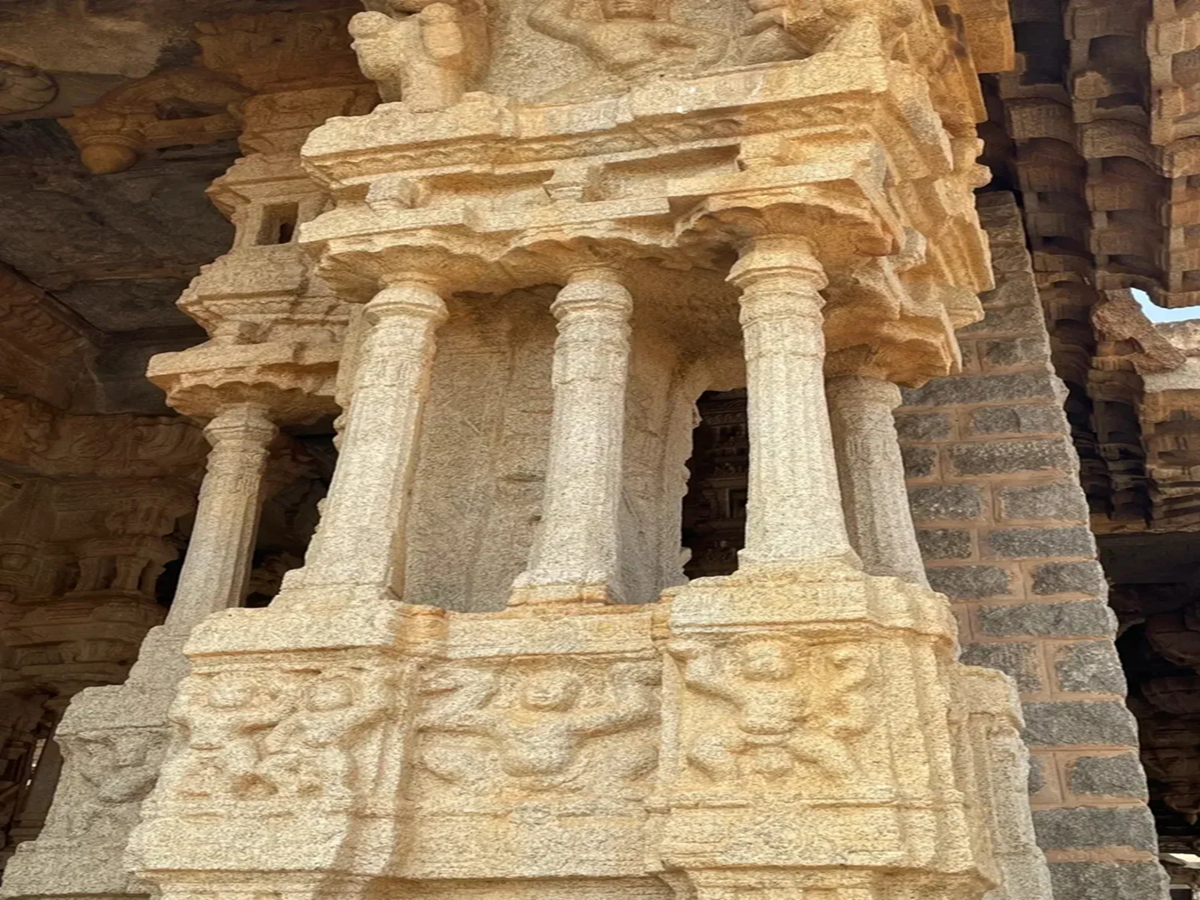
The most remarkable feature of the Vittala Temple is its 56 musical pillars—also known as the *Sa-Re-Ga-Ma* pillars. These pillars are situated within the temple's *Mahamandapa* (main hall). The unique characteristic of these pillars is that when gently tapped, they emit sounds resembling the seven musical notes (*svaras*).
These pillars are carved from solid blocks of granite. Each main pillar is surrounded by seven smaller pillars, each of which produces sounds akin to different musical instruments.
To this day, it remains a subject of scientific inquiry and research: how can musical sounds emanate from solid stone structures that possess no internal cavities? It is said that during the British Raj, even the British were eager to unravel this mystery. To discover what lay within these pillars, they cut open two of them; however, they found nothing inside—the pillars were composed of solid stone through and through. These pillars can still be seen within the temple complex today.
A Cultural and Spiritual Experience
The Vitthala Temple is not merely a religious site; it stands as a magnificent example of ancient Indian lithophones—that is, resonating stones. The intricate carvings of horses, soldiers, and dancers adorning the temple walls bear witness to the grandeur and artistic passion of that era.
The temple courtyard is so vast that it could accommodate thousands of people celebrating festivities simultaneously. In the evening, as the sun's rays fall upon these stones, the entire temple takes on a golden glow.
PC Social Media