LIFESTYLE
If you are observing the Hartalika Teej fast for the first time, do not make any mistakes—make sure to know the rules..

In Hinduism, every lunar day (*tithi*) and day of the week (*vaar*) holds special significance. Women observe various fasts (*vrat*) with the aim of ensuring unbroken marital bliss, their husband's longevity, and a happy married life. Festivals like Hariyali Teej, Kajari Teej, and Karwa Chauth are part of this tradition. However, among these, the Hartalika Teej fast is considered particularly rigorous. Women observe it with deep devotion and strict adherence to the prescribed rules.
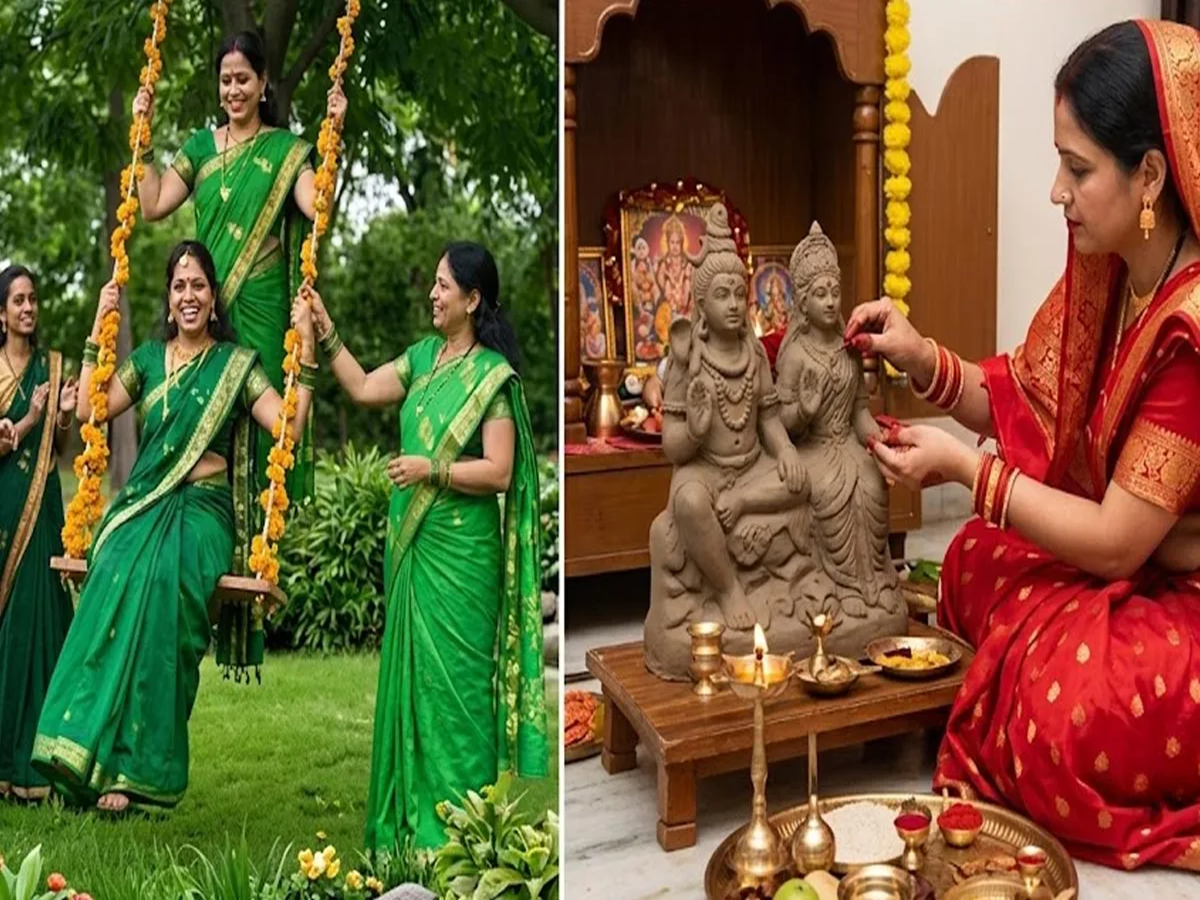
Observing the Hartalika Teej fast fosters happiness in married life; women intending to observe this fast for the first time should familiarize themselves with the rules governing this rigorous observance. Failure to follow the rules correctly renders the fast fruitless. Let us learn about the necessary guidelines for this fast from Pandit Anand Bhardwaj of Ujjain.
According to the Vedic calendar, this year the *Tritiya Tithi* (third day) of the *Bhadrapada Shukla Paksha* (waxing phase of the moon) begins on September 13 at 7:08 AM and concludes on September 14 at 7:06 AM. Based on the *Udaya Tithi* (the sunrise tithi), the Hartalika Teej fast will be observed on Monday, September 14.
**Mythological Significance of Hartalika Teej**
Women primarily observe the Hartalika Teej fast to pray for their husband's longevity and a blissful married life. This fast is associated with Goddess Parvati and Lord Shiva. Legend has it that Goddess Parvati's father wished to marry her to Lord Vishnu, but she desired Lord Shiva as her husband. Consequently, her companions took her into a dense forest, where she performed severe penance to please Lord Shiva. Subsequently, the two were united in marriage.
**Observing the Fast for the First Time? Know the Rules**
1. The Hartalika Teej fast is considered one of the most arduous fasts. No water is consumed on the day of the fast. Since it is a *Nirjala* fast (observed without water), not everyone is able to undertake it; therefore, if you are observing this fast for the first time, prepare yourself mentally a few days in advance.
2. On this day, married women should adorn themselves with the 'Solah Shringar' (sixteen traditional adornments) and worship Lord Shiva and Goddess Parvati. Applying henna (mehndi) is considered essential. It is believed that this pleases Lord Shankar and leads to the fulfillment of all wishes.
3. The observance of this fast begins before sunrise. Women bathe, wear clean clothes, and perform the worship of Lord Shiva, Goddess Parvati, and Lord Ganesha according to prescribed rituals.
4. During the worship, the women observing the fast perform the ritualistic adoration of the idols of Lord Shiva, Goddess Parvati, and Lord Ganesha. They offer flowers, incense, lamps, sandalwood paste, unbroken rice grains (akshat), fruits, and sweets to the deities.
PC Social Media