ENTERTAINMENT
If one's throat is parched with thirst and life is in danger during Nirjala Ekadashi, how can one drink water? Learn the rules..

Nirjala Ekadashi 2026: Rules Regarding Water Consumption – The Nirjala Ekadashi fast is the most rigorous of all Ekadashi fasts. A person observing this fast must abstain from consuming both food and water for the entire day. However, a dilemma arises if one is observing the fast and experiences a parched throat or feels their life is in danger due to extreme thirst; what should one do then? How can one consume water in such a situation?
Why is water not consumed during Nirjala Ekadashi?
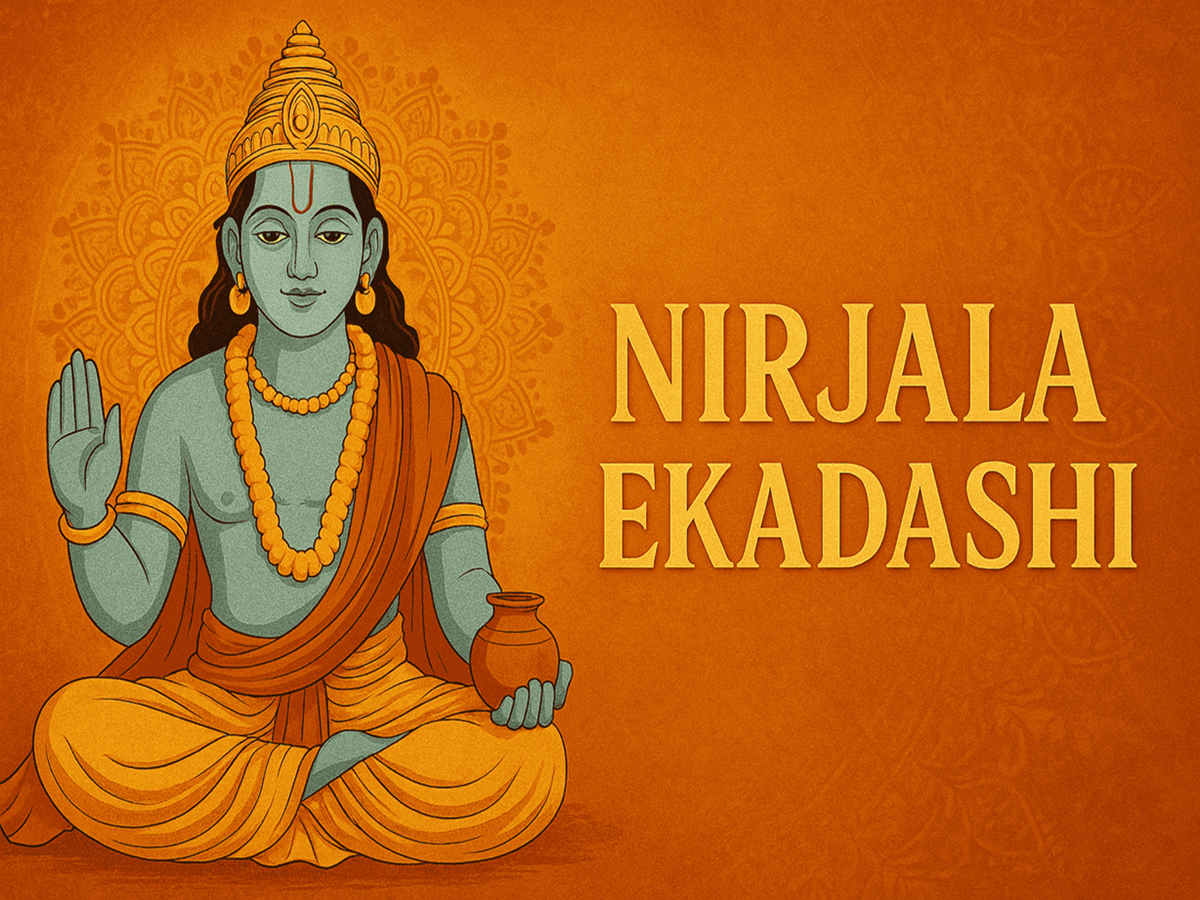
The very name "Nirjala Ekadashi" signifies an Ekadashi observed without water (*nir* means without, *jala* means water). During this fast, one abstains from consuming food, water, fruits, milk, and so forth. The fast begins in the morning after performing *Achaman* (ritual purification) and taking a solemn vow (*Sankalp*) to observe the fast and worship; thereafter, no water is consumed until sunrise the following day. Only by doing so does one attain the spiritual merit of all twenty-four Ekadashi fasts of the year and move towards *Moksha* (salvation).
Who is exempted from the Nirjala Ekadashi fast?
Children, the elderly, and the sick are exempted from the strict rules of the Nirjala Ekadashi fast. If you face health-related issues during the fast, you may consume water. If you are unable to fast without water, you may observe the fast by consuming fruits (*Phalahar*) and performing worship; offer your devotion to the Lord according to your capacity. While strictly following the rules in this manner might mean you do not reap the *full* spiritual rewards of the Nirjala Ekadashi fast, devotion to the Lord is certainly not prohibited.
How should one consume water during Nirjala Ekadashi?
Now, the question arises: what should one do if, while observing the Nirjala Ekadashi fast, one's throat becomes parched and one's life is endangered? How should water be consumed? The fundamental condition of this fast is that it must be completed without water. Consuming water breaks the fast, potentially rendering it fruitless.
However, some religious scholars suggest that on the day of Nirjala Ekadashi, one should rise at dawn, bathe, and worship Lord Sri Hari according to the prescribed rituals. You may drink water two hours after sunset; doing so can earn you the spiritual merit equivalent to observing at least twelve Ekadashi fasts.
However, in certain situations—specifically when one's life is in danger—it is prescribed that one may fill a brass or silver vessel with a mixture of Gangajal (water from the Ganges) and clean water. Then, by resting both hands and knees on the ground, one may drink the water like an animal. Before doing this, one must chant the mantra "Om Namo Narayanaya" twenty-one times; this act is not considered a violation of the fast.
Some people consume a small amount of water after midnight on the day of Nirjala Ekadashi.
These provisions are intended for those who, for some reason, cannot abstain from water while fasting. Nevertheless, the scriptures clearly state that consuming water during Nirjala Ekadashi breaks the fast.
PC Social Media