
LIFESTYLE
Health Tips: Will the Coronavirus Ever End? The Question Arises Again Following the New Variant...

Coronavirus New Variant Cicada: The coronavirus first emerged from Wuhan, China, nearly seven years ago. Gradually, it spread to every country in the world, and millions of people fell victim to it. The infection claimed the lives of hundreds of thousands of people. Initially, COVID wreaked havoc on an unprecedented scale; however, a few years later, scientists successfully developed vaccines and achieved success in bringing the virus under control. While the coronavirus has now significantly receded compared to its earlier stages, new variants continue to infect people from time to time.
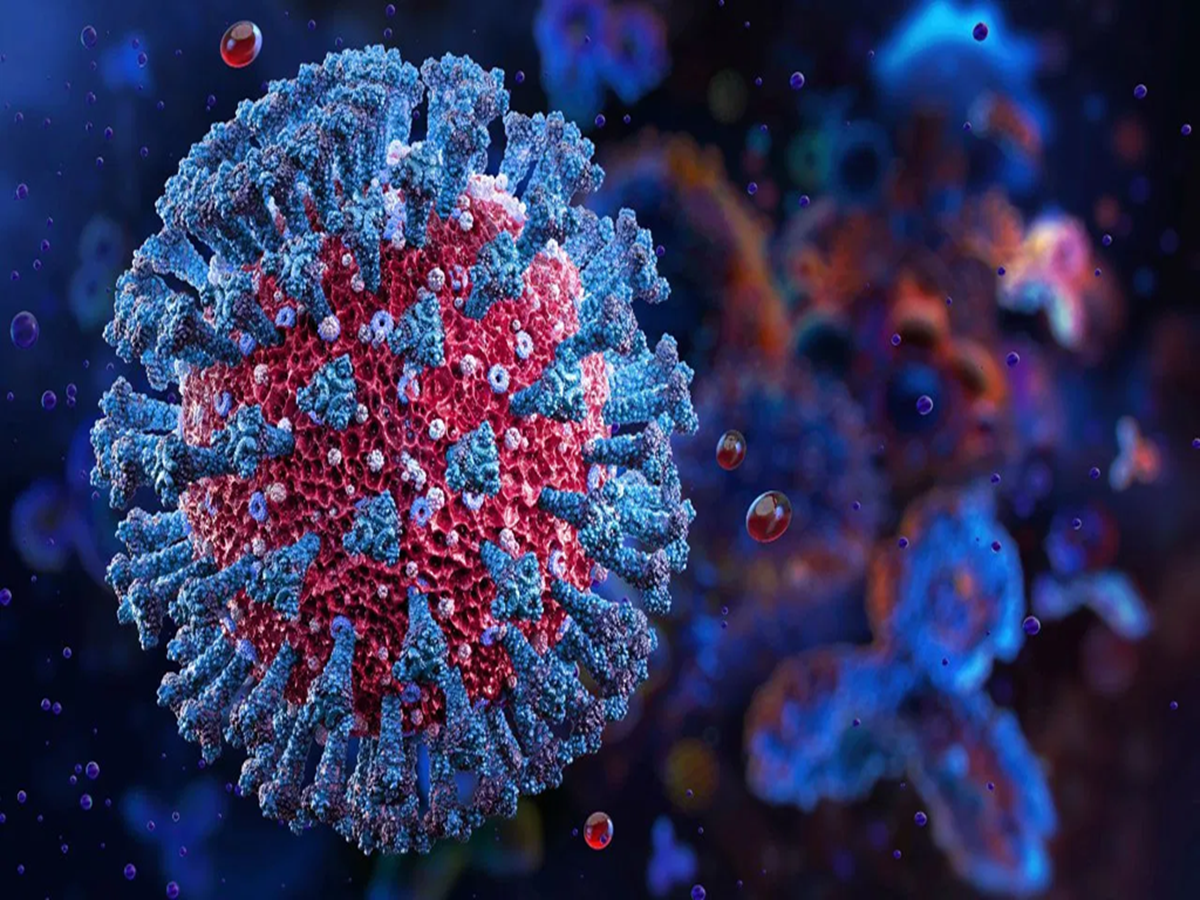
Over the past few weeks, a new COVID variant—BA.3.2—has been spreading rapidly across several countries, including the United States. Scientists have named this variant "Cicada." This variant has already spread to 23 countries. This has raised questions regarding whether the coronavirus can ever be completely eradicated. Let us examine what experts have to say on the matter.
Dr. Sunit K. Singh, a virologist and Director of the Dr. Ambedkar Center for Biomedical Research in New Delhi, stated that the complete eradication of the SARS-CoV-2 virus is nearly impossible. The primary reason for this is that the virus is not confined solely to humans; the coronavirus has now established a foothold in animals as well. Even if it were to be eliminated from the human population, it could potentially re-emerge through animal reservoirs. Consequently, the virus is unlikely to be completely wiped out; instead, much like the common cold or seasonal flu, it will continue to cause periodic infections, and new variants will continue to emerge over time.
Dr. Sunit explained that the coronavirus has now transitioned from a pandemic phase into an endemic phase. This signifies that the virus will remain a constant presence among us—much like seasonal influenza or the common cold. Rather than posing a sudden, global catastrophe, it has evolved into a predictable regional disease, with case numbers expected to fluctuate—rising and falling—periodically. Similar mutations have also been observed in the new sub-variant, Cicada. Although these new variants may be spreading rapidly, widespread vaccination has led to a significant reduction in both the severity of the illness and the number of fatalities. In the future, we must continue to integrate basic habits—such as wearing masks, ensuring proper ventilation, and maintaining hygiene—into our lifestyle to minimize the risk of infection from new variants.
Dr. Anil Bansal, a senior physician and former President of the Delhi Medical Association, notes that initially, it was believed that herd immunity would lead to the eradication of the coronavirus; however, this perception has now shifted. Since the virus is constantly mutating and the protection conferred by vaccines diminishes over time, herd immunity no longer serves as a permanent solution. Instead, it is now "hybrid immunity"—a combination of vaccine-induced and natural immunity—that prepares the body to defend against severe attacks by the virus. Enhanced surveillance, updated booster doses, and the availability of antiviral medications have enabled us to coexist with this virus. People will gradually adapt their lives to this reality, and the virus will persist in the environment.
PC Social Media