
LIFESTYLE
Gangaur Vrat Today: Learn about its significance, worship rituals, and auspicious timing..

Gangaur Vrat 2026 Today: Today, in many parts of the country—including Rajasthan—the special festival of faith and tradition, Gangaur, is being celebrated with deep reverence. Every year, this festival is observed on the *Tritiya* (third day) of the *Shukla Paksha* (waxing phase of the moon) during the month of *Chaitra*. Although the fasting rituals technically commence the very day after Holi, the *Tritiya* of *Chaitra* holds special significance, as it marks the culmination and ceremonial immersion (*Visarjan*) of the fast.
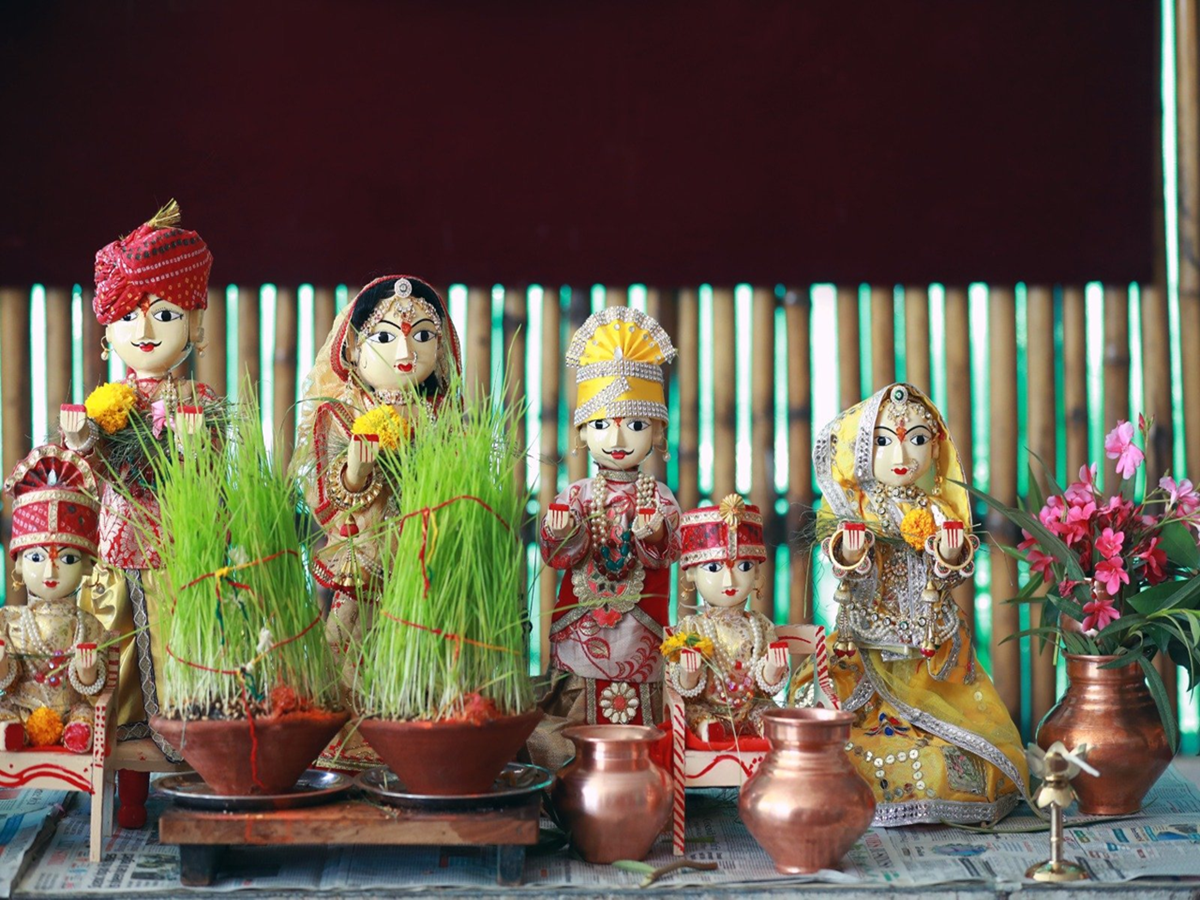
Primarily regarded as a festival for women, it is a time when they pray for *Akhand Saubhagya* (eternal marital bliss), the longevity of their husbands, and overall happiness and prosperity. Unmarried women also observe this fast with the hope of finding a suitable groom. The rituals of Gangaur Puja are deeply intertwined with Goddess Gauri (Parvati) and Lord Shiva. Let us explore the significance of Gangaur Puja, the proper rituals (*Puja Vidhi*), the auspicious timings (*Shubh Muhurat*), and the intriguing reason why women observe this fast in secret—hidden even from their husbands...
What is the Significance of Gangaur?
According to religious beliefs, Goddess Gauri observed the Gangaur fast for Lord Shiva; consequently, this fast is revered as a symbol of marital felicity. A unique aspect of this observance is that women perform the rituals and fasting in complete secrecy, keeping them hidden from their husbands. This fast is believed to usher happiness, prosperity, and marital stability into women's lives. The festival is celebrated with immense enthusiasm, particularly in Rajasthan, Madhya Pradesh, and certain regions of North India. On this day, women adorn themselves in traditional attire, performing the *Solah Shringar* (the sixteen traditional adornments), and offer their prayers to Goddess Gauri. It is believed that by observing this fast and performing the associated rituals, devotees receive the divine grace of Lord Shiva and Goddess Parvati, who then fulfill all their heartfelt wishes. The *Prasad* (sacred food offering) of Gangaur also holds special significance; in Rajasthan, a traditional sweet delicacy known as *Gune* is prepared as the *Bhog* (offering) on this auspicious day.
Gangaur Puja Muhurat (Auspicious Timings) 2026
Brahma Muhurat: 04:49 AM to 05:37 AM
Abhijit Muhurat: 12:04 PM to 12:53 PM
Vijaya Muhurat: 02:30 PM to 03:18 PM
What is the Procedure for Gangaur Puja?
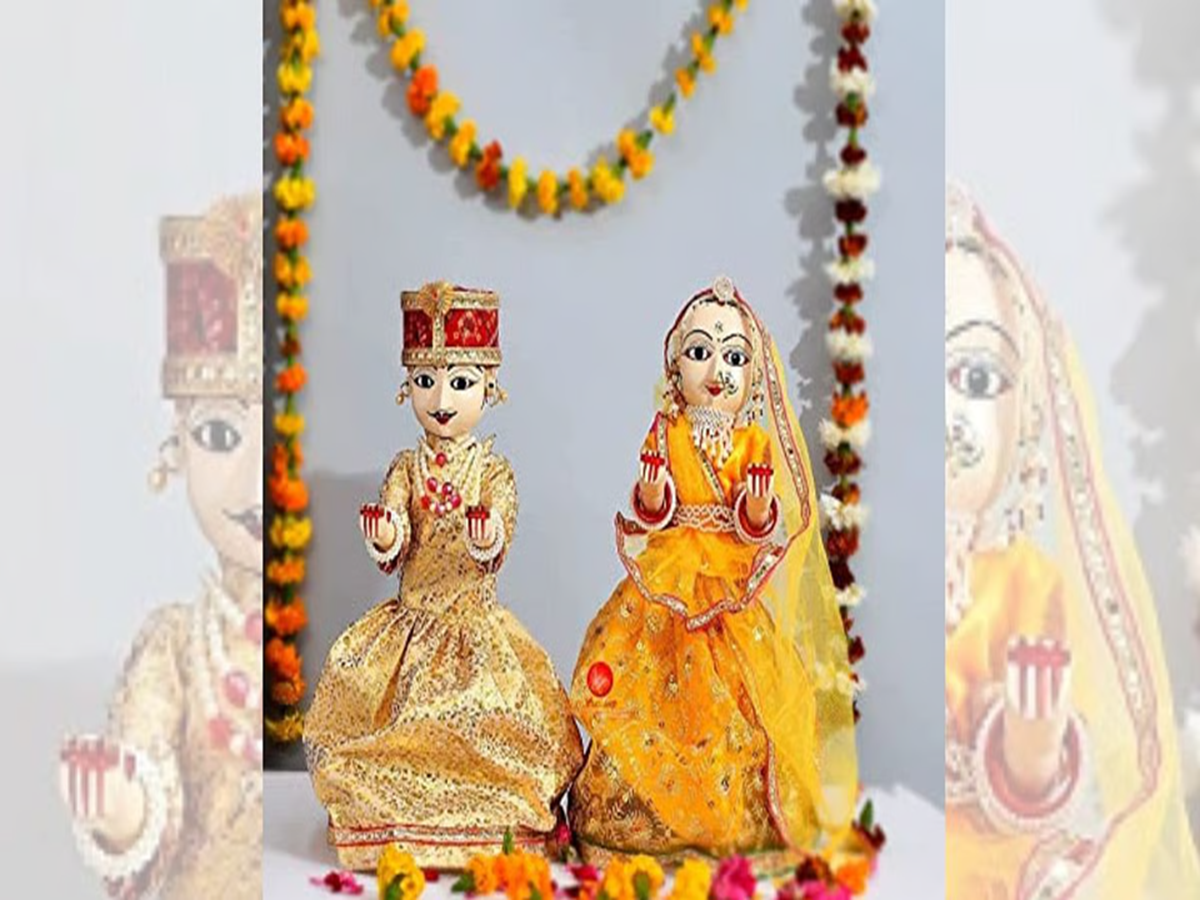
For Gangaur Puja, women begin the day by taking a ritual bath and adorning themselves in clean, fresh garments. Subsequently, a red cloth is spread over a raised platform (Chowki), and an idol of Gangaur—depicting Lord Shiva and Goddess Parvati—made of clay or wood is installed upon it. Following the prescribed rituals, offerings such as water, flowers, *Akshat* (unbroken rice grains), and *Sindoor* (vermilion) are presented. Thereafter, items symbolizing marital bliss—such as *Sindoor*, *Chunari* (decorative scarf), bangles, *Mehendi* (henna), and *Prasad* (sacred food offering)—are offered. In many regions, women carry water-filled pitchers and participate in processions while singing traditional folk songs. Women observing the fast abstain from food and water (*Nirjala*)—or subsist solely on fruits (*Phalahar*)—throughout the day; in the evening, after listening to the sacred legends associated with the festival, they proceed to a holy river—singing and playing musical instruments—to perform the immersion of the idol. Traditional songs and dances performed during the worship rituals constitute a distinctive hallmark of this festival.
Why the Tradition of Observing the Fast in Secrecy from One's Husband?
An intriguing tradition associated with Gangaur is that, in certain regions, women observe this fast without disclosing it to their husbands. It is believed that if the fast is flaunted or performed merely for show, one does not reap its full spiritual rewards. Consequently, a tradition of observing this fast in secrecy has evolved, ensuring that the devotee receives the complete spiritual merit of the observance. Furthermore, according to a popular folktale, when Goddess Gauri herself observed this fast for Lord Shiva, she did not inform even Him about it; for this reason, women continue to observe this fast in secrecy from their husbands. Additionally, the *Prasad* (sacred food offering) from the Gangaur worship is traditionally not distributed to men.
PC Social Media