
Parenting
Being an obedient child isn't always a good thing! Learn about the side effects of being overly compliant..

Side Effects of Being an Overly Obedient Child: We often consider a child who obeys every command to be well-mannered. However, this habit of always saying "yes" can prove detrimental to their mental growth. In the pursuit of excessive obedience, children lose the ability to openly express their thoughts. They develop an inability to make their own decisions and a hesitation to say "no." Learn about the side effects observed in overly obedient children and discover appropriate parenting tips.
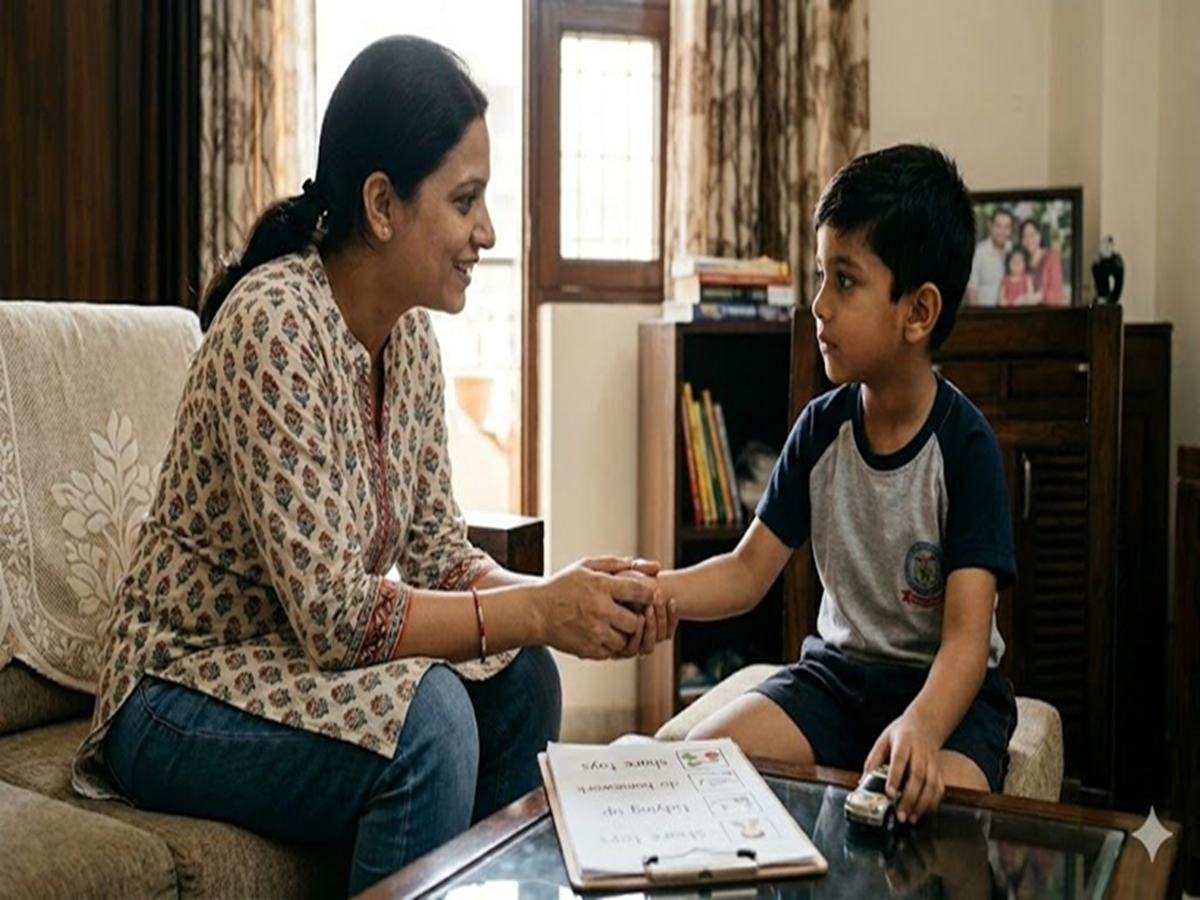
Society often deems a child "well-mannered" and "sensible" if they quietly accept everything elders say without question. Parents, too, proudly tell relatives and neighbors, "My child is so docile; they never talk back and quietly do whatever they are told." But have you ever paused to consider the impact this habit of constantly nodding in agreement has on your child's mind and personality?
Make your child feel that their opinion matters just as much. If they disagree with something, listen to them calmly. (Canva)
When you confine a child to the role of being merely "obedient" or a "good boy/girl," you inadvertently strip them of the freedom to think, understand, and express their own views.
The Fear and Suffocation of Being Unable to Speak Up—
When children are taught from a young age to remain silent and simply agree with everything, it becomes ingrained in their mental programming. They gradually begin to feel that holding an opinion or speaking up before elders is not their right.
When such children grow up and reach a point in life where they need to stand up for their rights, they often remain silent. This deep-seated childhood fear becomes so embedded in their nature that, even as adults, they are unable to raise their voices—even when they want to—and continue to live with hesitation.
Obedience or Fear of Reprimand?
There is a subtle difference between a child genuinely respecting your words and a child saying "yes" out of fear of losing their parents' love and praise.
Suppose you ask your child to do something, and without a moment's thought, they cancel plans to watch their favorite cartoon or play with friends. This is not always a sign of good upbringing. Often, a child does this simply because they fear that saying "no" will make their parents angry or lead to being labeled a "bad child."
The Craving for External Praise
A child who becomes accustomed to seeking validation or praise from others after every action gradually begins to suppress their own preferences and desires.
Inability to Make Decisions: Constantly following others' orders can erode a child's decision-making abilities as they grow up.
Vulnerability to Bad Company: Such individuals can easily get trapped in unhealthy relationships or high-pressure environments later in life because they never learned to say "no" during childhood. They often sacrifice their own well-being in an attempt to please others.
Recognizing Internal Exhaustion and Mental Stress:
A child who remains excessively quiet and complies with everything asked of them may be showing signs of emotional burnout. While the outside world might endlessly praise your child for being "so quiet and obedient," internally, they may be suppressing their true emotions. If your child is going through the motions like a robot—devoid of joy, enthusiasm, or energy—understand that they are likely feeling deeply lonely and stressed.
How to Correct the Habit:
If you feel your child has fallen prey to the "people-pleasing" habit and is losing self-confidence, do not panic; instead, make a few fundamental changes. 1. Foster an environment of open communication at home:
Make your child feel that their opinion matters just as much as yours. If they disagree with something, listen to their point of view calmly.
2. Learn to admit your mistakes:
There is no harm in acknowledging to your children that parents, too, can sometimes be wrong. When children see adults admitting their mistakes, it helps alleviate their fears.
3. Explain the difference between right and wrong:
Teach your child that saying 'no' to something wrong is not an act of rudeness, but rather a way of setting boundaries.
4. Seek professional help:
If your child remains excessively timid and is unable to express themselves at all, do not hesitate to consult a child counselor or psychologist.
5. True parenting lies in setting the right boundaries:
Giving your child the freedom to express themselves does not mean allowing them to be stubborn or rude.
Presenting your views logically while also listening to theirs is a hallmark of healthy parenting. Striking the right balance between discipline and love is key to raising a strong and self-reliant individual.
PC Social Media