LIFESTYLE
How does Bengal deck up for Durga Puja? Find out why the white saree with a red border is special..
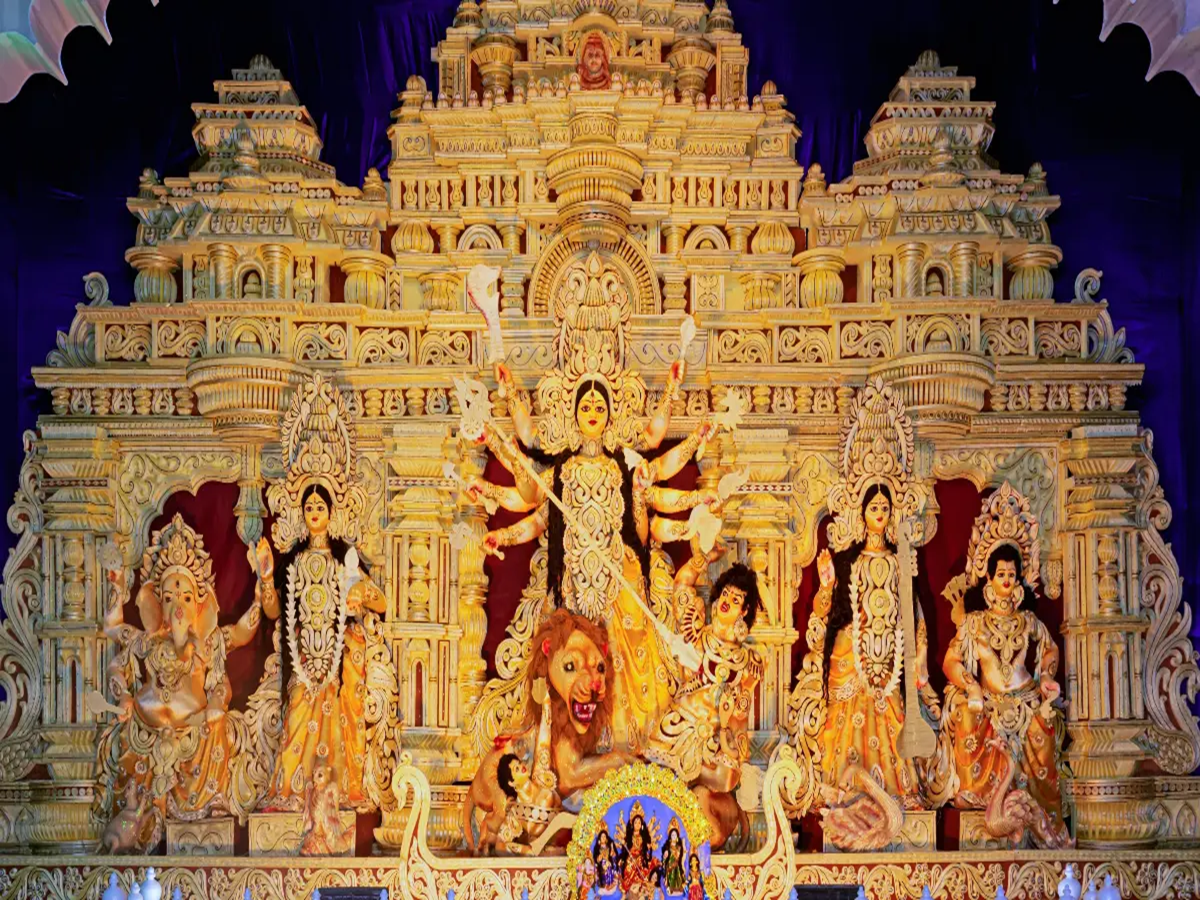
Mahalaya Durga Puja and *Chakshu Daan* 2026: As Durga Puja approaches, West Bengal—and Kolkata in particular—becomes immersed in a vibrant tapestry of lights, art, decorations, and religious festivity. From narrow lanes to major intersections, the city captivates onlookers with its *pandals* (temporary marquees), dazzling lights, and diverse decorative themes. During this period, the ritual of *Chakshu Daan* (painting the eyes of the idol) and the wearing of traditional attire become integral parts of the celebration. In 2026, *Sharadiya Navratri* begins on October 11 and concludes on October 19, with the main Durga Puja festivities observed from *Shasthi* (the sixth day) to *Dashami* (the tenth day). While the two festivals coincide, they possess distinct spiritual and cultural identities. Let us explore how Bengal adorns itself for Durga Puja and discover the significance of the iconic white saree with a red border.
A Hallmark of Traditional Bengali Culture: During Durga Puja, temporary *pandals* are erected across various neighborhoods. Their decorations often draw inspiration from historical monuments, temples, or socio-cultural themes, showcasing everything from traditional Bengali heritage to diverse artistic concepts. Beyond the *pandals* themselves, the surrounding areas are also illuminated; colorful lights, tableaux, and modern decorative installations adorn the streets and prominent locations.
The Significance of Mahalaya in Durga Puja Preparations: Mahalaya—also known as *Sarvapitri Amavasya*—holds special significance in the preparations for Durga Puja. A key tradition associated with this auspicious occasion is *Chakshu Daan*, the ritual of painting the eyes of the Goddess Durga idol. Traditionally, the idols are crafted using clay alongside materials like bamboo and cloth. During the festival, people don new clothes and visit various *pandals*; the tradition of venturing out at night to view these *pandals* has become a central feature of the public celebration of Durga Puja.
Traditions of Dhunuchi Dance and Sindoor Khela – The Dhunuchi dance holds a special place among Durga Puja traditions. This traditional dance is performed with a *dhunuchi* (an earthen incense burner) during the evening *Aarti*. Meanwhile, on the day of Vijayadashami, before Goddess Durga’s immersion, the tradition of *Sindoor Khela* takes place among women; during this ritual, women apply vermilion (*sindoor*) to one another. The festival concludes with the immersion of the idol.
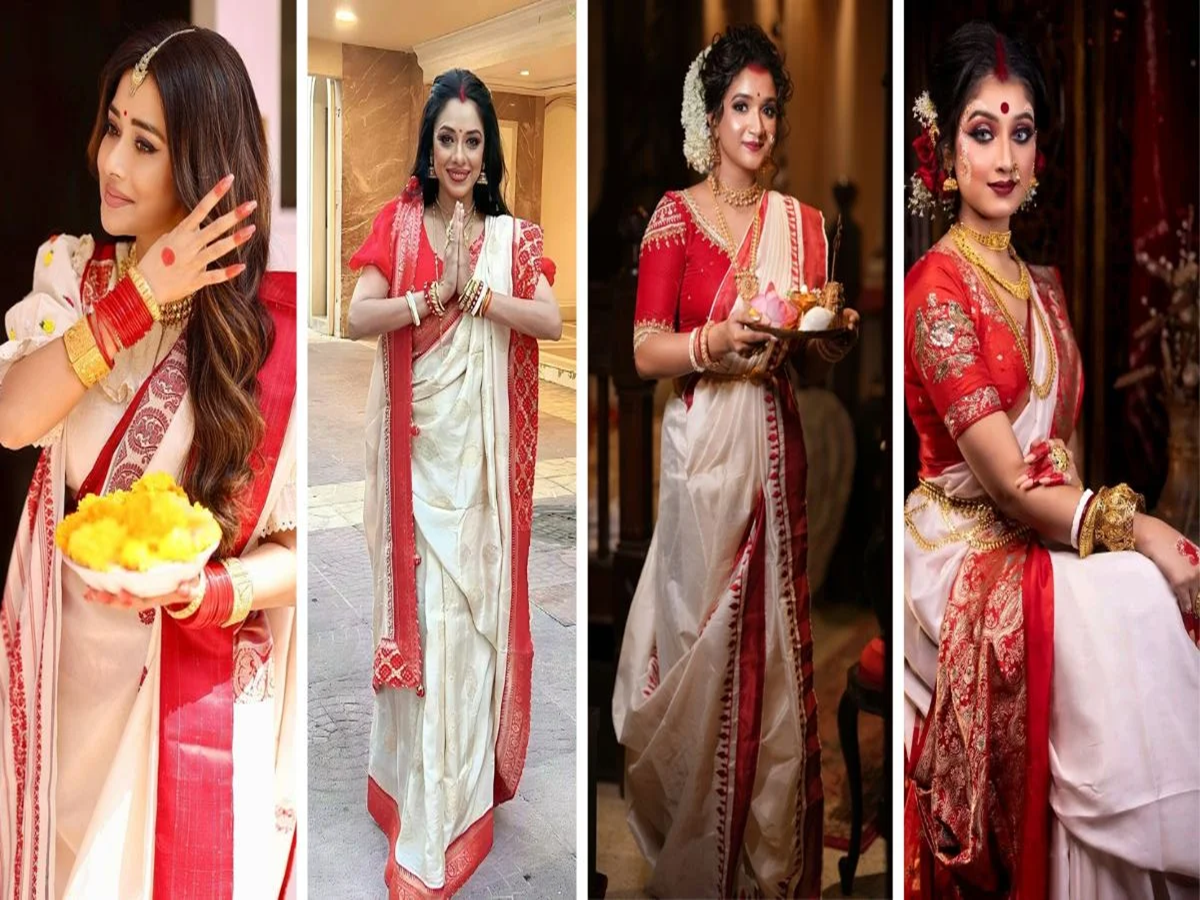
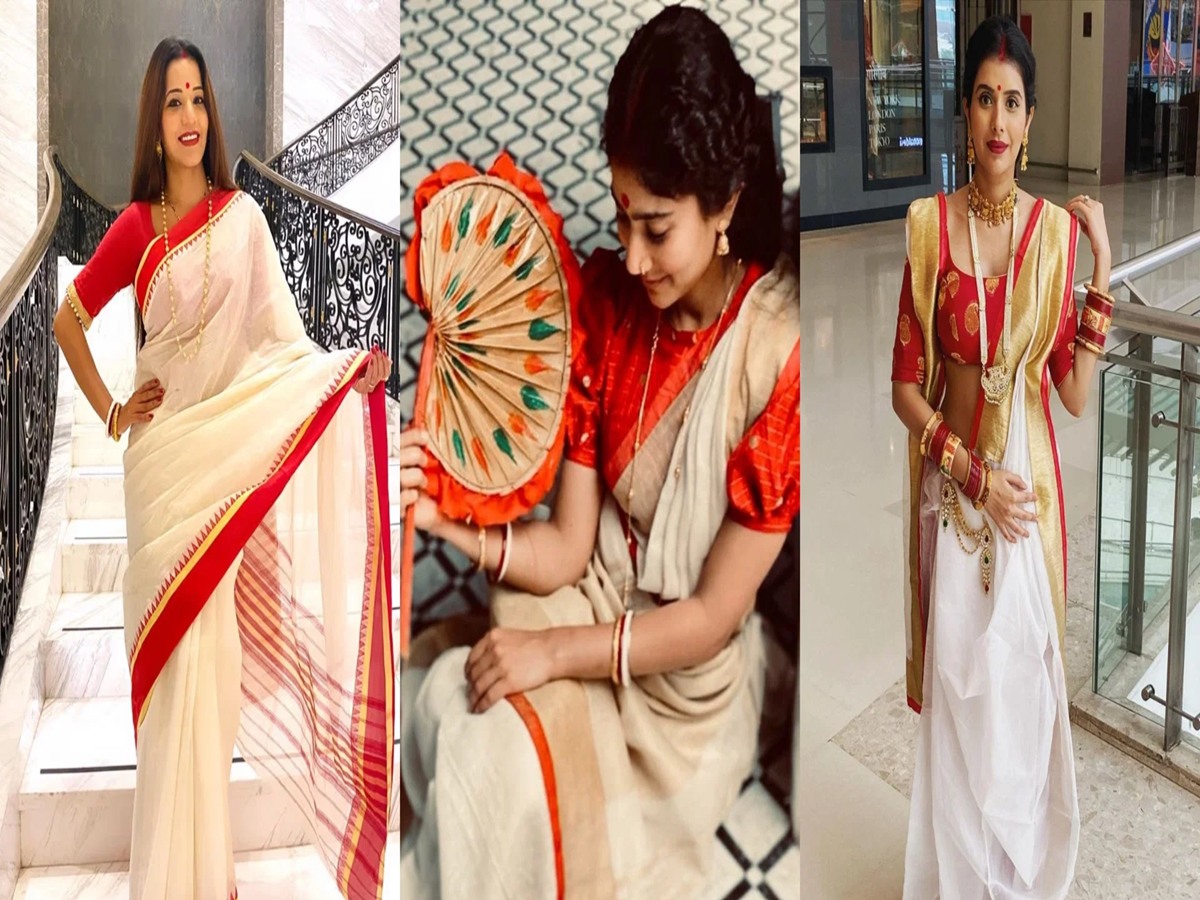
Traditional Attire of Bengali Women – During Durga Puja, the traditional attire of Bengali women prominently features the white saree with a red border, commonly known as the *Lal-par* saree. This saree is synonymous with traditional Bengali clothing and is crafted from fabrics like cotton and silk. Traditional sarees from Bengal, such as *Tant*, hold a unique identity. The custom of wearing a white saree with a red border on occasions like Durga Puja is deeply rooted in the cultural and religious atmosphere.
Traditional Beliefs Regarding the Saree's Colors – There are traditional beliefs associated with the two colors of this saree. Red is associated with power and energy, while white symbolizes purity. This is why the red-and-white saree is particularly favored during Durga Puja, although it would be incorrect to consider it mandatory attire for all Bengali women. The traditional Bengali draping style of the *Lal-par* saree also gives it a distinctive look; the *pallu* and border are arranged in such a way that the red edge of the saree remains clearly visible.
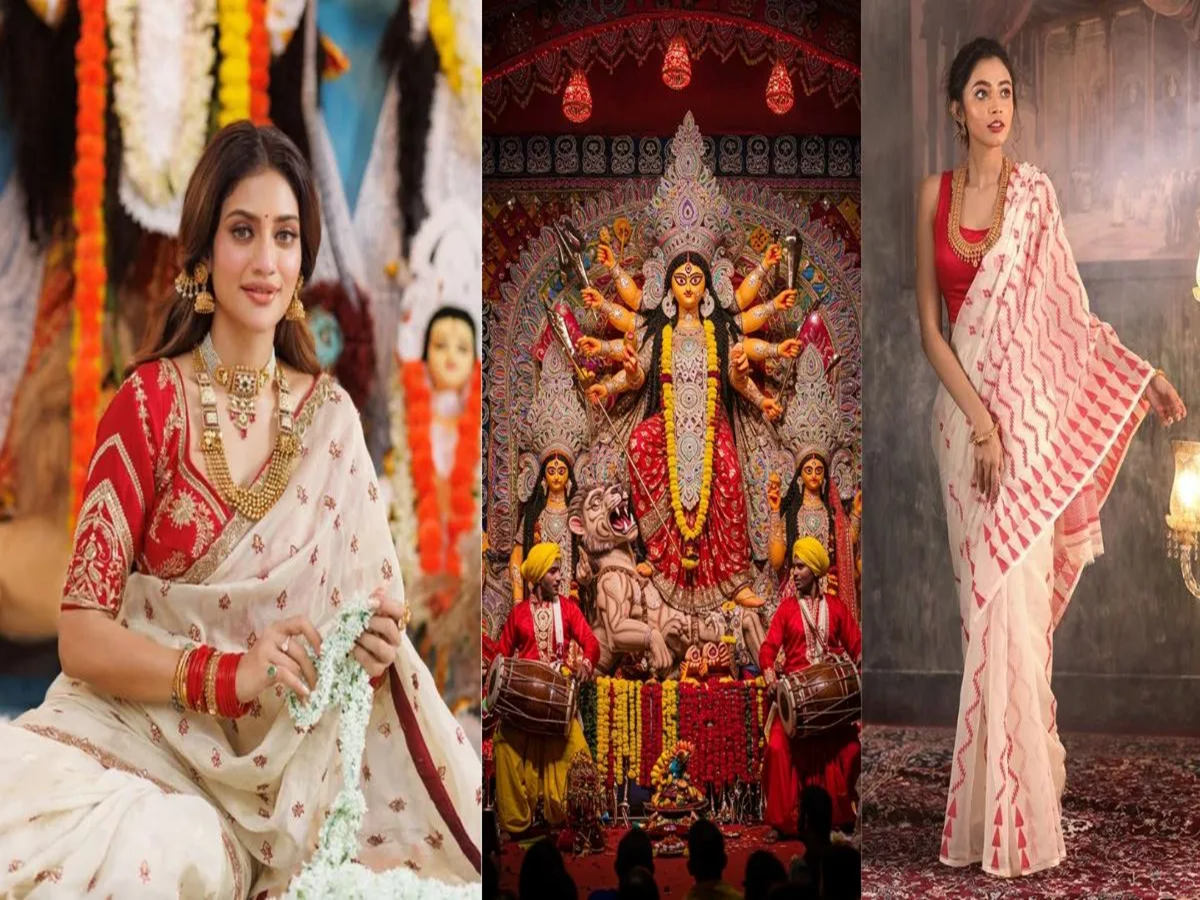
How Women Get Ready – Jewelry plays a vital role in the traditional Bengali look. Gold necklaces, earrings, bangles, and ornaments featuring traditional designs are worn with the saree. This further enhances the visual appeal of the traditional Bengali attire during Durga Puja.
PC Social Media